
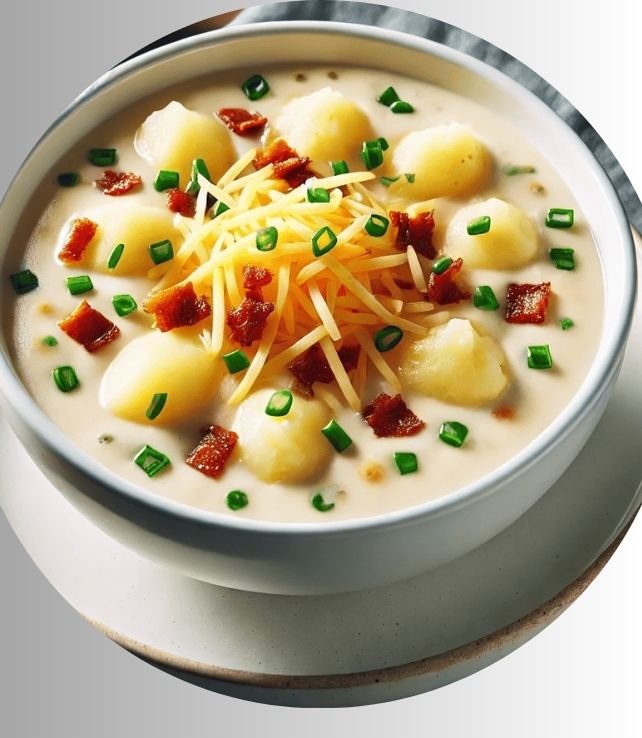
There is a specific kind of hunger that only a bowl of truly good potato soup can satisfy. It’s not about complexity, but about a foundational, almost primal comfort. For years, I searched for a version that balanced creamy texture with clear potato flavor, one that felt substantial without being heavy. My discovery of the method behind Rafferty’s potato soup was a turning point.
This recipe, shared with me by a friend whose family frequented the restaurant chain, achieves a particular harmony. It is deceptively simple, relying on technique and ingredient quality rather than a long list of components. As a dietitian and culinary historian, I appreciate recipes that serve as both nourishment and a lesson in cooking fundamentals. This one does exactly that.
Below, you will find the detailed recipe for Rafferty’s potato soup, followed by a comprehensive analysis of its ingredients, nutritional profile, and the culinary science that makes it work. My goal is to provide you with everything needed to master this dish and understand its place at your table.
Storage Instructions
Allow the soup to cool completely before transferring it to an airtight container. It will keep in the refrigerator for 3-4 days. The starch in the potatoes may cause the soup to thicken considerably when chilled.
Reheating for Best Results
Reheat gently on the stovetop over low to medium-low heat, stirring frequently. You will likely need to add a small amount of broth, milk, or water to return it to your desired consistency. Avoid boiling. Microwave reheating is possible but can be uneven; use a microwave-safe container, reheat in 1-minute intervals, and stir well between each.
I do not recommend freezing this soup. Dairy-based soups with potatoes can separate and become grainy when frozen and thawed. The potatoes often develop an unpleasant, spongy texture.
The Science of Texture and Flavor
Why does this specific method work so well? The answer lies in basic food science. The Russet potatoes contain two types of starch: amylose and amylopectin. When heated in liquid, the starch granules swell and absorb water, eventually bursting and releasing these molecules into the broth. This process, called gelatinization, is what thickens the soup when you mash some of the potatoes.
The fat from the butter and dairy coats the tongue, allowing flavor compounds to be released slowly, which we perceive as a richer, longer-lasting taste. The glutamates in the cheese and vegetables contribute umami, the savory “fifth taste,” which creates depth and makes the soup more satisfying.
Understanding these principles allows you to troubleshoot. If your soup is too thin, you likely did not mash enough potatoes to release sufficient starch. If it is too thick, you can simply stir in more liquid. The goal is a stable suspension where the thickened broth carries the tender potato pieces and melted cheese evenly in every spoonful.
Frequently Asked Questions
Can I leave the potato skins on for this recipe?
You can, but it will change the final texture and appearance. The skins add fiber and nutrients but will create a more rustic, flecked soup. For the smooth, creamy broth associated with the Rafferty’s style, peeling is recommended. If you do leave skins on, scrub the potatoes thoroughly first.
My soup turned out too thin. How can I fix it?
Create a slurry by mixing one tablespoon of cornstarch or all-purpose flour with two tablespoons of cold water until smooth. Bring the soup to a very gentle simmer and whisk in the slurry. Cook for 2-3 minutes, stirring constantly, until thickened. Alternatively, you can mash more of the potatoes directly in the pot.
What can I use instead of half-and-half?
An equal mix of whole milk and heavy cream is a direct substitute. For a lighter version, whole milk will work but yield a less rich soup. For a richer version, use all heavy cream. Be mindful of the heat to prevent curdling with these substitutes as well.
Why did my cheese become stringy or clumpy in the soup?
This is usually caused by too high heat. Pre-shredded bagged cheeses often contain anti-caking agents like cellulose, which can also hinder smooth melting. For best results, shred your own cheese from a block and add it off direct heat, stirring until just melted.
How can I make this soup in a slow cooker?
Sweat the onions, carrots, and celery in butter on the stovetop first to develop flavor. Transfer them to the slow cooker. Add the potatoes, broth, water, thyme, bay leaf, salt, and pepper. Cook on LOW for 6-7 hours or HIGH for 3-4 hours, until potatoes are tender. Mash partially, then stir in the half-and-half and cheese on the LOW setting until combined.
Is this soup suitable for freezing?
It is not ideal. Dairy-based soups can separate and become grainy upon thawing. The potatoes also tend to become mealy and absorb too much liquid, ruining the texture. For best quality, consume within 3-4 days of refrigeration.
Can I add other vegetables, like broccoli or corn?
Absolutely. Add sturdy vegetables like broccoli florets or corn kernels with the potatoes. For
