
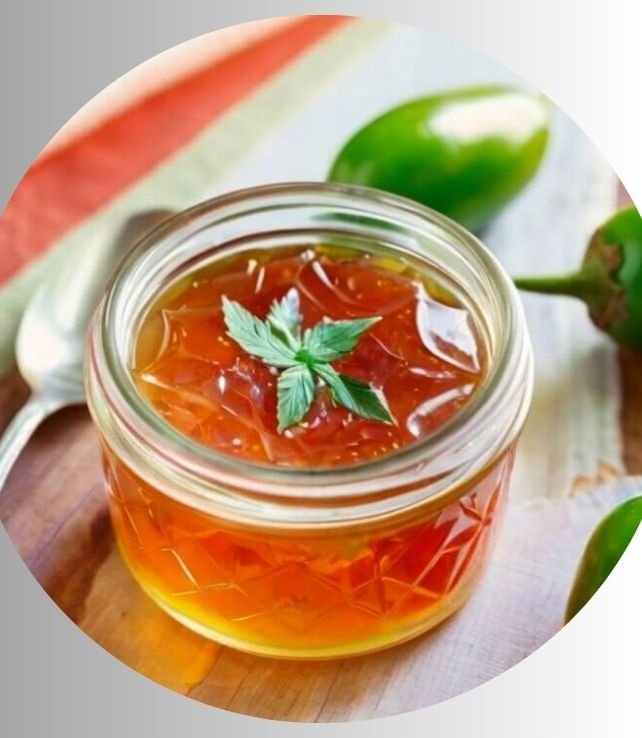
The first time I tasted jalapeño jelly, it was at a community potluck in rural Oklahoma. A neighbor had brought a block of cream cheese topped with this vibrant, jewel-toned substance, surrounded by crackers. The combination of cool dairy, crisp crackers, and the sweet, spicy jelly was a revelation. I knew I had to learn how to make it.
Years later, when I began studying culinary traditions and nutrition, I understood why this recipe is a staple. The Pioneer Woman’s version of jalapeño jelly is a masterclass in balance. It transforms simple garden ingredients into a preserve that is at once a condiment, a glaze, and the star of an appetizer. This guide provides the complete recipe and an in-depth analysis of its components, nutritional profile, and versatile applications.
What is Pioneer Woman’s Jalapeño Jelly?
Pioneer Woman’s Jalapeño Jelly is a cooked preserve that combines finely chopped jalapeño peppers, bell peppers, sugar, vinegar, and liquid pectin. The result is a clear, bright jelly with a complex flavor profile that starts sweet and finishes with a gentle, building heat. It is not a traditional jam with chunks of fruit but a smooth, gelled condiment.
Its importance lies in its versatility. This jelly functions as more than just a spread. It is a culinary multitool. You can use it as a glaze for roasted pork or chicken, a topping for a cheese board, or a surprising ingredient in a sandwich. It bridges the gap between sweet and savory, making it a unique and valuable addition to any pantry.
The recipe works through a combination of food science principles. Pectin, a natural fiber found in fruits, forms a gel network when combined with sugar and acid. The high acidity from the vinegar ensures food safety for canning, while the sugar not only sweetens but also acts as a preservative, drawing out moisture from microbial cells and inhibiting their growth.
How to Make Pioneer Woman’s Jalapeño Jelly Recipe
Recipe Details
- Prep Time: 30 minutes
- Cook Time: 15 minutes
- Servings: Makes approximately 6 half-pint jars
- Course: Appetizer, Condiment
- Cuisine: American
- Diet: Vegetarian
Ingredients
- 1 cup green bell pepper, finely chopped
- 1/2 cup red bell pepper, finely chopped
- 10-12 medium jalapeño peppers, finely chopped (about 1 1/2 cups)
- 1 1/2 cups apple cider vinegar
- 6 cups granulated sugar
- 6 ounces liquid pectin
- 2-3 drops green food coloring (optional, for enhanced color)
Instructions
- Prepare your canning equipment. Place jars in a large pot, cover with water, and bring to a simmer to sterilize. Place lids in a separate small pot of simmering water to soften the sealing compound.
- Wearing gloves, prepare the peppers. Remove the stems and seeds from the jalapeños and bell peppers. Finely chop them by hand or use a food processor for a more uniform, finer texture. Be careful not to puree them.
- In a large, heavy-bottomed pot, combine the chopped peppers, apple cider vinegar, and sugar. Stir well to combine.
- Bring the mixture to a full, rolling boil over high heat, stirring constantly to prevent the sugar from burning on the bottom of the pot.
- Once at a vigorous boil, add the entire bottle of liquid pectin. Return the mixture to a full boil and let it cook for exactly one minute, continuing to stir.
- Remove the pot from the heat. If using, stir in the food coloring.
- Skim off any foam from the surface with a spoon.
- Carefully ladle the hot liquid jelly into the warm, sterilized jars, leaving 1/4 inch of headspace at the top.
- Wipe the rims of the jars clean with a damp cloth. Place the lids on top and screw on the bands until they are fingertip-tight.
- Process the jars in a boiling water bath for 10 minutes. Remove and let them cool, undisturbed, for 12-24 hours. Check that the lids have sealed by pressing on the center; it should not pop back.
Nutrition
- Calories: 70 kcal
- Protein: 0 g
- Fat: 0 g
- Carbohydrates: 18 g
- Sugar: 17 g
- Fiber: 0.1 g
- Sodium: 1 mg
- Cholesterol: 0 mg
Cooking Method
This recipe uses the stovetop boiling method. A large, heavy-bottomed pot is essential for even heat distribution, which prevents the high-sugar content mixture from scorching. The process involves bringing the ingredients to a specific temperature to activate the pectin and achieve the correct gel set, followed by a water bath canning process to create a vacuum seal for long-term shelf stability.
Tools Needed
- Large, heavy-bottomed stockpot (8-quart or larger)
- Canning pot with a rack
- 6 half-pint canning jars with lids and bands
- Jar lifter
- Canning funnel
- Ladle
- Chopping board and a sharp knife
- Food processor (optional, for chopping)
- Disposable gloves
- Clean kitchen towels
Ingredient Analysis and Selection
Every component in this preserve plays a specific role, from flavor and texture to food safety. Understanding these roles helps you make informed substitutions and troubleshoot any issues.
Jalapeño Peppers: The Heart of the Heat
Jalapeños provide the signature kick. The heat level, measured in Scoville Heat Units (SHU), can vary significantly between peppers. A typical jalapeño ranges from 2,500 to 8,000 SHU. The heat is concentrated in the white pith and seeds. For a milder jelly, meticulously remove all pith and seeds. For a spicier version, leave some in. Wearing gloves during this process is non-negotiable; the capsaicin oils can cause a burning sensation on your skin and are extremely painful if transferred to your eyes.
Bell Peppers: Sweetness and Body
Green and red bell peppers are included not just for their vibrant color but for their structural role. They are low in pectin compared to apples or citrus, but they provide bulk and a subtle, sweet vegetable flavor that forms the base of the jelly, complementing the sharp heat of the jalapeños.
Sugar: More Than Just Sweetness
Six cups of sugar may seem like a lot, but in preserving, sugar is a functional ingredient. It acts as a preservative by binding with water molecules, making them unavailable to spoilage microorganisms. It also works in tandem with pectin to form the gel structure. Reducing the sugar can result in a runny jelly that does not set properly and has a significantly shorter shelf life, even when refrigerated.
Vinegar: The Acidic Backbone
Apple cider vinegar is the acid of choice here. Its acidity is crucial for two reasons. First, it provides the low pH environment necessary for a safe water bath canning process, preventing the growth of harmful bacteria like Clostridium botulinum. Second, the tartness balances the intense sweetness of the sugar, creating a more complex and palatable flavor profile.
Liquid Pectin: The Gelling Agent
Pectin is a soluble fiber that naturally occurs in fruits. Commercial liquid pectin is a concentrated form that provides a reliable and quick set. It must be added at a full, rolling boil and boiled for the specified time (usually one minute) to activate its gelling power. Using powdered pectin is possible, but the instructions and addition point in the recipe often differ, so substitutions are not direct.
Nutritional Breakdown of Jalapeño Jelly
As a dietitian, I analyze recipes for their nutritional composition. It is important to understand that this is a condiment, designed to be used in small quantities to enhance a meal, not consumed in large portions.
The primary macronutrient here is carbohydrate, specifically from sugar. A single teaspoon provides about 4-5 grams of sugar. While this is a significant amount, when used sparingly as a glaze on a pork tenderloin or a dollop on a cracker with cheese, it can be part of a balanced diet. The jelly contains trace amounts of capsaicin from the peppers, which some studies suggest may have a minor, temporary effect on metabolism.
The key is context. Pairing a sugar-dense condiment with protein, healthy fats, and fiber can help mitigate blood sugar spikes. For example, serving it with cream cheese and whole-grain crackers provides fat, protein, and fiber, which slows digestion and the absorption of sugars.
Dietary Adaptations and Variations
This classic recipe can be modified to suit various dietary needs without sacrificing its essential character.
Low-Sugar Adaptation
For a lower-sugar version, you cannot simply reduce the granulated sugar. This will fail to gel and will not be safe for canning. Instead, you must use a specific type of pectin designed for low-sugar recipes, such as Pomona’s Universal Pectin. These pectins use calcium to gel rather than relying on a high sugar concentration. You must follow the instructions on the low-sugar pectin package precisely, as they are different from the standard recipe.
Vegan and Dairy-Free Serving
The jelly itself is naturally vegan and dairy-free. The common serving suggestion over cream cheese is not. Excellent vegan alternatives include spreading it on a block of firm almond-based cheese or coconut-based cream cheese. It also works beautifully as a glaze for tofu or roasted vegetables.
Cultural and Historical Context
Pepper jellies have a firm place in American culinary history, particularly in the South and Southwest. They emerged as a popular homemade preserve in the mid-20th century, a creative way to use a bounty of garden peppers. The combination of sweet and hot is a hallmark of many Southern condiments, reflecting a culinary preference for complex, layered flavors.
The Pioneer Woman’s version popularized this homemade tradition for a new generation, emphasizing its accessibility and its role as a perfect homemade gift. The bright color and unique flavor profile make it a standout item on a holiday gift board or at a church supper.
Common Mistakes and Expert Tips for Success
After making countless batches, I have identified the most common pitfalls and how to avoid them.
Why is My Jelly Runny?
A runny jelly is the most frequent issue. The causes are usually one of the following: not achieving a full, rolling boil before adding the pectin; not boiling for the full minute after adding the pectin; inaccurate measuring of ingredients; or using old or expired pectin. Always ensure your boil is vigorous and time the minute precisely.
Preventing Crystallization
Stirring the mixture constantly as it comes to a boil is critical. This dissolves the sugar completely and prevents it from crystallizing on the sides of the pot or in the finished jelly. A heavy-bottomed pot is your best defense against this.
Ensuring a Proper Seal
For shelf-stable jelly, a proper seal is mandatory. Always use new lids, as the sealing compound is designed for one-time use. Wipe the jar rims meticulously to remove any residue that could break the seal. After processing, let the jars cool completely for 12-24 hours without touching the lids before checking the seal.
Serving, Pairing, and Storage Guidance
The true joy of this jelly is discovering its many uses beyond the classic cream cheese appetizer.
Ways to Serve Jalapeño Jelly
- The Classic Appetizer: Pour the jelly over a block of cream cheese and serve with buttery crackers like Ritz or water crackers.
- As a Glaze: Brush it over pork chops, chicken breasts, or meatballs during the last 10-15 minutes of roasting. The sugar caramelizes, creating a sticky, flavorful crust.
- On a Cheese Board: Its sweet heat pairs wonderfully with sharp cheddar, creamy brie, and salty blue cheese.
- In a Sandwich: Add a layer to a turkey or ham sandwich for a surprising burst of flavor. It is exceptional with roasted pork in a banh mi-style sandwich.
- With Goat Cheese: Spread goat cheese on a crostini and top with a small spoonful of jelly for an elegant bite.
Storage and Shelf Life
Properly canned and sealed jars can be stored in a cool, dark place for up to one year. Once opened, refrigerate the jelly and use it within three months. You can also skip the water bath canning process altogether and simply pour the hot jelly into clean jars, let them cool, and store them in the refrigerator for up to three months.
Frequently Asked Questions
Can I use different types of peppers?
Yes, you can experiment with pepper varieties. Using a combination of red and green jalapeños will alter the final color. For a hotter jelly, substitute a habanero pepper for one of the jalapeños, but use extreme caution. For a smokier flavor, you can use a few chipotle peppers in adobo sauce, finely minced.
Is it necessary to use a food processor?
No, a food processor is optional but highly recommended for achieving a fine, uniform chop quickly. You can finely mince the peppers by hand with a sharp knife, but wearing gloves becomes even more critical. The goal is small, consistent pieces, not a puree.
How can I tell if my jelly has set properly?
The jelly will thicken noticeably as it cools. The true test is after the jars have cooled completely for 12-24 hours. It should be a soft but firm gel. If it is still runny after this time, you can reprocess the jars. Empty the contents back into the pot, bring to a boil, add another packet of pectin, boil for one minute, and re-jar and process.
Why did my jelly turn out too dark?
Overcooking is the most common reason for a dark jelly. The sugar can begin to caramelize if boiled for too long, darkening the color and altering the flavor. Follow the cooking times precisely. Using a light-colored, heavy-bottomed pot helps you monitor the color more accurately than a dark pot.
Can I make this jelly without canning it?
Absolutely. This is an excellent freezer jam. After cooking, let the jelly cool in the pot for about 10 minutes, then ladle it into freezer-safe containers, leaving 1/2-inch headspace for expansion. Once cool, freeze it. The texture may be slightly softer than a canned jelly, but the flavor will be preserved.
What is the purpose of the food coloring?
The green food coloring is purely aesthetic. Without it, the jelly will have a pale, amber-green hue from the peppers and vinegar. The coloring enhances the vibrant, jewel-like quality that makes the jelly so visually appealing on a cheese board or as a gift. It is entirely optional.
