
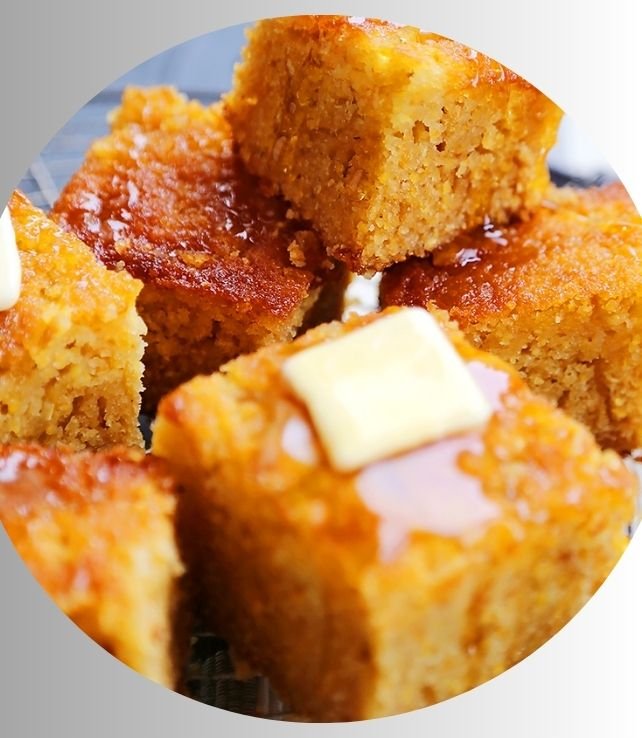
The first time I pulled a cast iron skillet of cornbread from my grandmother’s oven, the scent filled the kitchen with a warmth that felt like home. It was a simple dish, but it held a complexity of texture and history that I’ve spent years understanding as a culinary historian and dietician.
This recipe for cornbread with honey butter is the result of that lifelong study. It balances a tender, moist crumb with a crisp crust, and the honey butter adds a sweet, creamy finish that complements the corn’s natural flavor. Below, you will find the complete method for making it, followed by a detailed analysis of its ingredients, nutritional profile, and cultural significance.
How to Make Cornbread Recipe With Honey Butter
This section provides the complete recipe with precise measurements and steps. For best results, have all ingredients at room temperature before you begin.
Recipe Details
- Prep Time: 15 minutes
- Cook Time: 25 minutes
- Servings: 9
- Course: Side Dish
- Cuisine: American
- Diet: Vegetarian
Ingredients
- 1 ½ cups fine-ground yellow cornmeal
- 1 cup all-purpose flour
- ⅔ cup granulated sugar
- 1 tablespoon baking powder
- 1 teaspoon salt
- ½ teaspoon baking soda
- 1 ¼ cups whole milk, at room temperature
- 2 large eggs, at room temperature
- ½ cup unsalted butter, melted and slightly cooled
- 1 cup fresh or frozen corn kernels (optional)
For the Honey Butter
- ½ cup unsalted butter, softened
- 3 tablespoons honey
- ¼ teaspoon flaky sea salt
Instructions
- Begin by placing a 10-inch cast iron skillet in your oven. Preheat the oven to 400°F (200°C). Heating the skillet is crucial for forming a crisp crust.
- While the oven heats, combine the dry ingredients. In a large bowl, whisk together the cornmeal, all-purpose flour, sugar, baking powder, salt, and baking soda until no streaks remain.
- In a separate bowl, whisk the milk and eggs together until fully combined. Slowly stream in the ½ cup of melted butter while whisking continuously.
- Pour the wet mixture into the dry ingredients. Use a spatula to fold them together until just combined; a few small lumps are acceptable. Do not overmix. If using, gently fold in the corn kernels.
- Carefully remove the hot skillet from the oven. Add a small pat of butter and swirl it to coat the bottom and sides, or use a pastry brush.
- Immediately pour the batter into the hot skillet. It should sizzle slightly. Spread the batter into an even layer.
- Place the skillet back into the oven and bake for 20-25 minutes. The bread is done when the top is golden brown and a toothpick inserted into the center comes out clean or with a few moist crumbs.
- While the cornbread bakes, prepare the honey butter. In a small bowl, use a fork to whip the softened butter, honey, and sea salt together until smooth and creamy.
- Let the cornbread cool in the skillet for at least 10 minutes before slicing. Serve warm with the honey butter spread on top or drizzled over each piece.
Nutrition
- Calories: 385 kcal
- Protein: 6 g
- Fat: 19 g
- Carbohydrates: 50 g
- Sugar: 24 g
- Fiber: 2 g
- Sodium: 480 mg
- Cholesterol: 85 mg
Cooking Method
The primary cooking method for this dish is baking. The process begins with preheating a heavy pan, which jumpstarts the formation of a crust. The high oven temperature then causes the baking powder and soda to react, creating steam and gas bubbles that make the batter rise. The proteins in the eggs and flour set around these bubbles, giving the bread its final structure and texture.
Tools Needed
- 10-inch cast iron skillet
- Two mixing bowls
- Whisk
- Spatula
- Measuring cups and spoons
- Oven thermometer (to verify temperature accuracy)
- Toothpick or cake tester
Ingredient Analysis and Selection
Each component in this recipe plays a specific role. Understanding these roles allows you to make informed substitutions and achieve consistent results.
Cornmeal: The Foundation of Flavor and Texture
Cornmeal is ground, dried corn. Its type directly influences the bread’s character. Fine-ground yellow cornmeal, used here, provides a soft, cake-like crumb with a vibrant color. Stone-ground cornmeal retains more of the corn’s germ and hull, offering a richer flavor and coarser texture, but it can make the final product denser and requires more liquid.
White cornmeal is another common variety with a milder flavor. The choice between yellow and white is often regional, but for this recipe, yellow contributes a more pronounced corn flavor that stands up well to the honey butter.
Flour, Leaveners, and Binding Agents
All-purpose flour builds the gluten network that gives the bread structure, preventing it from being too crumbly. The combination of baking powder and baking soda provides a double leavening action. Baking powder reacts with liquid and heat, while baking soda neutralizes the natural acidity in the batter and reacts with the heat to produce additional lift.
Eggs act as a binder, emulsifying the fat and liquid while contributing to the bread’s rise and tender texture. Room-temperature ingredients incorporate more easily, creating a smoother batter that rises uniformly.
The Role of Fats and Sweeteners
Butter adds moisture, richness, and flavor. Using melted butter in the batter ensures a tender crumb, while the fat in the honey butter carries the flavor of the honey and creates a luxurious mouthfeel. Sugar not only sweetens the bread but also tenderizes it by inhibiting gluten development and promoting browning.
Honey, a humectant, helps keep the bread moist. Its distinct floral notes pair perfectly with the earthy flavor of corn. The flaky sea salt in the honey butter provides a textural contrast and enhances the overall flavor profile.
Nutritional Breakdown
From a dietary perspective, this dish is an energy-dense food. A single serving provides a significant amount of carbohydrates, which are the body’s primary fuel source. The fat content, primarily from butter, contributes to satiety and aids in the absorption of fat-soluble vitamins.
The protein comes from the eggs, milk, and flour, supporting muscle maintenance. The fiber, while modest, is provided by the cornmeal and any added whole kernels. For those monitoring intake, the values for sugar and sodium are notable. The sugar comes from both the added granulated sugar and the honey, while the sodium is a combination of the added salt and the chemical leaveners.
Dietary Adaptations
This recipe is versatile and can be modified for various dietary needs without sacrificing quality.
Gluten-Free Adaptation
Replace the all-purpose flour with a 1:1 gluten-free baking blend that includes xanthan gum. Ensure your cornmeal is certified gluten-free, as cross-contamination can occur during processing.
Vegan Adaptation
Substitute the milk with unsweetened soy or oat milk. Replace the eggs with a commercial egg replacer or a flax egg (1 tablespoon ground flaxseed mixed with 2.5 tablespoons water per egg). Use a plant-based butter alternative for both the batter and the honey butter. For the honey, use maple syrup or agave nectar.
Reduced-Sugar Version
The amount of granulated sugar can be reduced to ⅓ cup. The honey butter can be made with a single tablespoon of honey. The texture will be slightly less tender, and the crust will be paler.
Cultural and Historical Context
Cornbread’s history is deeply rooted in Native American agriculture. Long before European contact, indigenous peoples across the Americas were grinding corn into meal and cooking it into flat cakes. The introduction of wheat flour, milk, and eggs by European settlers transformed these simple cakes into the leavened bread we know today.
The preference for sweetened cornbread, as in this recipe, is more common in the Northern U.S., while Southern traditions often favor a savory bread made with little or no wheat flour and no sugar. The practice of baking it in a cast iron skillet is a direct link to hearth cooking, where the heavy pan retained heat efficiently. Honey butter is a natural pairing, as both honey and dairy were staple farm products.
Common Mistakes and Expert Tips
Avoiding a few key errors will ensure your cornbread turns out perfectly every time.
Overmixing the batter is the most common mistake. Stir the wet and dry ingredients together until they are just combined. Overmixing develops gluten, leading to a tough, dense bread with tunnels running through it.
Using a cold pan will prevent the formation of a good crust. Always preheat your skillet. Check for doneness with a toothpick, but do not rely on color alone. The center should be springy to the touch, and the toothpick should come out clean.
If your bread is browning too quickly, tent it loosely with aluminum foil for the remainder of the baking time. Allow the bread to cool for at least 10 minutes before cutting; this gives the structure time to set and makes for cleaner slices.
Serving, Pairing, and Storage
This cornbread is a versatile side dish. It pairs classically with chili, soups, and stews, where it can be used to soak up the liquid. It is also excellent with barbecue, roasted chicken, or as part of a holiday meal.
For a breakfast or brunch option, try it toasted with a pat of the honey butter. Leftovers can be stored in an airtight container at room temperature for up to two days. For longer storage, wrap it tightly and freeze for up to three months. Reheat slices in a toaster oven or a warm skillet to restore the crust.
Variations and Add-Ins
The basic recipe is a perfect canvas for customization. For a cheesy version, fold in one cup of shredded sharp cheddar cheese with the dry ingredients. To make it extra-savory, add one finely chopped jalapeño pepper or ¼ cup of diced roasted red peppers.
For a fruity twist, add ¾ cup of fresh blueberries, chopped cherries, or cranberries. Toss the fruit in a tablespoon of flour first to prevent it from sinking to the bottom during baking.
Frequently Asked Questions
What do I eat honey cornbread with?
This cornbread complements hearty, savory dishes. It is traditionally served with chili, bean soups, pulled pork, fried chicken, or greens like collards or kale. The sweet notes balance spicy and smoky flavors effectively.
Can I substitute yellow cornmeal with a different type?
Yes. White cornmeal can be used for a milder flavor. Stone-ground cornmeal will create a more rustic, gritty texture but may require an additional 2-3 tablespoons of milk. Avoid using self-rising cornmeal, as it contains salt and leavening, which will throw off the recipe’s balance.
Can I use a different pan instead of a 9×13 pan?
Absolutely. A 10-inch cast iron skillet is ideal for a thick, crisp crust. You can also use a 9-inch square baking pan. Grease the pan well and preheat it in the oven if it is metal. A glass or ceramic dish does not need preheating and will result in a softer crust.
Is it possible to reduce the amount of sugar for a less sweet cornbread?
You can reduce the granulated sugar to ⅓ cup. The bread will be less tender and have a paler color, but the corn flavor will be more prominent. This creates a cornbread more aligned with Southern traditions.
How do I know when the cornbread is done baking?
The top will be a golden brown, and the edges will pull away slightly from the sides of the pan. The most reliable test is to insert a toothpick into the center of the bread. If it comes out clean or with a few dry crumbs, the bread is ready.
I don’t like corn, can I omit it?
Yes, the cup of corn kernels is optional. Omitting them will result in a more uniform texture but will not negatively impact the structure of the bread. The primary corn flavor comes from the cornmeal.
How long can I store the cornbread, and is there a special storage method?
Store completely cooled cornbread in an airtight container or wrapped tightly in plastic at room temperature for up to two days. For longer storage, freeze it. To maintain texture, avoid refrigeration, as it accelerates staling.
