
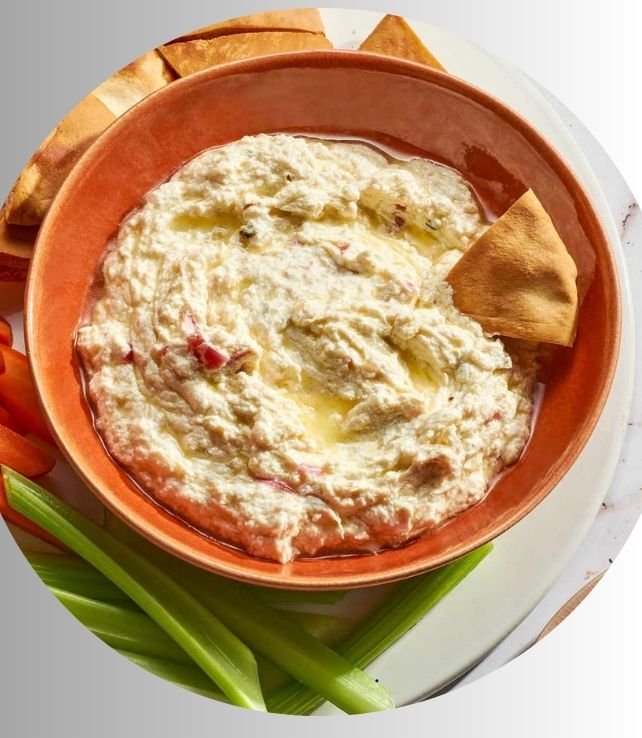
You know that feeling when a restaurant dish is so good, you find yourself trying to reverse-engineer it at home for weeks? That was me with Cava’s Crazy Feta. I’d order it every time, scooping the creamy, spicy spread onto warm pita, and wonder what magic they used to transform simple feta into something so compelling.
As a dietician and culinary enthusiast, I was determined to crack the code. This isn’t just a dip; it’s a lesson in how a few quality ingredients, treated with respect, can create a flavor far greater than the sum of its parts. After numerous tests in my own kitchen, I’m confident this method captures that signature taste.
Below, you’ll find the precise formula for making Crazy Feta, followed by a complete guide to its ingredients, nutritional profile, and the cultural context that makes it so special. This is the resource I wish I’d had.
Lower-Sodium and Lower-Fat Options
To reduce sodium, you can rinse the block of feta briefly under cold water before using it. This removes some surface salt. You can also increase the ratio of roasted peppers to cheese, stretching the flavor with more vegetables. For lower fat, use a reduced-fat feta. Be aware that the texture may be less creamy and more crumbly, so you may need to add a tablespoon of Greek yogurt or a splash of water to facilitate blending.
A Brief History of Feta and *Kopanisti*
While “Crazy Feta” is a modern creation by the Cava restaurant group, its spirit is deeply rooted in Greek meze culture. It is a direct descendant of traditional spreads like *Kopanisti*, a fiercely spicy cheese spread from the Cycladic islands.
*Kopanisti* is traditionally made by fermenting cheese (often myzithra or feta) with pepper paste over weeks or even months, developing a powerful, peppery, and almost blue-cheese-like pungency. Cava’s version is a more accessible, instantly gratifying take on this concept, using immediate roasting instead of long fermentation to marry the pepper and cheese flavors. It represents a clever adaptation of a rustic, regional tradition for a broader audience.
Expert Techniques and Common Errors to Avoid
Small details separate a good version from a great one. Here are the pitfalls I encountered during my testing and how to sidestep them.
Texture Troubles: Gritty or Too Runny
A gritty texture almost always comes from using pre-crumbled feta. Stick to a block. If your spread is too runny, the likely culprit is under-roasted peppers retaining too much water. Ensure they are properly blistered and softened. You can also drain the peeled peppers on a paper towel for a few minutes before processing.
Flavor Imbalance: Lack of Depth or Overpowering Salt
If the dip tastes flat, you may have under-roasted the vegetables. The char is flavor. Alternatively, not using enough garlic or a bland olive oil can leave it one-dimensional. If it’s too salty, the feta itself was very salty. Next time, try the rinsing technique or blend in a tablespoon of plain, unsalted Greek yogurt to dilute the saltiness without altering the texture drastically.
The Science of Emulsification
When you process the cheese with oil and lemon juice, you are creating a stable emulsion. The mechanical action of the blade breaks the fat and protein in the cheese into tiny particles, which are then surrounded by the liquid. The lemon juice, being acidic, helps to keep the proteins dispersed, preventing the mixture from separating and yielding a smooth, unified spread.
Serving, Storage, and Pairing Ideas
This spread’s versatility is one of its greatest assets. Think beyond the pita chip.
For serving, present it at room temperature. Cold mutes its flavors. A final drizzle of vibrant green olive oil and a sprinkle of oregano not only looks professional but adds a last aromatic touch.
Pair it with warm, grilled pita bread, of course. But also consider it as a condiment for grilled chicken or fish, a spread on lamb burgers, a dollop inside an omelet, or a bold topping for baked potatoes. It can transform a simple vegetable bowl into something special.
Store leftovers in an airtight container in the refrigerator for up to 5 days. The oil may solidify slightly when chilled; let it sit at room temperature for 15-20 minutes before serving and give it a quick stir. I do not recommend freezing, as the texture of the dairy can become grainy and separate upon thawing.
Frequently Asked Questions
Can I use jarred roasted red peppers instead?
You can, in a pinch. Drain and pat them dry very thoroughly to remove the excess liquid and vinegar brine they are packed in. The flavor will be slightly different—often sweeter and lacking the subtle smokiness of home-roasted—but it will save time.
How can I make this spicier or milder?
For more heat, leave the seeds and membranes in the jalapeños, or add a pinch of crushed red pepper flakes to the food processor. For a milder version, use only one jalapeño and meticulously remove all seeds and white ribs. A poblano pepper can also be used for a very mild, earthy flavor.
My food processor isn’t getting it smooth. What should I do?
Ensure you are using the “pulse” function first to break down the large chunks, then process continuously. Scrape down the sides several times. If it’s still not coming together, the mixture may be too dry. Add an additional teaspoon of olive oil or lemon juice to help the blades catch and emulsify the ingredients.
Is there a way to make this without a food processor?
You can mash it by hand with a sturdy fork, but the texture will be much chunkier, more like a coarse relish than a spread. Finely mince the roasted peppers and garlic, then mash vigorously with the feta and oil in a bowl. It will be a different, but still tasty, experience.
How long does homemade Crazy Feta last in the fridge?
When stored properly in a sealed container, it will maintain best quality for 4-5 days. The flavors often meld and improve after a day. Always check for any off odors or mold before consuming.
What’s the difference between this and traditional *Kopanisti*?
The main difference is the fermentation process. Traditional *Kopanisti* involves a lengthy aging period where cheese and peppers ferment together, creating a much stronger, sharper, and more complex flavor profile. This recipe uses roasting for immediate, sweet-smoky flavor without the wait or intense pungency.
Can I use a different type of cheese?
Feta is integral for its salty tang and crumbly-yet-creamy texture when blended. Substituting with ricotta or cottage cheese will result in a much milder, wetter spread. For a similar texture with a different flavor, you could experiment with a brine-cured goat cheese or a French feta, which is often milder and creamier.
