
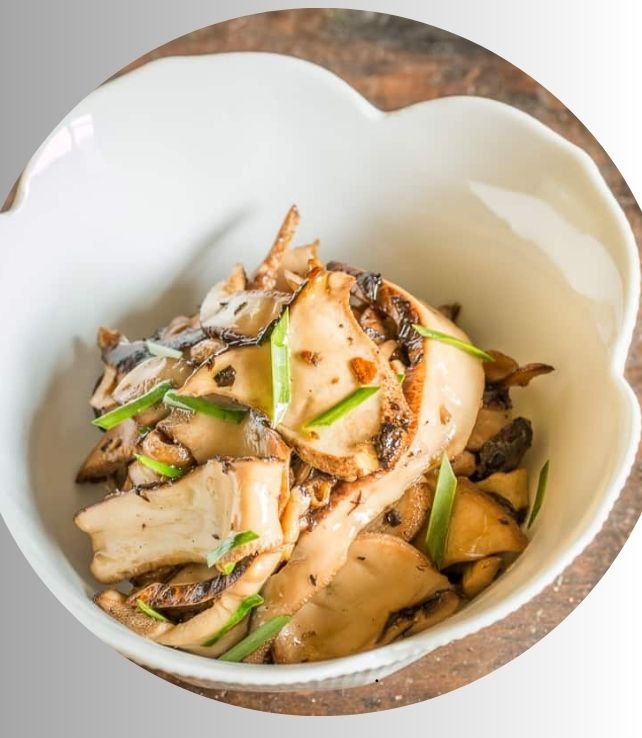
You’ve found a large, pale bracket fungus on a fallen log, its surface patterned like a horse’s hoof or a map of contour lines. You know it’s an edible mushroom called Dryad’s Saddle, but every search result warns of its toughness and potent, cucumber-meets-watermelon rind aroma. The common advice is to only use the youngest, most tender edges. I’m here to show you a different path.
After years of foraging and testing methods in my kitchen, I developed a preparation technique that transforms even moderately mature Dryad’s Saddle (Cerioporus squamosus, also known as Pheasant Back) into a remarkably savory, tender, and deeply satisfying dish. This recipe is not a quick sauté. It is a deliberate, slow-cooked method that respects the unique texture of this wild ingredient, unlocking a flavor far beyond its raw scent.
The core of this Dryad’s Saddle recipe is a two-step process: a thorough, slow sauté to drive off moisture and concentrate flavor, followed by a braise in a flavorful liquid to tenderize the flesh. The result is a meaty, umami-rich mushroom that stands as a hearty main or a robust side. Below, I’ll guide you through every step, from certain identification to the final plate, ensuring your foray into cooking this abundant mushroom is a success.
Understanding Your Ingredient: The Dryad’s Saddle Mushroom
Before you cook, you must know your subject. Cerioporus squamosus is a polypore mushroom, meaning it releases spores through tiny pores on its underside rather than gills. It is a saprophyte, decomposing dead and dying hardwood, particularly elm, but also maple and beech. Its season is primarily spring, often appearing when morel hunters are afield, but it can fruit again in the fall.
Identification and Foraging
Correct identification is non-negotiable. While Dryad’s Saddle has few dangerous look-alikes, confidence is key. Look for these attributes:
- Cap: Fan-shaped or semicircular, ranging from 3 to 12 inches or more across. The color is a creamy tan to yellowish-brown, covered in distinctive, dark brown, feathery scales that resemble a pheasant’s back.
- Pores: The underside is white to yellowish, with very small, angular pores. In young specimens, these pores are tiny and tight; in older ones, they become more pronounced.
- Stem: When present, it is short, thick, lateral (attached to the side of the cap), and blackish-brown at the base.
- Smell: A strong, fresh aroma of cucumber or watermelon rind is a hallmark, especially when young.
- Substrate: Always found on wood, never on the ground alone. It grows on logs, stumps, and standing dead trees.
If you are new to foraging, go with an experienced guide or use multiple reputable field guides. Never consume a mushroom you cannot identify with 100% certainty.
Selecting the Best Specimens for Cooking
The age and condition of the mushroom dramatically affect the cooking process. Your goal is to find specimens that will yield the best texture with the method outlined in this recipe.
- Ideal: A mushroom with a cap diameter of 4-8 inches. The pores on the underside should be very small, almost invisible to the eye. The flesh should feel slightly spongy but firm when you press the edge. The “thumbnail test” is classic: if you can easily pierce the cap’s edge with your thumbnail and it offers little resistance, it is prime.
- Acceptable with Technique: Larger specimens, up to 12 inches, with slightly larger but still intact pores. The edge may be softer than the center. This recipe is designed for these.
- Avoid: Mushrooms that are dry, brittle, or have pores that are visibly large, bruised, or stained green (a sign of insect activity). Mushrooms growing on conifers are not Cerioporus squamosus.
How to Make Dryad’s Saddle Recipe
This method is a labor of patience. It cannot be rushed. The slow evaporation of water and subsequent braising are what make the tougher fibers break down and absorb flavor. Think of it as preparing a tough cut of meat—low, slow, and with ample liquid.
Recipe Details
- Prep Time: 25 minutes
- Cook Time: 1 hour 15 minutes
- Servings: 4 as a side, 2 as a main
- Course: Main Course, Side Dish
- Cuisine: Foraging, American
- Diet: Gluten-Free, Vegetarian
Ingredients
- 1 lb Dryad’s Saddle mushroom, cleaned
- 3 tbsp high-heat oil (grapeseed, avocado, or refined coconut)
- 1 medium yellow onion, thinly sliced
- 4 cloves garlic, minced
- 1 cup vegetable or mushroom stock
- 2 tbsp dry sherry or white wine (optional)
- 2 tbsp soy sauce or tamari
- 1 tbsp fresh thyme leaves, or 1 tsp dried
- 1 tsp smoked paprika
- Salt and black pepper to taste
- 2 tbsp unsalted butter or olive oil (for finishing)
- Fresh parsley, chopped (for garnish)
Instructions
- Prepare the Mushroom: Using a dry brush or slightly damp paper towel, clean any debris from the mushroom. With a sharp knife, cut away the tough, pore-covered underside completely. You will be left with only the solid, creamy flesh. Slice the flesh into strips approximately 1/4-inch thick and 2 inches long, cutting across the grain of the fibers (which typically radiate from the point of attachment).
- Initial Sauté (Moisture Release): In a large, heavy-bottomed skillet or Dutch oven, heat 2 tablespoons of oil over medium heat. Add half of the mushroom strips in a single layer. Do not crowd the pan. Let them cook, stirring only occasionally, for 10-12 minutes. The mushrooms will release a large amount of liquid. Continue cooking until this liquid has completely evaporated and the mushrooms begin to sizzle in the oil again and take on a light golden color. Remove this batch to a bowl and repeat with the remaining mushrooms and 1 more tablespoon of oil.
- Build the Base: In the same pan, add a touch more oil if needed. Add the sliced onion and a pinch of salt. Cook over medium-low heat for 8-10 minutes until softened and translucent. Add the minced garlic and cook for 1 minute until fragrant.
- Deglaze and Braise: Return all sautéed mushrooms to the pan. Increase heat to medium-high. If using, add the sherry or wine, scraping up any browned bits from the pan bottom. Let it reduce by half. Add the soy sauce, thyme, smoked paprika, and stock. The liquid should come about halfway up the sides of the mushrooms.
- Slow Cook: Bring to a simmer, then reduce the heat to low. Cover the pan with a lid slightly ajar. Allow the mushrooms to braise gently for 35-45 minutes. Check occasionally, adding a small splash of water or stock if the pan becomes dry before the mushrooms are tender.
- Finish and Serve: The mushrooms are done when they are tender throughout but still retain a pleasant, meaty bite—similar to a well-cooked portobello stem. Uncover the pan, increase the heat to medium, and cook for 2-3 minutes to reduce any remaining liquid to a glossy glaze. Stir in the butter or olive oil to enrich the sauce. Adjust seasoning with salt and pepper. Garnish with fresh parsley and serve immediately.
Nutrition
- Calories: 180 kcal
- Protein: 4 g
- Fat: 14 g
- Carbohydrates: 10 g
- Sugar: 4 g
- Fiber: 3 g
- Sodium: 650 mg
- Cholesterol: 15 mg
Note: Nutritional values are estimates based on specific ingredients used and can vary. The high fiber content is a notable benefit of this recipe.
Cooking Method
The primary cooking methods employed are sautéing and braising. The initial high-heat sauté is crucial for the Maillard reaction, which develops complex, savory flavors in the mushrooms by browning their proteins and sugars. The subsequent low-and-slow braise uses moist heat to hydrolyze collagen and other tough connective tissues in the mushroom’s cell walls, transforming its texture from potentially chewy to succulently tender.
Tools Needed
- A sharp chef’s knife or paring knife
- A large, heavy-bottomed skillet or Dutch oven with a lid
- Wooden spoon or spatula
- Cutting board
- Brush or damp paper towels for cleaning
Nutritional and Dietary Analysis
From my perspective as a dietician, wild mushrooms like Dryad’s Saddle are a functional food. They are low in calories and fat but dense in micronutrients and unique bioactive compounds.
Macronutrient and Micronutrient Profile
The nutritional data shows a profile high in dietary fiber, which supports digestive health and promotes satiety. The fat content comes primarily from the cooking oils and finishing butter, which can be adjusted. The protein, while not high in grams, is a complete protein, containing all essential amino acids, which is uncommon in the plant kingdom.
Dryad’s Saddle contains B-vitamins like riboflavin and niacin, which are essential for energy metabolism. It also provides minerals such as potassium, selenium, and copper. Furthermore, like many polypores, it contains polysaccharides like beta-glucans, which are studied for their potential immune-modulating properties.
Dietary Adaptations and Substitutions
This recipe is inherently gluten-free and vegetarian. To adapt it for other dietary needs, consider these swaps:
- Vegan: Omit the butter for finishing. Use a plant-based oil and ensure your vegetable stock is vegan. The soy sauce provides ample umami.
- Low-Sodium: Use low-sodium soy sauce or tamari and a low-sodium or homemade vegetable stock. The mushrooms themselves are very low in sodium.
- Nut-Free: The recipe as written is nut-free. Always check labels on pre-made stocks.
- Herb Variations: Thyme can be replaced with rosemary, sage, or marjoram. For an earthy note, add a pinch of dried porcini powder to the braising liquid.
The Science of Tenderizing Wild Mushrooms
Why is Dryad’s Saddle often tough? The structure. Its flesh is composed of dense, stringy hyphal fibers that run in a radial pattern. These fibers are reinforced with chitin, the same polysaccharide that makes up insect exoskeletons and crustacean shells. Chitin is resistant to quick cooking.
This recipe addresses chitin in two ways. First, the prolonged dry-heat phase helps break down some of the structure. Second, and more importantly, the moist heat of braising promotes hydrolysis. The water and steam gradually break the bonds within the chitin and the matrix holding the cells together. The addition of an acidic or alkaline component (the soy sauce) can further assist in this breakdown. The result is a texture that is yielding without being mushy.
Cultural and Historical Context
Dryad’s Saddle has a long, if understated, history in foraging traditions across Europe and North America. The name “Dryad’s Saddle” comes from Greek mythology; a dryad is a tree nymph, suggesting the mushroom is a seat for such a spirit. The alternate name, “Pheasant Back,” is a direct reference to its patterned scales.
Historically, it was often considered a “famine food” or a food of last resort due to its reputation for toughness. Older field guides frequently dismissed it. However, a resurgence in modern foraging and a deeper understanding of low-and-slow cooking techniques have rehabilitated its status. It is now valued by foragers as a reliable, abundant, and flavorful spring mushroom that teaches the important lesson that technique is as important as the ingredient itself.
Common Mistakes and How to Avoid Them
Through trial and error, I’ve identified the key pitfalls that can lead to a less-than-ideal result.
Skipping the Pore Removal
The pore layer on the underside is always tough, spongy, and bitter when mature. Even on young specimens, removing it ensures a better texture. Do not try to incorporate it into the dish.
Rushing the Moisture Release
Adding mushrooms to the pan and stirring them constantly steams them. You must allow them to sit in a single layer so the released water can evaporate efficiently. This step is the foundation for browning and flavor concentration.
Underseasoning the Braising Liquid
The mushroom itself is mild. The braising liquid is its source of flavor. Do not be shy with the aromatics, herbs, and umami-rich liquids like stock and soy sauce. This is what the mushroom will absorb.
Overcooking or Undercooking the Braise
Undercooked, the mushroom will be rubbery. Overcooked, it can become stringy and fall apart. Start checking for tenderness at the 35-minute mark. The perfect texture is pliable and easy to bite through, with no persistent crunch or squeak.
Serving Suggestions, Pairings, and Storage
This prepared Dryad’s Saddle is versatile. Its rich, savory character allows it to stand in for meat in many applications.
Serving Ideas
- As a main course over creamy polenta, mashed potatoes, or a hearty grain like farro or barley.
- As a side dish to roasted chicken, seared steak, or grilled fish.
- Tossed with pasta and a touch of the braising liquid, grated Parmesan, and fresh herbs.
- As a filling for omelets, quesadillas, or savory tarts.
Storage and Reheating
Allow the cooked mushrooms to cool completely. Store in an airtight container in the refrigerator for up to 4 days. The flavors often improve on the second day. Reheat gently in a skillet over low heat with a splash of water or stock to prevent drying out. I do not recommend freezing, as the texture can become mushy upon thawing.
Frequently Asked Questions
Can you eat the center of a large Dryad’s Saddle?
The very center, where the mushroom attaches to the tree, is almost always extremely tough and woody, even in young specimens. I always cut this part out and discard it. The flesh radiating out from this core is what you use, with the outermost edge being the most tender.
Does the cucumber smell go away when cooked?
Yes, completely. The aromatic compounds responsible for that fresh, melon-rind scent are volatile and are driven off during the initial sauté and braising process. They are replaced by the deep, savory, umami flavors developed from browning and the braising liquid.
Is Dryad’s Saddle related to morel mushrooms?
No, they are not closely related. Morels (Morchella spp.) are ascomycete mushrooms with a honeycombed cap. Dryad’s Saddle is a polypore, a basidiomycete. They simply share a similar spring fruiting season, which is why foragers often find them on the same outings.
Can I use this method for other tough wild mushrooms?
Absolutely. This slow sauté and braise technique is excellent for other firm, meaty mushrooms like Hen of the Woods (Maitake), Berkeley’s Polypore, and the tender parts of Chicken of the Woods. It is a foundational method for transforming dense fungal flesh.
What if my braising liquid is gone but the mushrooms aren’t tender?
This means your heat was too high, or your pan was not covered properly. Simply add more hot water or stock, about 1/4 cup at a time, reduce the heat to low, cover, and continue cooking until tender. The goal is a gentle simmer, not a rapid boil.
Are there any poisonous look-alikes to Dryad’s Saddle?
There are no seriously toxic polypores that closely mimic the distinctive scaly cap and watermelon scent of a fresh, young Cerioporus squamosus. However, always use multiple identification features (cap, pores, stem, smell, substrate) and consult expert sources. When in doubt, do not eat it.
