
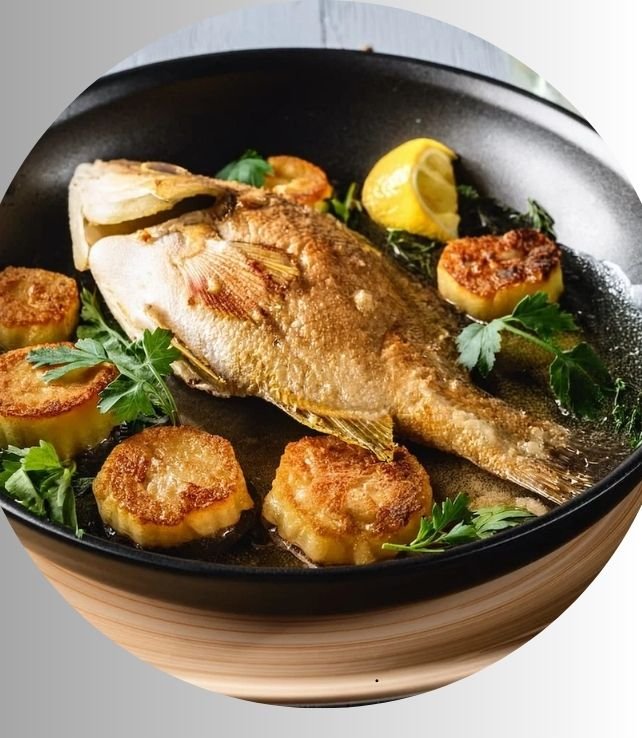
You have a beautiful, firm fillet of triggerfish in front of you, and a question hangs in the air: what is the best way to cook this unique fish? Many recipes treat it like any other white fish, but that misses its distinct character. I learned this years ago on a pier in the Florida Keys, watching an angler clean his catch with practiced hands, explaining that the right method makes all the difference.
This recipe is my answer, developed from that lesson and countless tests in my kitchen. It is a simple, pan-seared preparation that honors the fish’s natural texture and subtle sweetness, finished with a bright, herbaceous sauce. It is a method designed to showcase the ingredient, not hide it. Below, you will find the complete recipe, followed by a detailed analysis of everything from its nutritional profile to its culinary history, ensuring you can cook triggerfish with confidence.
Understanding Your Main Ingredient: The Triggerfish
Before you heat the pan, understanding the fish itself is the most important step. Triggerfish are a family of reef-dwelling fish found in tropical and subtropical oceans worldwide. They are known for their oval, laterally compressed bodies and a unique dorsal fin locking mechanism—the “trigger”—that gives them their name.
From a culinary perspective, the key attribute is the texture. Triggerfish meat is exceptionally firm, dense, and lean. It holds together well, more akin to monkfish or lobster tail than to flaky cod or tilapia. This structural integrity makes it ideal for searing, grilling, or even kebabs, as it won’t fall apart easily. The flavor is mild, clean, and slightly sweet, with a hint of nuttiness that can carry bolder seasonings without being overwhelmed.
Common Species for the Table
Not all triggerfish are commonly eaten, but a few species are prized by anglers and chefs. The Grey Triggerfish, abundant in the Atlantic and Gulf of Mexico, is a popular target. The Queen Triggerfish, with its brilliant blue and gold markings, is also considered excellent eating, though often protected in certain areas. In the Indo-Pacific, the Titan and Clown Triggerfish are occasionally found in markets, though they are more common in aquariums.
When sourcing, freshness is paramount. Look for fillets that are translucent, glossy, and have a clean, ocean-like scent. The flesh should spring back when pressed gently. Due to its firmness, it can sometimes be sold as “filet mignon of the sea,” a marketing term that accurately hints at its steak-like quality.
How to Make Triggerfish Recipe
This pan-seared method maximizes the fish’s natural qualities, creating a crisp exterior and a moist, tender interior. The accompanying sauce adds a necessary element of fat and acidity that complements the lean fish perfectly.
Recipe Details
- Prep Time: 15 minutes
- Cook Time: 10 minutes
- Servings: 2
- Course: Main Course
- Cuisine: American, Coastal
- Diet: Gluten-Free, Low-Carb
Ingredients
- 2 triggerfish fillets, skin on or off (about 6-8 ounces each)
- 1 teaspoon kosher salt
- 1/2 teaspoon freshly ground black pepper
- 2 tablespoons all-purpose flour (or gluten-free 1:1 substitute)
- 2 tablespoons high-heat oil (grapeseed, avocado, or refined coconut)
- 2 tablespoons unsalted butter
- 2 cloves garlic, minced
- 1/4 cup dry white wine (such as Sauvignon Blanc)
- 2 tablespoons fresh lemon juice
- 2 tablespoons chopped fresh parsley
- 1 tablespoon chopped fresh chives
Instructions
- Pat the triggerfish fillets completely dry with paper towels. This is critical for achieving a good sear. Season both sides evenly with the salt and pepper.
- Lightly dredge each fillet in the flour, shaking off any excess. The flour will promote browning and help thicken the sauce slightly.
- Heat the oil in a large, heavy-bottomed skillet (cast iron or stainless steel work well) over medium-high heat until it shimmers and just begins to smoke.
- Carefully place the fillets in the hot pan. Cook undisturbed for 3-4 minutes, until a deep golden-brown crust has formed.
- Using a thin, flexible spatula, flip the fillets. Add the butter to the pan. Cook for another 3-4 minutes, basting the fillets constantly with the melted butter by tilting the pan and spooning it over the top. The fish is done when it feels firm to the touch and flakes easily with a fork at its thickest part.
- Transfer the cooked fish to a warm plate. Reduce the heat to medium.
- Add the minced garlic to the pan and sauté for 30 seconds until fragrant, being careful not to burn it.
- Pour in the white wine and lemon juice to deglaze the pan, using a wooden spoon to scrape up all the browned bits (the fond) from the bottom. Let the liquid simmer and reduce by half, about 2-3 minutes.
- Remove the pan from the heat. Stir in the fresh parsley and chives. Taste the sauce and adjust seasoning if needed.
- Pour the warm sauce over the plated triggerfish fillets and serve immediately.
Nutrition
- Calories: 420 kcal
- Protein: 38 g
- Fat: 24 g
- Carbohydrates: 8 g
- Sugar: 1 g
- Fiber: 0.5 g
- Sodium: 680 mg
- Cholesterol: 125 mg
Cooking Method
The primary method here is pan-searing, followed by basting and finishing with a pan sauce. Pan-searing uses direct, high heat to create the Maillard reaction—a complex chemical process that produces hundreds of new flavor compounds, resulting in the savory, browned crust. Basting with butter accomplishes two things: it cooks the top of the fillet evenly without flipping again, and it infuses the fish with the rich, nutty flavor of browned butter.
Tools Needed
- 12-inch heavy-bottomed skillet (cast iron or stainless steel)
- Thin, flexible metal spatula or fish turner
- Tongs (for handling, if preferred)
- Paper towels
- Cutting board and chef’s knife
- Measuring spoons
Nutritional Breakdown and Health Benefits
As a dietitian, I appreciate this recipe not just for its flavor but for its nutritional composition. Triggerfish is a lean source of high-quality protein, essential for muscle repair, immune function, and satiety. A single serving of this recipe provides nearly 40 grams of protein.
The fat content is primarily from the added oil and butter, which are used strategically. These fats are necessary to carry fat-soluble vitamins and to help you absorb nutrients from the fish and herbs. Using a high-heat oil ensures stability during searing, preventing the formation of harmful compounds.
This dish is inherently low in carbohydrates, making it suitable for those managing carbohydrate intake. The sodium level is controlled by using kosher salt, which you can adjust to your preference. The cholesterol present is dietary cholesterol, which has a minimal impact on blood cholesterol levels for most people compared to saturated and trans fats.
Micronutrients and Sustainability
Triggerfish is a good source of selenium, a powerful antioxidant that supports thyroid function and DNA synthesis. It also provides B vitamins, particularly B12 and niacin, which are crucial for energy metabolism and nervous system health.
From a sustainability perspective, triggerfish populations are generally considered resilient due to their rapid growth rate. However, it is always best to check regional guidelines. The Grey Triggerfish in the Gulf of Mexico, for example, has specific regulations. I recommend consulting resources like the Monterey Bay Aquarium Seafood Watch for the most current recommendations based on harvest location and method.
Dietary Adaptations and Variations
The base recipe is already gluten-free and low-carb. Here are adaptations for other dietary needs.
For a Dairy-Free Version
Replace the butter with an additional tablespoon of high-heat oil or a dairy-free butter alternative. For the basting step, use only oil. The sauce will be less rich but still flavorful from the wine, lemon, and herbs.
For a Whole30 or Paleo Approach
Omit the flour dredging entirely. The crust will be slightly less uniform but still achievable with a very dry fillet and a hot pan. Ensure the white wine is compliant (some allow it, others do not) or substitute with additional lemon juice and a splash of fish or chicken broth.
Alternative Cooking Methods
Given its firm texture, triggerfish is excellent on the grill. Brush fillets with oil, season, and grill over medium-high heat for 4-5 minutes per side. You can also bake it. Place seasoned fillets on a parchment-lined sheet, dot with butter or oil, and bake at 400°F (200°C) for 10-12 minutes.
For a Caribbean-inspired variation, create a marinade with lime juice, olive oil, minced Scotch bonnet pepper, thyme, and allspice. Marinate for 30 minutes, then grill or pan-sear.
Cultural and Historical Context
Triggerfish has a long history as a food source in coastal communities around the world, though it has often been a staple of subsistence fishing rather than haute cuisine. In the Southern United States, particularly along the Gulf Coast, it is a celebrated catch among recreational anglers. “Triggerfish on the half-shell” is a popular preparation where the fish is grilled skin-side down, often with a butter and seasoning topping, its tough skin acting as a natural cooking vessel.
In Japan, certain triggerfish species, known as “kawahagi,” are eaten. They are sometimes served as sashimi or “usuzukuri” (thin slices), but their preparation requires expert knowledge due to potential ciguatera risk in larger, predatory reef fish. In the Mediterranean, the Grey Triggerfish is becoming more common in markets as species distribution shifts, leading to new local recipes.
Common Mistakes and Expert Tips
Avoiding these pitfalls will guarantee a better result.
Not Drying the Fillets
Moisture is the enemy of browning. If the fish is wet, it will steam instead of sear. Take the time to pat it thoroughly with paper towels, even if it looks dry.
Moving the Fish Too Soon
Placing the fillet in the pan and immediately trying to move it will cause it to tear. Let it cook undisturbed for the full 3-4 minutes to allow a crust to form. It will release from the pan naturally when ready.
Using a Pan That Isn’t Hot Enough
If the oil isn’t shimmering and hot, the fish will absorb it and become greasy. Wait for the oil to be properly heated. A drop of water should skitter and evaporate instantly.
Overcooking
Due to its leanness, triggerfish can become dry if overcooked. It continues to cook from residual heat after being removed from the pan. The moment it flakes easily and feels firm but not hard, it is done. A digital instant-read thermometer inserted into the thickest part should read 130-135°F (54-57°C) for medium.
Serving, Pairing, and Storage Guidance
This pan-seared fish is best served immediately, straight from the skillet to the plate. The sauce is a key component, so spoon it generously over the top.
Ideal Side Dishes
The mild, rich flavor of the fish pairs well with simple, bright, and texturally contrasting sides. Consider roasted asparagus or broccolini, a crisp arugula salad with a lemon vinaigrette, or sautéed spinach with garlic. For a heartier meal, serve with creamy polenta, mashed cauliflower, or roasted new potatoes.
Wine Pairing
The lemon and white wine in the sauce naturally lead to a white wine pairing. A Sauvignon Blanc, with its crisp acidity and citrus notes, will mirror the sauce. A dry Riesling or an unoaked Chardonnay would also complement the dish without overpowering it.
Storage and Reheating
Leftovers can be stored in an airtight container in the refrigerator for up to 2 days. Reheat gently in a covered skillet over low heat with a splash of water or broth to prevent drying out. Microwaving is not recommended, as it can make the texture rubbery.
The Science of Searing and Basting
Understanding the “why” behind the steps leads to better cooking. Searing works through the Maillard reaction, which requires high heat (above 300°F/150°C), low moisture, and the presence of amino acids and reducing sugars. The flour coating aids this by drying the surface further and providing additional sugars for browning.
Basting with butter serves a scientific purpose beyond flavor. The constant flow of hot fat over the top of the fillet transfers heat more efficiently and evenly than air alone, cooking the fish from both sides simultaneously. This allows the interior to reach the desired doneness without over-developing the crust on the bottom.
Frequently Asked Questions
What does triggerfish taste like?
Triggerfish has a mild, sweet, and clean flavor, often described as slightly nutty. Its most notable characteristic is its firm, almost steak-like texture, which is denser than most common white fish.
Can you eat the skin of triggerfish?
The skin of triggerfish is very tough and leathery. It is not typically eaten. Most recipes call for skinless fillets. If your fillet has skin on, it is best to remove it with a sharp knife before cooking, or cook it skin-side down and discard the skin when eating.
Is triggerfish safe to eat?
Yes, it is safe and considered delicious. However, like many reef fish, larger predatory specimens have a potential risk of ciguatera poisoning, a foodborne illness caused by toxins that accumulate in the food chain. To minimize risk, source fish from reputable suppliers and be cautious with very large fish caught in known ciguatera-prone areas.
What can I substitute for triggerfish?
The best substitutes are other firm, lean white fish. Monkfish is the closest match in texture. Mahi-mahi, swordfish (steaks), or halibut would also work well using the same cooking method and times.
Why is my triggerfish tough?
If your cooked fish is tough, it is almost certainly overcooked. Lean fish like triggerfish have very little fat to keep them moist, so they transition from perfectly done to dry and tough quickly. Use a thermometer and aim for 130-135°F (54-57°C) at the thickest part for the best texture.
Can I bake this recipe instead of pan-searing?
Yes. Preheat your oven to 400°F (200°C). Follow steps 1 and 2 for seasoning and dredging. Heat the oil in an oven-safe skillet on the stovetop, sear the fillets for 2 minutes per side, then transfer the entire skillet to the oven. Bake for 6-8 minutes, until cooked through. Proceed with the sauce steps on the stovetop using the same pan.
Is triggerfish high in mercury?
Triggerfish is not classified as a high-mercury fish. It is generally considered to have low to moderate mercury levels. The U.S. FDA guidelines place it in the “Best Choices” category, meaning it is safe to eat 2-3 servings per week.
