
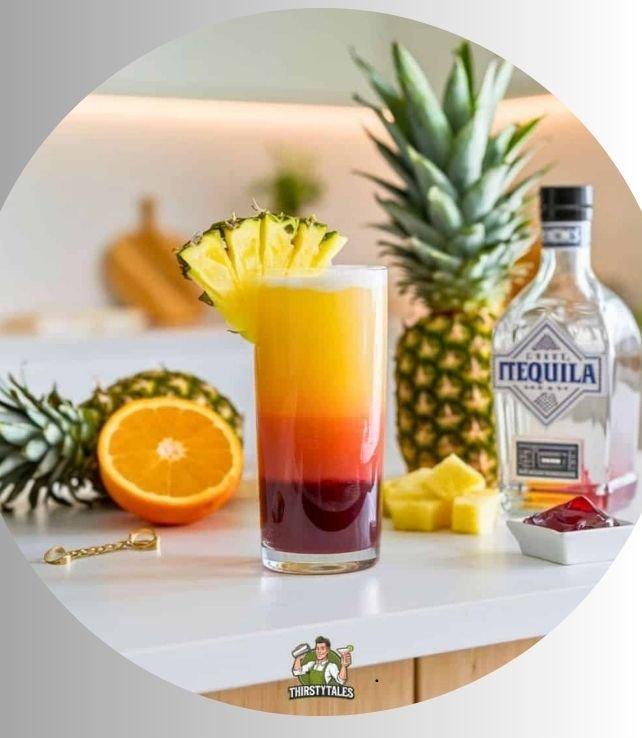
Finding a cocktail that balances vibrant flavor with a touch of visual artistry can be a challenge. Many are either overly sweet or rely on artificial mixers that mask the quality of the spirits. The classic Tequila Sunrise, with its iconic gradient of orange juice and grenadine, offers a beautiful template, but I often found myself wanting a more complex fruit profile.
This version, which I developed after a particularly memorable summer evening, uses fresh strawberries and pineapple to create a layered drink that is both stunning and satisfying. It’s a recipe I return to when I want to serve something that feels special without requiring bar-level skills. Below, you’ll find the complete method, followed by a detailed analysis of every component and technique to ensure your success.
How to Make Strawberry Pineapple Tequila Sunrise Recipe
This method builds the drink in stages to achieve the signature sunrise effect. The key is in the preparation of the strawberry puree, which acts as our natural, flavorful substitute for traditional grenadine.
Recipe Details
- Prep Time: 15 minutes
- Cook Time: 0 minutes
- Servings: 2 cocktails
- Course: Beverage
- Cuisine: Mexican-American Fusion
- Diet: Gluten-Free, Vegetarian
Ingredients
- 6-8 large fresh strawberries, hulled
- 1 cup fresh pineapple chunks
- 4 oz (120 ml) blanco tequila
- 2 oz (60 ml) fresh orange juice
- 1 oz (30 ml) fresh lime juice
- 1/2 oz (15 ml) agave syrup (optional, adjust to taste)
- Ice cubes
- Sparkling water or club soda, to top (optional)
- Orange slices and whole strawberries, for garnish
Instructions
- Prepare the strawberry puree: In a blender or food processor, blend the hulled strawberries until completely smooth. For a silkier texture, you can strain the puree through a fine-mesh sieve to remove seeds, though this is optional. Set aside.
- Prepare the pineapple base: In a cocktail shaker, muddle the fresh pineapple chunks until they release their juice. You want a pulpy, juicy consistency.
- Mix the cocktail: To the shaker with the muddled pineapple, add the blanco tequila, fresh orange juice, fresh lime juice, and agave syrup (if using). Fill the shaker with ice.
- Shake vigorously: Secure the lid and shake for 12-15 seconds, until the outside of the shaker is very cold.
- Strain into glasses: Fill two highball glasses with fresh ice. Strain the shaken cocktail mixture evenly over the ice in each glass.
- Create the sunrise layer: Slowly pour about 1-1.5 tablespoons of the fresh strawberry puree into each glass. It will sink and then slowly rise through the drink, creating the gradient effect. Do not stir.
- Finish and garnish: If desired, top each glass with a small splash of sparkling water for effervescence. Garnish with an orange slice and a whole strawberry on the rim. Serve immediately.
Nutrition
- Calories: 210 kcal
- Protein: 0.8 g
- Fat: 0.2 g
- Carbohydrates: 18 g
- Sugar: 14 g
- Fiber: 2 g
- Sodium: 5 mg
- Cholesterol: 0 mg
Note: Nutritional values are estimates per serving, calculated without optional sparkling water. Using agave syrup will increase sugar and calorie content.
Cooking Method
This is a no-cook, cold-assembly beverage. The primary techniques involved are blending (for the strawberry puree), muddling (to extract pineapple juice), and shaking (to chill and dilute the cocktail base). The final assembly relies on the differing densities of the liquids to create the visual effect.
Tools Needed
- Blender or food processor
- Cocktail shaker (or a large jar with a tight-fitting lid)
- Muddler or wooden spoon
- Fine-mesh sieve (optional, for straining puree)
- Jigger or measuring spoons
- Sharp knife and cutting board
- Two highball glasses
Ingredient Analysis: Building Flavor with Purpose
Each component in this drink serves a specific functional and sensory role. Understanding these roles allows you to make informed substitutions and troubleshoot any issues with your final result.
The Spirit: Choosing Your Tequila
Blanco (silver) tequila is the ideal choice for this recipe. It is typically unaged or aged for less than two months, preserving the bright, agave-forward flavor of the blue Weber agave plant. This clean, sometimes peppery profile cuts through the sweetness of the fruit without adding the oak-derived vanilla or caramel notes of reposado or añejo tequilas, which would compete with the fresh fruit.
Look for a bottle labeled “100% agave.” Mixtos, which contain only 51% agave sugar, are often blended with other sugars and can impart a harsher, less refined taste that becomes noticeable in a simple cocktail.
The Fruit Foundation: Strawberries and Pineapple
Fresh fruit is non-negotiable for the depth of flavor we’re aiming for. Frozen fruit can be used in a pinch, but it often contains more water and less concentrated taste.
Strawberries provide pectin and body to the puree, helping it create a distinct layer. Their natural acidity balances their sweetness. Pineapple contributes bromelain, a proteolytic enzyme that can tenderize meat and, in this context, adds a subtle, almost creamy mouthfeel to the drink when muddled. The citric acid from the orange and lime juice not only brightens the flavor but also interacts with the other sugars to create a more rounded taste profile than a single source of sweetness could achieve.
The Sweetener: Agave Syrup
Agave syrup, or nectar, is included as an optional ingredient for a reason. Its primary function is to balance acidity, not to make the drink cloying. The sweetness of your strawberries and pineapple can vary dramatically based on season and ripeness.
Taste your mixture after shaking, before straining. If the tartness from the lime and pineapple is too sharp, agave syrup integrates seamlessly as it originates from the same plant as the tequila, creating a harmonious flavor bridge. Simple syrup or honey can be used, but they will impart a slightly different character.
Nutritional Breakdown and Dietary Considerations
As a dietitian, I view this as a celebratory beverage to be enjoyed mindfully. Its nutritional profile is primarily defined by the natural sugars from the fruit and the alcohol content.
The fresh fruit provides vitamin C, manganese from the pineapple, and a small amount of dietary fiber, especially if the strawberry puree is unstrained. The alcohol itself provides 7 calories per gram, which is why the tequila constitutes a significant portion of the total calorie count. There is no fat or cholesterol, and sodium is minimal.
Dietary Adaptations
This recipe is naturally gluten-free and vegetarian. For other dietary needs, consider these adjustments.
Vegan Version
The standard recipe is already vegan, as it contains no animal products. Ensure your agave syrup is certified vegan, as some processing methods may use bone char filters, though this is rare.
Low-Sugar or Diabetic-Friendly Adaptation
Omit the optional agave syrup entirely. Select very ripe, in-season berries and pineapple for maximum natural sweetness. You can also reduce the orange juice to 1 oz (30 ml) per serving and increase the lime juice slightly for brightness without as much sugar. The final sugar content will be lower, but note that alcohol can affect blood sugar levels.
Alcohol-Free (Mocktail) Version
Replace the blanco tequila with 2 oz (60 ml) of a non-alcoholic spirit designed for cocktails or with a combination of 2 oz extra pineapple juice and 1 oz of strong brewed, chilled hibiscus tea. The tea adds a tart, complex note that mimics some of the bite of alcohol. Proceed with the rest of the recipe as written.
The Cultural and Historical Context
The Tequila Sunrise, as we commonly know it, was popularized in the 1970s, though its origins are debated. The original version from the 1930s or 40s in Arizona likely used tequila, creme de cassis, lime, and soda. The 70s iteration, created at the Trident in Sausalito, California, established the now-iconic combination of tequila, orange juice, and grenadine.
This strawberry-pineapple variation is a modern evolution, part of a broader cocktail movement emphasizing fresh, seasonal ingredients over pre-made, artificially colored syrups. It reflects a contemporary preference for less sweetness and more discernible fruit character, while paying homage to the dramatic visual presentation that made the original a classic. It’s a fusion of Mexican spirit, American cocktail culture, and a global appreciation for fresh produce.
Common Mistakes and Expert Tips for Perfection
After making this drink countless times, I’ve identified a few key pitfalls that can affect the outcome.
Mistake 1: Using Pre-Made or Frozen Fruit Puree
Store-bought strawberry puree or frozen pineapple concentrate often contains added sugars, stabilizers, and preservatives. These alter the density and sweetness, making it difficult to control the final flavor and often preventing the clean layered effect. The fresh puree has the right viscosity to sink and rise properly.
Mistake 2: Shaking or Stirring After Assembly
The entire visual appeal of the “sunrise” is the gradient. Once you add the strawberry puree, resist the urge to mix it in. The drink will naturally blend as you sip it, offering an evolving flavor experience from top to bottom.
Mistake 3: Incorrect Ice Usage
Always use fresh, cold ice in the glass when straining the cocktail. If you strain the mixture into an empty glass and then add ice, the sudden thermal shock can create a cloudy appearance and uneven dilution. The ice in the glass also provides a physical barrier that helps slow the strawberry puree’s descent, contributing to the layered look.
Pro Tip: The Muddling Technique
When muddling the pineapple, apply firm pressure in a twisting motion. The goal is to break down the fibrous structure to release juice, not to pulverize it into a paste. A few chunks remaining are fine and add texture.
Pro Tip: Testing Puree Density
If your strawberry puree is too thin and mixes in immediately, it likely has too much water content. Next time, use riper strawberries or add a few raspberries (which are high in pectin) to the blend to thicken it slightly without adding other flavors.
Serving, Pairing, and Storage Guidance
This drink is best enjoyed immediately after preparation. The ice will dilute it over time, and the vibrant, separate layers will eventually merge.
Presentation and Glassware
A tall, clear highball glass is traditional and ideal, as it showcases the gradient. A Collins glass works equally well. Ensure glasses are clean and free of any residue, as oils or soap can disrupt the visual effect. The garnish is functional; the citrus aroma from the orange slice enhances the sensory experience with each sip.
Food Pairings
The sweet-tart profile of this cocktail pairs beautifully with spicy, salty, or rich foods. Consider serving it alongside:
- Mexican street corn (elote)
- Chicken or shrimp tacos with a spicy salsa
- Queso fundido with chorizo
- Simple salted nuts or plantain chips
The acidity and fruitiness act as a palate cleanser, cutting through fat and heat.
Storage and Make-Ahead Options
You cannot store the fully assembled drink. However, you can prepare components ahead of time. The strawberry puree can be made and stored in an airtight container in the refrigerator for up to 2 days. The pineapple can be muddled and combined with the tequila and citrus juices in a sealed pitcher or jar and refrigerated for several hours. Shake with ice and assemble with the puree when ready to serve.
The Science Behind the Sunrise Effect
The layered appearance is a direct application of fluid density. The main cocktail mixture, containing water, alcohol, and dissolved sugars from the juice, has a certain density. The strawberry puree is denser due to its higher concentration of dissolved solids (sugars, pectin, and fiber from the fruit).
When poured slowly into the glass, the denser puree sinks through the less dense cocktail base. As it sinks, it begins to diffuse and mix slightly with the base, creating the gradient of color from orange at the top to red at the bottom. Gravity and diffusion work together to create the visual spectacle. If the densities were too similar, they would mix immediately; if the puree were less dense, it would float on top.
Frequently Asked Questions
Can I use frozen strawberries and pineapple?
You can, but thaw and drain them thoroughly first. Frozen fruit releases a significant amount of water as it thaws, which will dilute your puree and cocktail base, resulting in a weaker flavor and a less defined layered effect.
What can I use instead of agave syrup?
Simple syrup is the most direct substitute. Honey syrup (honey dissolved in an equal part of warm water) will work but will impart a distinct floral flavor. You could also omit sweetener entirely and rely on the natural fruit sugars.
Why is my strawberry puree not sinking to the bottom?
This indicates your puree is not dense enough. Ensure you are using ripe, flavorful strawberries and blending them without adding any extra water or juice. For a guaranteed result, you can add a tiny amount of granulated sugar to the blending strawberries, which will dissolve and increase the density of the puree.
Is there a non-alcoholic tequila that works well?
Several distilled non-alcoholic spirits are designed to mimic the flavor profile of tequila. Brands like Ritual Zero Proof or Free Spirits offer agave-based alternatives. They provide the botanical and peppery notes without the alcohol, making them an excellent choice for the mocktail version.
How can I make a large batch for a party?
Multiply the ingredient quantities by your desired number of servings, excluding the ice and strawberry puree. Mix the tequila, muddled pineapple, and juices in a large pitcher and chill. Keep the strawberry puree separate. When serving, fill individual glasses with ice, pour the cocktail base about 3/4 full, then slowly add the puree to each glass individually to maintain the sunrise effect.
What type of orange juice is best?
Freshly squeezed orange juice is superior. It has a brighter acidity and more nuanced flavor than pasteurized carton juice, which can taste flat or cooked. If you must use store-bought, seek out a high-quality, not-from-concentrate variety with no added sugar.
Can I turn this into a frozen blended drink?
Yes, though you will lose the layered presentation. Combine all ingredients—including the strawberry puree—in a blender with 1 to 1.5 cups of ice. Blend until smooth. The result will be a uniform pink, slushy cocktail with all the combined flavors in each sip.
How does the acidity in the lime juice affect the drink?
Acidity is a crucial balancing agent in cocktail chemistry. The lime juice’s citric acid provides a sharp, clean taste that counteracts the sweetness of the fruit and any added agave. It lifts the overall flavor profile, preventing it from tasting flat or overly sweet, and enhances the perception of other flavors.
