
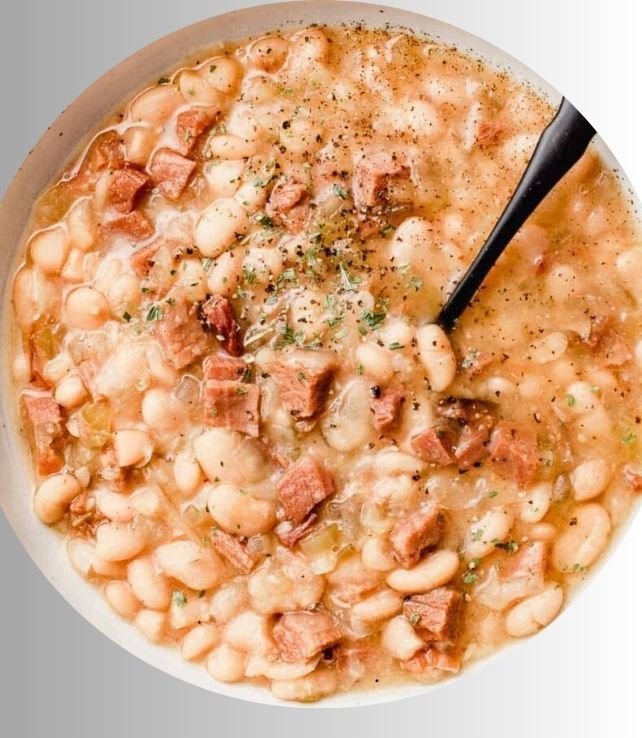
You know the feeling of a meal that settles you, one that feels like a quiet conversation at the table? For me, that’s a pot of simmering white beans. It’s a dish that asks for patience and rewards you with profound simplicity.
This recipe is for those beans. It’s a method I learned from watching family, adjusted through my work in nutrition, and refined by understanding the history behind the pot. It’s more than a list of ingredients; it’s a process for building flavor from the ground up.
Below, you’ll find the complete guide to making this staple, followed by a deep look at why each choice matters, from the bean variety to the final stir. Let’s start with the foundation.
How to Make Southern White Beans Recipe
This method uses a stovetop simmer, which allows for the best control over the bean’s texture and the development of a rich, savory pot liquor. The key is a gentle heat and time.
Recipe Details
- Prep Time: 20 minutes (plus 8 hours soaking)
- Cook Time: 2 hours 30 minutes
- Servings: 8
- Course: Main Course, Side Dish
- Cuisine: Southern, American
- Diet: Gluten-Free, Dairy-Free
Ingredients
- 1 pound (about 2 1/4 cups) dried Great Northern or Navy beans
- 8 cups cold water, plus more for soaking
- 1 large yellow onion, diced
- 1 large green bell pepper, diced
- 3 stalks celery, diced
- 4 cloves garlic, minced
- 12 ounces smoked ham hock or smoked turkey wing
- 2 bay leaves
- 1 teaspoon dried thyme
- 1/2 teaspoon freshly ground black pepper
- 1 teaspoon salt, plus more to taste at the end
- 2 tablespoons olive oil or bacon drippings
- Optional for serving: hot sauce, chopped fresh parsley, cornbread
Instructions
- Sort through the dried beans on a baking sheet, removing any small stones or debris. Rinse them thoroughly in a colander under cold water.
- Place the rinsed beans in a large bowl or pot and cover with at least 3 inches of cold water. Allow them to soak at room temperature for 8 hours or overnight. After soaking, drain and rinse the beans again.
- In your large cooking pot, heat the olive oil or bacon drippings over medium heat. Add the diced onion, bell pepper, and celery. Cook, stirring occasionally, until the vegetables have softened and the onions are translucent, about 8-10 minutes. Add the minced garlic and cook for 1 more minute until fragrant.
- To the pot with the vegetables, add the drained beans, smoked ham hock, bay leaves, dried thyme, and black pepper. Pour in 8 cups of fresh cold water. Do not add the salt yet.
- Increase the heat to high and bring the pot to a rolling boil. Immediately reduce the heat to low, cover the pot with a lid slightly ajar, and maintain a very gentle simmer. Bubbles should barely break the surface.
- Simmer for 1 hour and 30 minutes, checking occasionally to ensure the beans remain submerged. Add a little hot water if needed.
- After 1.5 hours, check a bean for tenderness. It should be soft but still hold its shape. Add 1 teaspoon of salt to the pot and stir gently. Continue to simmer, uncovered now, for another 30 to 60 minutes. The beans will become fully tender and the pot liquor will thicken slightly.
- Carefully remove the ham hock to a plate. When cool enough to handle, pull the meat from the bone, shred it, and return it to the pot. Discard the bone, skin, and bay leaves.
- Taste the broth and beans. Adjust seasoning with additional salt and pepper as desired. For a thicker broth, you can mash a small spoonful of beans against the side of the pot and stir them in.
- Let the beans rest, off the heat and covered, for 15 minutes before serving. This allows the flavors to meld completely.
Nutrition
- Calories: 320 kcal
- Protein: 21 g
- Fat: 8 g
- Carbohydrates: 42 g
- Sugar: 3 g
- Fiber: 10 g
- Sodium: 480 mg
- Cholesterol: 25 mg
*Nutritional information is an estimate based on the listed ingredients and includes meat from a smoked ham hock. Values will vary with specific ingredients and adaptations.
Cooking Method
The primary method here is a long, slow simmer on the stovetop. This gentle heat breaks down the beans’ cell structure gradually, allowing the starches to release slowly and create a creamy, thickened broth without the beans disintegrating. It also gives the collagen in the smoked meat ample time to render and gelatinize, enriching the liquid.
Tools Needed
- Large bowl (for soaking)
- Colander
- Large heavy-bottomed pot or Dutch oven (6-8 quart capacity)
- Wooden spoon or sturdy spatula
- Cutting board and chef’s knife
- Measuring cups and spoons
Understanding Your Ingredients: A Dietician’s and Historian’s View
Each component in this pot has a purpose that extends beyond flavor. Selecting and understanding them transforms the dish from good to definitive.
The Bean: Great Northern vs. Navy
While often used interchangeably, these two white beans have subtle differences. Great Northern beans are larger, with a thin skin and a mild, slightly nutty flavor. They hold their shape beautifully during long cooking. Navy beans are smaller, rounder, and have a denser texture. They tend to break down a bit more, which can naturally thicken the pot liquor.
My preference leans toward Great Northern beans for their texture, but navy beans are a perfectly authentic choice. The critical factor is starting with dried beans. The canned version is pre-cooked in a different liquid, which prevents them from properly absorbing the flavors of your aromatic broth.
The Holy Trinity: Onion, Bell Pepper, Celery
This vegetable base is the aromatic heart of much Southern cooking. The onion provides a sweet foundational note, the green bell pepper offers a faint bitterness and vegetal depth, and the celery contributes a distinct, almost peppery aroma. Finely dicing them ensures they melt into the background, creating a complex flavor base without distinct pieces.
The Smoked Meat: Flavor and Function
The smoked ham hock is not merely for taste. It serves a biochemical function. As it simmers, collagen and connective tissues break down into gelatin. This gelatin gives the broth a luxurious, silky mouthfeel that water or stock alone cannot achieve. The smoke provides a savory, umami depth that permeates the entire dish.
For a poultry-based version, a smoked turkey wing or leg is an excellent substitute, offering a similar gelatin content with a slightly lighter flavor. The meat is always added at the beginning to ensure its flavor infuses every element.
The Role of Salt and Timing
The instruction to add salt late in the process is rooted in old kitchen wisdom. The theory was that early salt toughens bean skins. Modern testing suggests it has a minimal effect, but I maintain the practice for a specific reason: control.
By salting at the end, you account for the saltiness already contributed by the smoked meat. You season the final dish accurately, preventing it from becoming overly salty as the liquid reduces. It’s a safeguard that ensures perfect seasoning every time.
Nutritional Profile and Dietary Adaptations
From a nutritional standpoint, this is a remarkably balanced dish. It’s a powerful example of complementary nutrition, providing sustained energy and satiety.
Macronutrient Synergy
The beans are a rich source of complex carbohydrates and fiber, which digest slowly and provide steady blood sugar levels. They are also a complete plant-based protein when paired with grains, though the meat here adds additional high-quality protein and essential amino acids. The fat from the meat and cooking oil aids in the absorption of fat-soluble vitamins and contributes to a feeling of fullness.
The high fiber content, about 10 grams per serving, supports digestive health and feeds beneficial gut bacteria. This combination of protein, fiber, and complex carbs makes the meal deeply satisfying and energy-sustaining.
Creating a Vegan or Vegetarian Version
To make this dish plant-based, omit the smoked meat. You will need to replace its savory depth and the gelatin’s texture. Start by sautéing 4 ounces of chopped mushrooms with the holy trinity; their umami compounds mimic meaty flavors.
For the broth, use 6 cups of vegetable stock and 2 cups of water. Add a strip of kombu (dried kelp) while simmering; it imparts a subtle savory note and can help soften beans. To replace the gelatinous mouthfeel, stir in 1 tablespoon of olive oil or a spoonful of tahini at the end of cooking. The flavor profile will be different but equally complex and fulfilling.
Managing Sodium Content
For those monitoring sodium intake, use a low-sodium or unsmoked meat option, like a piece of fresh pork shoulder. You control all the salt added. Alternatively, use a smoked turkey leg, which often has less sodium than a ham hock. Always salt at the table to your individual taste, using a high-quality salt for maximum impact with less volume.
Cultural Roots and Practical Evolution
This dish is a direct descendant of resourcefulness. In the agrarian South, dried beans were a pantry staple—inexpensive, non-perishable, and nutritious. The smoked meat, often a less expensive cut like a hock or jowl, provided flavor and fat to a primarily vegetable-based pot.
It was, and is, a communal dish. It cooks in volume, improves over days, and stretches to feed many. It’s traditionally associated with “wash day” (Monday), when a pot could simmer unattended while other labor-intensive chores were done. Understanding this context explains the method: simple ingredients, a single pot, and patient heat.
Expert Techniques for Perfect Beans
Success lies in managing texture and flavor development. These steps address the most common points of failure.
The Soaking Question: Is It Mandatory?
Soaking does two things. First, it rehydrates the bean, which can reduce total cooking time by about 25%. Second, and more importantly for digestibility, it initiates the process of leaching out oligosaccharides—complex sugars that can cause gastrointestinal discomfort.
For a quick-soak method, cover rinsed beans with water in your pot, bring to a boil for 2 minutes, then remove from heat, cover, and let stand for 1 hour. Drain and proceed. While not as effective as an overnight soak for reducing oligosaccharides, it is a functional alternative.
Controlling the Simmer
A violent boil will cause the beans to bounce and break apart, leaving you with a murky, starchy broth and split beans. After the initial boil, reduce the heat until you see only occasional small bubbles rising. The surface should shimmer, not roll. This gentle treatment is non-negotiable for creamy, intact beans.
The Flavor Build: Layering vs. Adding
Sautéing the holy trinity in fat is an example of building flavor. This step, called sweating, uses heat to release the vegetables’ moisture and concentrate their sugars without browning. Adding them raw to the water would give a milder, more diluted flavor. This foundational step creates a flavor base that the beans and broth then amplify.
Serving, Storage, and Reinvention
This dish’s life extends far beyond the first bowl. Its versatility is one of its greatest strengths.
Traditional and Modern Pairings
Serve these beans over a slice of sturdy cornbread, which soaks up the pot liquor perfectly. A side of braised greens (collard, mustard, or turnip) cooked with a bit of vinegar creates a balanced plate. For a lighter accompaniment, a simple salad of sliced tomatoes and cucumbers with a vinegar dressing cuts the richness.
Storage and Reheating Guidelines
Cool the beans completely before transferring to airtight containers. They will keep in the refrigerator for up to 5 days. The flavor often deepens on the second day. To freeze, portion into containers, leaving an inch of space for expansion. They can be frozen for up to 3 months. Thaw overnight in the refrigerator.
Reheat gently on the stovetop over low heat, adding a small splash of water if the broth has thickened too much. Microwave reheating can be uneven and may make the beans mealy; stir frequently if using this method.
Transforming Leftovers
Leftover beans are a kitchen asset. Mash them slightly and use as a filling for savory hand pies or as a spread on toast. Thin them with a little broth or stock to create a hearty soup. You can also sauté them in a skillet with a bit of oil until some beans crisp up, then top with a fried egg for a new meal.
Frequently Asked Questions
Can I make this recipe in a slow cooker or Instant Pot?
Yes. For a slow cooker, complete the vegetable sauté step on the stovetop, then transfer everything to the cooker. Cook on LOW for 8 hours. For a pressure cooker like the Instant Pot, use the sauté function for the vegetables, then add remaining ingredients (with only 6 cups of water). Pressure cook on high for 30 minutes, then allow a 15-minute natural pressure release. Salt after cooking.
Why are my beans still hard after cooking?
Old beans are the most common culprit. Dried beans over two years old lose moisture and may never soften properly. Hard water with high mineral content or acidic ingredients (like tomatoes) added too early can also inhibit softening. Always start with beans from a store with good turnover and add acidic ingredients only after the beans are fully tender.
Is the pot liquor (broth) meant to be eaten?
Absolutely. The broth, often called “pot likker,” is where a significant amount of the flavor, vitamins, and soluble fiber reside. It’s a cherished part of the dish. Soaking it up with cornbread is a traditional and essential part of the experience.
Can I use a different type of bean?
While the flavor profile is designed for mild white beans, you can adapt it. Pinto or red kidney beans work structurally but will create a darker, earthier broth. Adjust cooking times as needed, as kidney beans require a full, rolling boil for at least 10 minutes at the start to ensure food safety.
How can I make the broth thicker?
Remove about 1/2 cup of beans and a little broth, mash them thoroughly with a fork, and stir back into the pot. Alternatively, continue simmering with the lid off for the last 20-30 minutes to allow for more evaporation and concentration. Avoid adding starch-based thickeners like flour, as they can make the broth cloudy and pasty.
What can I use if I don’t have a ham hock?
Smoked turkey wings or legs are the best substitute. You can also use 4-6 ounces of diced smoked bacon or pancetta, sautéed at the beginning before adding the vegetables. For a simpler approach, a tablespoon of smoked paprika added with the dried herbs will provide a smoky note, though you’ll miss the gelatinous body.
