
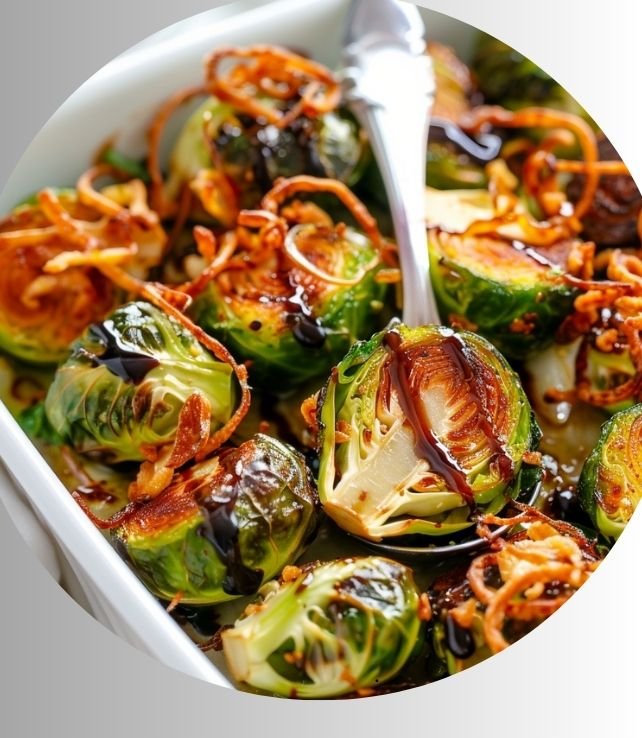
You know the side dish. The one that arrives at the table with a deep, caramelized crust, a salty-sweet aroma, and a texture that makes you forget any bad memory you ever had of boiled, mushy sprouts. For years, that specific dish from Red Lobster felt like a restaurant secret, a treat reserved for dining out.
I’m here to tell you that secret is yours to unlock at home. After many attempts in my own kitchen, comparing notes with culinary history and my background in nutritional science, I’ve refined a method that captures that iconic flavor and texture perfectly. This isn’t just a copycat recipe; it’s a comprehensive guide to understanding why this dish works so well, how to adapt it for any diet, and how to make it a flawless part of your meals.
Let’s get straight to the heart of it. The magic of these sprouts lies in a two-step process: a high-heat roast to develop flavor and texture, followed by a glossy, savory-sweet glaze built on a foundation of balsamic vinegar and honey. The result is a side dish with undeniable authority on any dinner plate.
Gluten-Free and Allergen-Friendly
This recipe is naturally gluten-free. Always check labels on pre-packaged ingredients like balsamic vinegar, as some may contain traces or use barley-based caramel color, though this is rare.
Lower Sugar and Sodium
To reduce sugar, you can decrease the honey to 1 tablespoon. The glaze will be less syrupy but still flavorful. For a sodium-conscious version, reduce the kosher salt in the roasting step to ½ teaspoon and omit the finishing flaky salt.
Flavor Variations
The basic template invites experimentation. Try adding a teaspoon of whole grain mustard to the glaze for tang, or a tablespoon of chopped fresh rosemary for an herbal note. For a smoky twist, toss the roasted sprouts with a pinch of smoked paprika before glazing.
Culinary History and Context
The story of the Brussels sprout is one of transformation. A member of the Gemmifera Group of cabbages, cultivated for its edible buds, it has historical roots in Belgium as far back as the 13th century. For generations, its primary preparation in many Western kitchens was boiling, a method that often unleashed sulfurous compounds and a soggy texture, cementing its poor reputation.
The modern renaissance of the Brussels sprout is directly tied to the popularization of high-heat cooking methods—roasting and sautéing—in home and restaurant kitchens over the last few decades. These methods create the Maillard reaction, a chemical process between amino acids and reducing sugars that generates hundreds of new flavor compounds, resulting in browning and complex, savory, nutty tastes.
Dishes like the one from Red Lobster sit at this intersection of history and modern technique. They represent a broader culinary shift where vegetable sides are engineered for maximum sensory impact, using glazes, fats, and precise cooking to elevate them to a centerpiece status. This recipe is a direct descendant of that movement.
Common Mistakes and How to Avoid Them
Success lies in the details. Here are the pitfalls I’ve encountered and the solutions that guarantee a perfect outcome.
Crowding the Pan
This is the most frequent error. If the sprouts are piled on top of each other, they will steam instead of roast. You need space for moisture to evaporate. Use a large enough baking sheet, or better yet, two. The sprouts should have a little room between them.
Not Placing Cut-Side Down
That flat, cut surface is your canvas for caramelization. Taking the extra moment to place most halves cut-side down ensures direct contact with the hot metal, leading to a superior sear and richer flavor.
Stirring During Roasting
Resist the urge to shake the pan. Let the sprouts sit undisturbed for the first 20 minutes. This allows the heat to build and that desirable crust to form. Moving them breaks the contact and can lead to uneven cooking.
Overcooking or Undercooking the Glaze
The glaze should be simmered until it just coats the back of a spoon. If undercooked, it will be thin and runny. If overcooked, it can become sticky and harden too quickly on the sprouts. Remove it from the heat when it has the consistency of warm maple syrup.
Adding the Glaze Too Early
Always glaze the sprouts immediately after they come out of the oven and just before serving. Adding glaze before roasting will cause it to burn. Letting the sprouts sit glazed for too long can make them lose their crisp texture.
Serving, Pairing, and Storage Guidance
This dish is versatile, but a few principles will help it shine in any meal context.
Optimal Serving
Serve these sprouts immediately in a warm, shallow bowl or platter. The contrast between the hot, glossy vegetables and a cool, crisp finishing salt is part of the experience. They are best enjoyed within 15 minutes of preparation.
Protein Pairings
The robust, sweet-and-savory profile of the sprouts pairs beautifully with a wide range of proteins. They are a classic match for roasted chicken or turkey, where they complement the savory notes. They also stand up well to the richness of grilled steak or pork chops. For a seafood pairing, try them with seared salmon or blackened cod; the acidity of the glaze cuts through the fish’s oil beautifully.
Storage and Reheating
Leftovers can be stored in an airtight container in the refrigerator for up to 3 days. Note that the glaze will be absorbed and the crisp texture will soften. To reheat, spread the sprouts on a baking sheet and warm in a 375°F oven for 8-10 minutes. This method is far superior to microwaving, which will further soften them. I do not recommend freezing, as the texture of the sprouts becomes unpleasantly watery upon thawing.
The Science of Caramelization and the Maillard Reaction
What we call “browning” in this recipe is actually two distinct, powerful chemical processes at work. Understanding them demystifies the technique.
Caramelization is the pyrolysis of sugar. When the natural sugars in the Brussels sprouts (and the honey in the glaze) are exposed to high heat (around 320°F), they break down, producing new compounds that result in a nutty, sweet flavor and a brown color. This is why placing the cut side down is non-negotiable; it maximizes sugar-heat contact.
The Maillard reaction is more complex. It occurs between amino acids (from the protein in the sprouts) and reducing sugars at temperatures above 285°F. This reaction creates hundreds of new flavor and aroma molecules, responsible for the deep, savory, “roasted” notes that are so satisfying. The dry heat of the oven is the perfect environment to promote both reactions, which is why boiling could never achieve the same flavor profile.
The glaze leverages these principles again. Reducing the balsamic vinegar and honey not only thickens the liquid but also encourages caramelization and Maillard reactions within the sauce itself, deepening its flavor before it even touches the vegetable.
Frequently Asked Questions
Can I use frozen Brussels sprouts for this recipe?
You can, but the result will be different. Frozen sprouts have a much higher water content. Thaw them completely and pat them extremely dry with towels before roasting. Expect less crisp caramelization and a softer final texture. Fresh sprouts are strongly recommended for the authentic result.
My glaze is too thin. How can I thicken it?
Return the glaze to low heat and continue simmering for another 2-3 minutes, stirring constantly. Alternatively, create a quick slurry by mixing ½ teaspoon of cornstarch with 1 teaspoon of cold water, then whisk it into the simmering glaze until it thickens, about 30 seconds.
Is there a way to make this recipe less sweet?
Yes. Reduce the honey to 1 tablespoon. You can also increase the balsamic vinegar by half a tablespoon to boost the acidic counterpoint, balancing the perceived sweetness.
Can I prepare any part of this dish ahead of time?
You can trim and halve the sprouts a day in advance. Store them in an airtight container in the refrigerator. The glaze can be prepared up to 2 hours ahead; gently reheat it before tossing with the hot sprouts. Do not roast the sprouts ahead, as they will lose their texture.
What is the best substitute for balsamic vinegar?
A combination of 2 tablespoons apple cider vinegar and 1 tablespoon of molasses or maple syrup will provide a similar sweet-tart complexity. Red wine vinegar with a pinch of sugar is another option, though the flavor profile will shift.
Why are my sprouts bitter?
Bitterness in Brussels sprouts is often linked to overcooking, which can concentrate certain compounds. Ensuring a hot, fast roast to caramelize the sugars helps mask natural bitterness. Also, smaller sprouts are generally milder than very large, older ones.
Can I cook these on the grill?
Absolutely. Use a grill basket over direct, medium-high heat. Toss the oiled sprouts in the basket, closing the lid, and cook for 15-20 minutes, shaking occasionally, until charred and tender. Prepare the glaze on your stovetop indoors and combine as directed.
How do I get my sprouts extra crispy?
Ensure your oven is fully preheated. Use a dark-colored metal baking sheet, which conducts heat more efficiently than light-colored ones. Do not use parchment paper, as it creates a barrier that inhibits direct browning on the cut side.
