
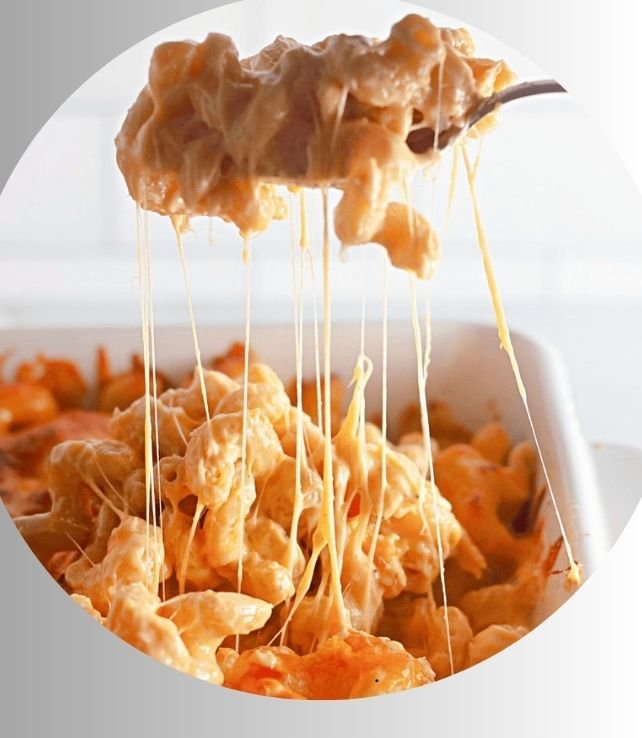
You know that specific texture of mac and cheese from Popeyes. It’s not a loose, soupy sauce. It’s not a dry, crumbly bake. It’s a dense, rich, and incredibly creamy block of comfort that holds its shape on the fork but melts seamlessly on the tongue. For years, I tried to pinpoint what made it different from every other version I’d made at home or ordered elsewhere.
My background as a dietitian and a culinary historian made this a particular puzzle. I analyzed it from both angles: the nutritional composition that gives it that body and the historical techniques that might inform its method. After many kitchen experiments, comparing textures and tasting notes, I believe I’ve recreated it. This recipe is the result of that analysis, breaking down not just the “how,” but the “why” behind each step to achieve that signature Popeyes style.
Dietary Adaptations and Variations
Food should be accessible. With a few strategic swaps, you can adapt this recipe to meet various dietary needs while striving to preserve its soul.
Gluten-Free Adaptation
For a gluten-free version, use a reliable gluten-free elbow pasta made from brown rice, corn, or a blend. Ensure it’s a brand that holds up well to baking. Substitute the all-purpose flour in the roux with an equal weight of a gluten-free flour blend that contains a starch like tapioca or potato; these blends mimic wheat flour’s thickening properties well.
Dairy-Free and Vegan Adaptation
This is a greater challenge, as dairy is the star. For the sauce base, use a high-fat, neutral-flavored plant milk like oat or cashew milk, and a plain, unsweetened vegan cream alternative. The roux can be made with vegan butter or olive oil. The cheese is the trickiest part. Use a combination of store-bought vegan cheddar and mozzarella shreds designed to melt. Adding a tablespoon of nutritional yeast to the sauce can provide some of the savory, umami depth lost by omitting Parmesan.
Lower-Fat Variation
You can reduce the fat content by using 2% milk instead of whole, omitting the heavy cream (replace with an equal amount of milk), and using a reduced-fat cheddar cheese. Be aware that the texture will be less rich and creamy, and the sauce may be more prone to separation. Increasing the amount of dry mustard and spices can help boost flavor to compensate for the reduced fat.
The Cultural and Historical Context of Macaroni and Cheese
Macaroni and cheese, in its simplest form, is pasta with cheese—a concept with ancient roots. However, the baked, creamy version we know in America has a distinct lineage. Thomas Jefferson is often credited with popularizing it after encountering macaroni in France and Italy. He served a dish of macaroni with Parmesan cheese at a state dinner in 1802.
The recipe evolved through 19th-century cookbooks, but its place as a staple of American home cooking was cemented in the 20th century with the mass production of dried pasta and the 1937 introduction of Kraft boxed macaroni and cheese during the Great Depression, offering an affordable, shelf-stable meal.
Popeyes’ version, emerging from Louisiana’s rich Creole and Cajun foodways, represents a specific commercial interpretation. It leans into indulgence, with a texture that speaks to a preference for richness and substance, a hallmark of Southern cuisine. It’s a side dish that often rivals the main, a testament to its cultural weight on the plate.
Common Mistakes and Expert Tips for Success
After testing this repeatedly, I’ve identified the pitfalls that can separate a good mac and cheese from a great one. Here’s how to avoid them.
Overcooking the Pasta
This is the most common error. Pasta cooked to package directions will become mushy when baked. You must undercook it significantly in the boiling water. It will finish cooking and absorbing liquid in the oven. The result is pasta with a defined, pleasant bite, not a soft paste.
Adding Cheese to a Boiling Sauce
High heat is the enemy of a smooth cheese sauce. It can cause the proteins and fats to separate, creating a greasy, grainy texture. Always remove your pot from the heat source before stirring in the cheese. The residual heat is more than enough to melt it gently and evenly.
Skipping the Resting Period
Pulling the dish from the oven and serving it immediately is tempting, but it leads to a runny, loose presentation. The resting time is when the starches in the pasta and sauce fully set, allowing you to cut clean portions. This is essential for achieving that “block” texture associated with the Popeyes style.
Using Only Pre-Shredded Cheese
While convenient, pre-shredded cheeses are coated to prevent clumping. These coatings can interfere with a perfectly smooth melt. For the ultimate silky sauce, take the extra few minutes to shred blocks of cheese yourself. The difference in texture is noticeable.
Serving, Pairing, and Storage Guidance
Serving and Pairing
This mac and cheese is rich and substantial. It pairs perfectly with simply prepared proteins that can stand up to it. Think of classic Popeyes combinations: buttermilk-battered fried chicken, blackened chicken tenders, or fried fish. To balance the meal’s heaviness, serve it with a sharp, vinegary collard green, a tangy coleslaw, or a simple green salad with a bright lemon vinaigrette. The acidity and crunch provide a necessary contrast.
Storage and Reheating
Leftovers can be stored in an airtight container in the refrigerator for 3-4 days. The texture will firm up considerably when cold. The best method for reheating is in the oven. Place portions in an oven-safe dish, sprinkle with a few drops of milk or water to reintroduce moisture, cover with foil, and bake at 300°F until warmed through. You can also reheat single portions in the microwave at a reduced power setting (50-70%), stirring occasionally, but this may further soften the pasta texture.
This dish can be frozen after baking and cooling. Wrap the entire dish or individual portions tightly in plastic wrap and then foil. Thaw in the refrigerator overnight before reheating using the oven method described above. Note that the cream sauce may separate slightly upon thawing and reheating, but it will still be flavorful.
The Science of the Sauce: Emulsions and Starch Gelatinization
Understanding a little of the “why” makes you a more confident cook. This recipe is a masterclass in stable emulsions and starch behavior. The roux works by coating the flour particles in fat, preventing them from clumping when liquid is added. As the mixture heats, the starch granules in the flour absorb the liquid and swell, a process called gelatinization, which thickens the sauce.
When you add cheese, you are incorporating fat and protein into this starch-thickened base. The gentle, off-heat melting preserves the emulsion of fat in water. If heated too aggressively, the emulsion breaks: the fat separates and pools, and the proteins tighten and squeeze out moisture, leading to a grainy, oily sauce. The resting period after baking allows the swollen starch molecules to form a stable network, solidifying the structure as it cools.
Frequently Asked Questions
Can I make this mac and cheese ahead of time?
Yes, you can assemble it completely, cover it tightly, and refrigerate it for up to 24 hours before baking. You may need to add 5-10 minutes to the baking time since you are starting with a cold dish. For best results, let the cheese sauce come to room temperature for about 30 minutes before combining with the pasta for assembly.
Why did my cheese sauce turn out grainy or oily?
This is almost always due to overheating. The cheese was likely added while the sauce base was still on direct heat or was too hot. Another cause can be using pre-shredded cheese with anti-caking agents. Next time, remove the pot from the burner before adding cheese and consider shredding your own from a block.
What can I use instead of heavy cream?
You can substitute the heavy cream with an equal amount of whole milk or even evaporated milk. Evaporated milk, with some of its water removed, can actually make a very stable, creamy sauce. The final result will be slightly less rich but still excellent.
Is it necessary to use three different kinds of cheese?
While it creates the most complex flavor, you can simplify. A combination of a sharp cheddar and a good melting cheese like Monterey Jack
