
You might have a small bottle of oregano oil in your cabinet, purchased for occasional use. I did for years, viewing it as just another supplement. That changed after a trip to a mountain village in Crete, where I shared a meal with a family who had been making their own for generations.
Their connection to this potent oil, not as a product but as a fundamental part of their home apothecary, was profound. It wasn’t mysterious; it was simply dried oregano from their hillside and the highest quality olive oil they pressed themselves. The simplicity and intention behind it were transformative. I returned home with a new perspective and a commitment to mastering this ancient preparation myself.
This guide is the result of that journey. I will show you how to make oregano oil at home, a process that is remarkably straightforward but rich with nuance. We will move beyond the basic steps to explore the science of extraction, the deep history of the herb, and the practical considerations for using it safely and effectively. By the end, you will possess not just a recipe, but a comprehensive understanding of this powerful botanical infusion.
Understanding Oregano: More Than a Pizza Herb
To create a truly exceptional oil, we must first respect its primary ingredient. The oregano most are familiar with, Origanum vulgare, is a culinary staple. However, for therapeutic oil, the species Origanum vulgare subsp. hirtum, often called Greek oregano or wild oregano, is the gold standard. This is the variety I seek out.
Its potency comes from high concentrations of carvacrol and thymol, phenolic compounds responsible for its characteristic aroma and studied properties. Not all oregano is equal; its chemical profile is dramatically influenced by its terroir—the soil, climate, and altitude where it is grown.
Choosing Your Oregano: Dried vs. Fresh
For oil infusion, dried oregano is unequivocally recommended. Fresh herbs contain water, which introduces the risk of bacterial growth and spoilage in an oil medium, potentially leading to botulism. Drying concentrates the essential oils and eliminates moisture, creating a stable and safe base for infusion.
You can dry your own oregano if you grow it. Harvest sprigs just before flowering for peak volatile oil content, bundle them, and hang them in a warm, dark, well-ventilated space until brittle. Alternatively, sourcing high-quality, organically grown dried oregano from a reputable supplier is an excellent choice. Look for whole leaves, not powder, to ensure better flavor and easier straining.
How to Make Oregano Oil Recipe
This method uses a cold infusion technique, which gently extracts the volatile compounds without heat that can degrade them. It requires patience, but the result is a beautifully aromatic, potent oil.
Recipe Details
- Prep Time: 15 minutes
- Cook Time: 0 minutes (14 days infusion)
- Servings: Makes approximately 1 cup of infused oil
- Course: Condiment, Home Remedy
- Cuisine: Mediterranean
- Diet: Gluten-Free, Vegan, Paleo
Ingredients
- 1/2 cup (tightly packed) high-quality dried oregano leaves (Greek oregano preferred)
- 1 cup extra virgin olive oil (or other carrier oil like organic jojoba or almond oil)
- 1 sterilized glass jar with airtight lid (8-12 oz capacity)
- Cheesecloth or a fine-mesh strainer
- Dark glass bottle (amber or cobalt blue) for storage
Instructions
- Ensure your glass jar and lid are thoroughly cleaned and completely dry. Any moisture can compromise the oil.
- Gently crush the dried oregano leaves between your palms or with a mortar and pestle. This breaks the plant material and increases the surface area for better oil extraction, but avoid creating a fine powder.
- Place the crushed oregano leaves into the clean, dry jar.
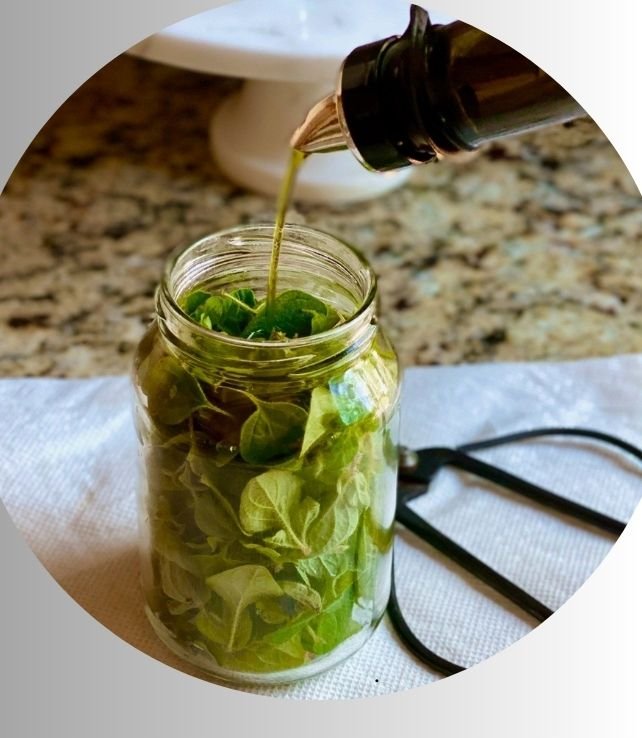
- Pour your chosen oil over the herbs, ensuring they are fully submerged. Use a clean spoon to press down and remove any air bubbles.
- Seal the jar tightly and label it with the date.
- Store the jar in a cool, dark place, such as a pantry or cupboard. Do not refrigerate during infusion.
- For the next two weeks, gently shake or swirl the jar once a day. This helps redistribute the herbs and promotes even extraction.
- After 14 days, place a cheesecloth-lined strainer over a bowl. Pour the oil and herb mixture through to separate the plant material. Press gently on the herbs to extract all the oil, then discard them.
- For a perfectly clear oil, strain it a second time through a fresh piece of cheesecloth or a coffee filter.
- Using a funnel, transfer the finished infused oil into a dark glass bottle. Label it with the contents and date. Store in a cool, dark place.
Nutrition
- Calories: 120 kcal (per teaspoon, from oil base)
- Protein: 0 g
- Fat: 14 g
- Carbohydrates: 0 g
- Sugar: 0 g
- Fiber: 0 g
- Sodium: 0 mg
- Cholesterol: 0 mg
Note: Nutritional values are primarily from the carrier oil. The infusion adds negligible macronutrients but concentrates the phytochemicals from the oregano.
Cooking Method
This is a cold infusion or maceration method. It relies on time and the solvent property of the oil to draw out the fat-soluble compounds from the oregano. No external heat is applied, preserving the delicate volatile oils.
Tools Needed
- Measuring cups
- Clean, dry glass jar with airtight lid
- Mortar and pestle (optional, for crushing herbs)
- Cheesecloth or fine-mesh strainer
- Funnel
- Dark glass bottle for storage
- Bowl for straining
Ingredient Analysis: The Foundation of Quality
The character and efficacy of your oil are dictated by your two ingredients. Let’s examine their roles and optimal choices.
Oregano: The Botanical Powerhouse
As a culinary historian, I find the journey of oregano from ancient medicinal herb to modern kitchen staple fascinating. Its use dates back to ancient Greece, where it was a symbol of joy and was used to crown newlyweds. Hippocrates employed it as an antiseptic.
The primary active constituents are carvacrol and thymol. These phenols are potent. Carvacrol, in particular, has been the subject of significant research for its properties. The concentration of these compounds is highest in wild, mountain-grown Greek oregano. When you smell a jar of high-quality dried oregano, it should be pungent, slightly camphorous, and unmistakably sharp—that’s the scent of carvacrol.
The Carrier Oil: Your Extraction Medium
The oil you choose does more than just extract; it becomes the final product. Extra virgin olive oil is my traditional choice. Its own polyphenols and stable fatty acid profile complement the oregano, and it has a cultural authenticity to the Mediterranean roots of this preparation.
However, other oils have merits. Organic jojoba oil is actually a liquid wax ester that is very stable and has a long shelf life. Sweet almond oil is lightweight. A key principle is to choose a high-quality, cold-pressed, food-grade oil. Avoid refined, odorless oils as they offer less nutritional synergy and may be processed with chemicals you don’t want in your infusion.
Nutritional and Biochemical Breakdown
As a dietitian, I must clarify: this is not a significant source of vitamins or minerals. Its value is phytochemical. The infusion process transfers the fat-soluble compounds from the oregano plant into the oil.
Think of the oil as a carrier, now loaded with bioactive molecules like carvacrol, thymol, rosmarinic acid, and various terpenes. These compounds are what modern science investigates. The concentration in your homemade oil will be far lower than in a commercially produced essential oil, which is a critical safety distinction.
Dietary Adaptations and Variations
This base recipe is inherently gluten-free, vegan, and compatible with many dietary patterns. The primary adaptation lies in your choice of carrier oil.
For a neutral flavor, use organic, expeller-pressed coconut oil (melted for infusion, then it will solidify). For topical-only applications, jojoba oil is superb. Some traditions use sunflower oil. The method remains identical; only the liquid fat changes.
You can also create infused oils with other robust, dry herbs like thyme, rosemary, or sage using this exact same cold-infusion technique. Each will offer a different phytochemical profile and flavor.
Common Mistakes and Expert Tips for Success
After making many batches, I’ve identified the pitfalls that can affect your oil’s safety and quality.
Using fresh herbs is the most serious error due to the water content. Ensure everything is bone-dry: herbs, jar, utensils. Do not speed up the process with heat; simmering or heating the oil can create a bitter flavor and damage the volatile compounds you’re trying to capture.
Shake the jar daily. This simple act prevents the herbs from clumping and ensures full extraction. When straining, do not squeeze the cheesecloth aggressively, as this can force bitter plant chlorophyll into the oil. A gentle press is sufficient.
Finally, storage is non-negotiable. Light and heat are the enemies of oil, causing rancidity. Always use a dark glass bottle and keep it in a cupboard, not on a counter or windowsill.
Serving, Use, and Storage Guidance
Important Disclaimer: This information is for educational purposes. I am not a medical doctor. This infused oil is a culinary ingredient and should not be used to diagnose, treat, cure, or prevent any disease. Consult a healthcare professional before using any herbal preparation, especially if you are pregnant, nursing, on medication, or have a health condition.
Culinary Use: Your homemade oregano oil is a fantastic culinary ingredient. Use it as a finishing oil drizzled over roasted vegetables, grilled meats, pizza, or into soups. It adds a profound, herbaceous depth.
Topical Use (Diluted): Some use it as a base for salves or diluted in a larger amount of plain carrier oil for massage. Always perform a patch test on a small area of skin to check for sensitivity.
Internal Use (Extreme Caution): If considering internal use, it is crucial to understand this is a very dilute infusion, not an essential oil. Even so, it should be used sparingly—a drop or two in food. Never ingest undiluted oregano essential oil. The potency of homemade infused oil is variable and not standardized.
Storage: Properly stored in a dark bottle in a cool, dark place, your oil should remain in good condition for 3-6 months. Discard it if you notice any off odor, cloudiness, or signs of mold.
The Science of Extraction: How Maceration Works
This process is a simple application of chemistry. The beneficial compounds in oregano—like carvacrol—are lipophilic, meaning they are soluble in fat and oil, not in water.
When submerged in oil, these molecules slowly migrate out of the plant cells and dissolve into the surrounding fat medium. Time and occasional agitation facilitate this transfer. Heat would accelerate it but at the cost of degrading heat-sensitive volatile oils and potentially creating a cooked, bitter flavor. Patience yields a superior, complex extract.
Frequently Asked Questions
Can I use fresh oregano to make oregano oil?
No, I strongly advise against it. Fresh herbs contain water, which can lead to bacterial growth and spoilage in the anaerobic (oxygen-free) oil environment. This can produce dangerous toxins. Always use thoroughly dried oregano for safety.
What is the difference between oregano infused oil and oregano essential oil?
They are fundamentally different products. Your homemade infusion is oregano compounds diluted in a carrier oil. Oregano essential oil is a highly concentrated volatile oil, typically extracted via steam distillation, containing extremely high levels of carvacrol. The essential oil is potent and must be diluted significantly before any use; it is not a culinary ingredient you can make at home safely.
How long does homemade oregano oil last?
When stored correctly in a dark glass bottle in a cool, dark pantry, it should maintain quality for 3 to 6 months. Always check for signs of spoilage like a rancid smell, mold, or cloudiness before use.
Can I use the oven or a slow cooker to make it faster?
While warm infusion methods exist, they require precise temperature control to stay below 100°F to preserve volatile oils. For most, the cold infusion method is safer and more reliable, preventing accidental “cooking” of the herbs which ruins the flavor and benefits.
What other herbs can I infuse using this method?
This cold infusion technique works well with any dry, robust herb. Thyme, rosemary, sage, and marjoram are excellent choices. Delicate herbs like basil or parsley do not infuse as effectively this way and can spoil more easily.
Is oregano oil safe for children?
Consult a pediatrician or qualified healthcare practitioner before using any herbal preparation with children. Their systems are more sensitive, and general guidelines for adults do not apply.
Can I use this oil on my skin?
It can be used as a base for topical applications when further diluted in a plain carrier oil. However, always perform a patch test on a small area of skin first to check for any adverse reaction, as some individuals may be sensitive to oregano.
Why did my oil turn out cloudy?
Cloudiness usually indicates microscopic plant particles or moisture. Ensure your herbs are completely dry and your equipment is moisture-free. A second straining through a coffee filter will often clarify it. If cloudiness develops later, it may be a sign of spoilage.
