
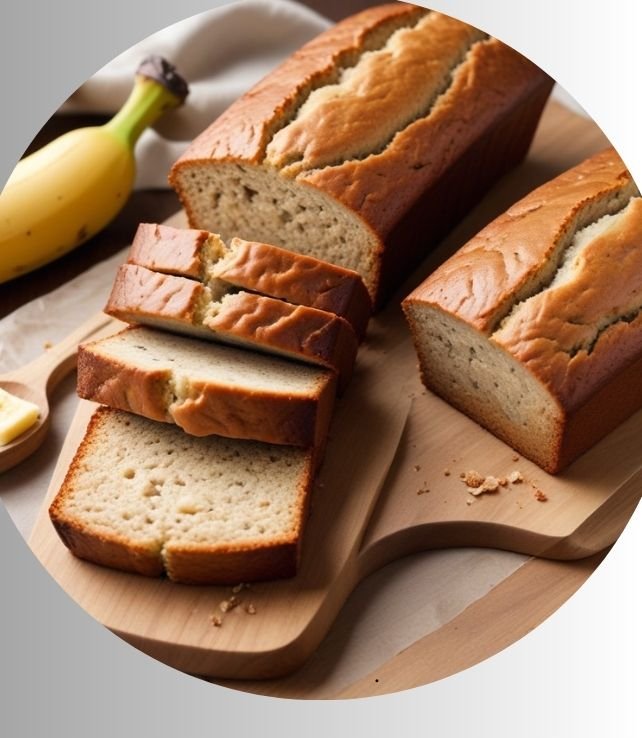
You pull a loaf from the oven at 7,000 feet, expecting the familiar scent of home. Instead, you find a sunken, gummy center and a crust that tastes of bitterness. The recipe from your old kitchen, trusted and true, has failed you. The thin air has rewritten the rules.
This is a problem I encountered years ago after moving to the mountains, and as a dietitian and culinary researcher, it became a personal mission to solve it. The solution is not a single adjustment, but a series of precise, scientifically-grounded modifications. Below, you will find a tested formula for banana bread that rises with structure and bakes with balance where the air is thin.
This guide provides the complete recipe, followed by a detailed analysis of why each change is necessary. We will examine ingredient functions, nutritional profiles, and historical context to give you not just a list of steps, but a complete understanding of high-altitude baking.
The Science of Baking at High Elevation
Baking is applied chemistry, and altitude changes the laboratory conditions. The primary factors are atmospheric pressure and humidity. Lower air pressure means gases expand more easily and liquids evaporate faster.
This leads to three core challenges: rapid rise and collapse, excessive moisture loss, and concentration of sugars and leaveners. Your bread may dome and crack dramatically before falling, become dry, or develop a harsh chemical flavor from undecomposed baking soda.
How Altitude Affects Key Ingredients
Each component in your batter behaves differently under reduced pressure. Understanding this is the first step to consistent results.
Flour and Structure
Wheat flour provides structure through gluten proteins. At altitude, weaker flour can lead to collapse. A slightly higher protein content, found in bread flour or a blend with all-purpose, helps the crumb support its rapid expansion. For every cup of flour, an additional 1 to 2 tablespoons may be needed to absorb the faster-evaporating liquid and strengthen the matrix.
Leavening Agents: Baking Soda and Powder
These are the most critical adjustments. Chemical leaveners produce gas more vigorously at lower pressure. Too much, and the bubbles grow too large too fast, causing the structure to over-inflate and implode. A general rule is to decrease baking powder by 1/8 to 1/4 teaspoon per teaspoon used at sea level. For baking soda, a reduction of 1/8 teaspoon is often sufficient, especially when paired with acidic ingredients like banana and yogurt.
Sugars and Liquids
Granulated sugar weakens gluten and retains moisture. At altitude, its hygroscopic nature is beneficial, but too much can over-tenderize and lead to sticking. A small reduction helps. More importantly, liquid evaporates quicker, so you must add more to prevent a dry loaf. An extra 1 to 3 tablespoons of a moist ingredient, like yogurt, sour cream, or the bananas themselves, compensates for this loss.
How to Make High Altitude Banana Bread Recipe
This recipe is calibrated for elevations between 3,000 and 7,500 feet. It incorporates the precise adjustments for structure, moisture, and leavening we’ve discussed. The result is a loaf with a tight, tender crumb, a domed top, and no bitter aftertaste.
Recipe Details
- Prep Time: 15 minutes
- Cook Time: 60-70 minutes
- Servings: 1 standard loaf (10-12 slices)
- Course: Breakfast, Snack
- Cuisine: American
- Diet: Vegetarian
Ingredients
- 1 3/4 cups (220g) all-purpose flour, plus 1 tablespoon
- 1 teaspoon baking soda, reduced by 1/8 teaspoon
- 3/4 teaspoon fine sea salt
- 3/4 cup (150g) granulated sugar
- 2 large eggs, at room temperature
- 1/2 cup (115g) plain whole-milk yogurt or sour cream
- 1/3 cup (75g) unsalted butter, melted and cooled
- 1 teaspoon pure vanilla extract
- 1 1/2 cups (about 3 large) mashed very ripe bananas
- 1/2 cup (65g) chopped walnuts or pecans (optional)
Instructions
- Preheat your oven to 350°F (177°C). Grease a 9×5-inch loaf pan and line it with parchment paper, leaving an overhang on the long sides.
- In a medium bowl, whisk together the 1 3/4 cups flour, the adjusted baking soda (about 7/8 tsp), and the salt.
- In a large bowl, whisk the sugar and eggs together vigorously for about 45 seconds until the mixture is pale and slightly thickened.
- Whisk in the yogurt, melted butter, and vanilla extract until smooth.
- Using a spatula, fold in the mashed bananas until just combined.
- Add the dry ingredients to the wet ingredients. Gently fold until only a few streaks of flour remain. Sprinkle the remaining 1 tablespoon of flour over the nuts (if using) and fold them in with the last few strokes. Do not overmix.
- Pour the batter into the prepared pan and smooth the top. Bake for 60 to 70 minutes. The bread is done when a long skewer inserted into the center comes out with a few moist crumbs, but no wet batter. The internal temperature should read about 210°F (99°C).
- Let the bread cool in the pan on a wire rack for 20 minutes. Then, use the parchment paper to lift it out of the pan and let it cool completely on the rack before slicing.
Nutrition
- Calories: 245 kcal
- Protein: 5 g
- Fat: 10 g
- Carbohydrates: 35 g
- Sugar: 17 g
- Fiber: 1.5 g
- Sodium: 280 mg
- Cholesterol: 55 mg
Note: Nutrition calculated per slice (1/10th of loaf) without optional nuts.
Cooking Method
This recipe uses the conventional creaming method, modified by whisking eggs and sugar rather than butter and sugar. This creates a stable emulsion that can better handle the vigorous gas expansion at altitude. The mixing technique is crucial; overmixing develops gluten, leading to toughness, while undermixing causes uneven rising.
Tools Needed
- 9×5-inch metal loaf pan
- Parchment paper
- Medium and large mixing bowls
- Whisk and silicone spatula
- Cooling rack
- Long skewer or cake tester
- Internal thermometer (recommended)
Ingredient Analysis and Selection
Choosing the right components is half the battle in high-altitude baking. Each brings specific functional attributes to the batter.
Bananas: The Foundation of Flavor and Moisture
The bananas are not just a flavoring; they are a primary moistening agent. Very ripe bananas with black speckled skins have three key attributes: higher sugar content from starch conversion, a more pronounced aromatic flavor, and a softer, more liquid mash. This free sugar and extra liquid are vital for altitude adjustments. Using underripe bananas will result in less sweetness and a drier texture.
Fats: Butter vs. Oil
This recipe uses butter for its flavor and its ability to solidify, contributing to structure. At room temperature, solid fat particles coat flour proteins, limiting gluten development for tenderness. Oil, being liquid at all temperatures, produces a moister, more velvety crumb that can sometimes feel too dense at altitude. The choice depends on texture preference; butter offers a classic, slightly cakier feel that stands up well to rapid rise.
The Role of Dairy: Yogurt or Sour Cream
The added dairy is a non-negotiable high-altitude adjustment. Its acidity tenderizes gluten, reacts with baking soda for a controlled lift, and, most importantly, introduces extra fat and water that resist rapid evaporation. The proteins in yogurt also contribute to browning and structure. Sour cream can be used interchangeably, offering a slightly richer tang.
Nutritional Breakdown and Dietary Considerations
From a dietary perspective, banana bread is often a sweet snack, but its composition can be understood and modified for different needs.
Macronutrient Profile
The loaf provides energy primarily from carbohydrates, with a portion from the natural sugars in banana and added granulated sugar. The eggs, yogurt, and butter supply protein and fat, which slow the absorption of sugars, providing more sustained energy. The optional nuts add healthy unsaturated fats, a small amount of plant-based protein, and dietary fiber.
Dietary Adaptations
Many dietary needs can be accommodated with careful substitutions, though each will alter the texture, requiring possible further altitude tweaks.
Gluten-Free Adaptation
Replace the all-purpose flour with a 1:1 gluten-free baking blend that contains xanthan gum. Because GF flours often absorb more liquid, you may need to reduce the extra tablespoon of flour or add an additional tablespoon of yogurt. The bake time may be slightly longer.
Vegan Adaptation
Replace each egg with a commercial egg replacer or a flax egg (1 tbsp ground flaxseed mixed with 2.5 tbsp water per egg). Use plant-based yogurt and a vegan butter stick. The binding power will be different, so expect a denser, moister result. You may need to increase baking temperature by 25°F and check for doneness sooner.
Reduced Sugar Adaptation
You can reduce the granulated sugar to 1/2 cup. The bananas will provide the remaining sweetness. Be aware that sugar contributes to tenderness and moisture retention; reducing it may yield a drier, more crumbly loaf. Compensate by ensuring your bananas are extremely ripe and consider adding an extra tablespoon of yogurt.
Cultural and Historical Context
Banana bread is a quintessential American quick bread, a product of ingenuity and resourcefulness. Its history is deeply tied to the popularization of baking powder and soda in the 19th century and the mass importation of bananas in the early 20th century.
During the Great Depression and World War II, the practice of not wasting overripe bananas became cemented in home economics. The first published recipes appeared in community cookbooks and pamphlets from companies like Pillsbury in the 1930s. It was a practical, affordable treat that used a commonly available fruit that ripened quickly.
The adaptation of such recipes for high altitudes is a more regional chapter in this story. It reflects the settlement of mountainous areas in the West, where cooks had to become food scientists, experimenting tirelessly to translate lowland culinary traditions to their new environment. This loaf is a direct descendant of that pragmatic, innovative spirit.
Common Mistakes and Expert Techniques
Avoiding these frequent errors will significantly increase your success rate, especially in a high-altitude kitchen.
Overmixing the Batter
This is the most common error. Once the flour is hydrated, mixing develops gluten. At altitude, you need some structure, but too much creates a tough, rubbery texture that can’t expand properly. Mix only until the last streaks of flour disappear. A few small lumps are preferable to a smooth, overworked batter.
Incorrect Oven Temperature
Ovens at altitude can be erratic, and their stated temperature is often inaccurate. An oven thermometer is essential. Setting your oven 15-25°F higher than a sea-level recipe suggests can help set the crust faster, preventing over-spreading and collapse. This recipe starts at 350°F, but knowing your oven’s true temperature is key.
Using the Wrong Pan Size or Material
A 9×5-inch metal pan is standard. Glass or ceramic pans bake differently; they retain heat longer but transfer it more slowly. If using glass, reduce the oven temperature by 25°F to prevent the edges from over-baking before the center is done. A dark metal pan promotes browning; a lighter-colored pan may require a slightly longer bake time.
Testing for Doneness Incorrectly
Relying solely on a visual check or a timer is unreliable. Use a skewer or cake tester, but understand that at altitude, a completely clean tester might indicate over-baking. You want a few clinging moist crumbs. For absolute certainty, an internal temperature of 205-210°F indicates the proteins and starches have fully set.
Serving, Storage, and Pairing Suggestions
Proper handling after baking ensures the best texture and extends the life of your loaf.
Allow the bread to cool completely on a wire rack before slicing. This allows the steam to redistribute and the crumb structure to firm up. Slicing it warm will cause it to gum and compress.
For storage, wrap the cooled loaf tightly in plastic wrap or aluminum foil. It will keep at room temperature for 2 days. For longer storage, refrigerate for up to 5 days, or freeze individual slices wrapped in plastic and placed in a freezer bag for up to 3 months. Thaw at room temperature.
This bread pairs well with a morning coffee or tea. For a more substantial snack, consider a smear of almond butter or cream cheese. Its mild sweetness also complements savory elements like a sharp cheddar cheese.
Frequently Asked Questions
Can I use this recipe at sea level?
You can, but it may produce a denser result. For sea level, I recommend increasing the baking soda to a full 1 teaspoon and reducing the yogurt by 1 tablespoon to standardize the liquid ratio.
My bread is still sinking in the middle. What went wrong?
A sunken center typically indicates under-baking, too much leavening, or an oven temperature that is too low. Ensure your oven is accurately calibrated with a thermometer, verify your baking soda measurement, and test doneness with a skewer and internal thermometer.
Can I make this recipe into muffins?
Yes. Divide the batter into a standard 12-cup muffin tin lined with papers. Bake at 375°F for 20-25 minutes. The higher temperature helps create a good rise quickly in the smaller form.
Why is my banana bread dry?
Dryness at altitude is usually from insufficient liquid or over-baking. Ensure you are using the full amount of yogurt and very ripe bananas. Check your oven temperature and begin testing for doneness 5-10 minutes before the recipe suggests.
Can I omit the yogurt or sour cream?
I do not recommend omitting it at high elevation. It provides necessary acidity and moisture. If you must, substitute an equal amount of buttermilk or thinned plain Greek yogurt. Using only milk will likely result in a less tender, drier loaf.
How do I adjust for an altitude above 7,500 feet?
Above 7,500 feet, further adjustments are often needed. Try reducing the sugar by another 1-2 tablespoons, increasing the flour by 1 more tablespoon, and adding another 1 tablespoon of yogurt. You may also need to increase the oven temperature by an additional 15-25°F.
What causes a bitter taste in banana bread?
A bitter or chemical aftertaste is almost always from undecomposed baking soda. This happens when there is not enough acidity in the batter to react with it fully. Using very ripe bananas, the yogurt, and the precise reduction in soda called for in this recipe prevents this issue.
