
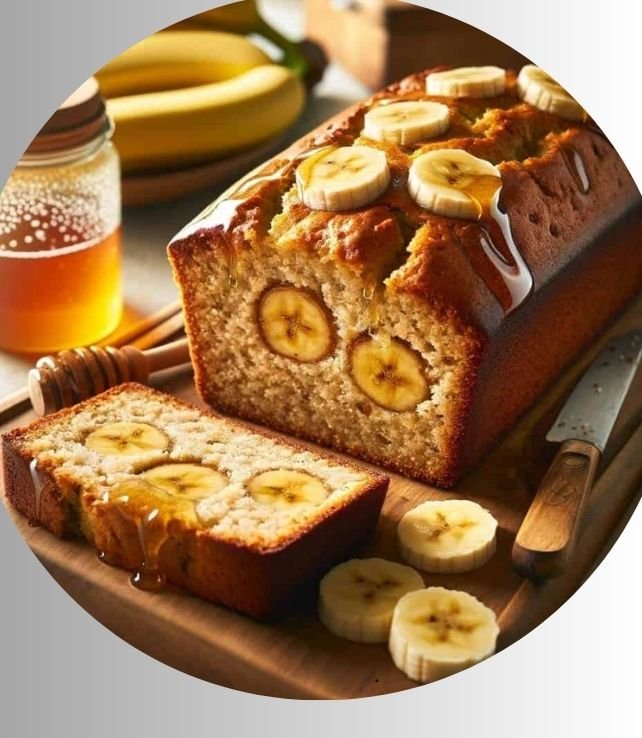
You have bananas on the counter, their skins freckled with brown. The idea of tossing them out feels wasteful, but eating them as they are is not appealing. This moment, familiar in kitchens everywhere, is the precise origin of banana bread. It is a solution born from thrift and creativity.
My version uses honey instead of refined sugar. This choice changes the bread in subtle, important ways. It yields a loaf that is deeply moist, with a flavor that is complex and warm, not just sweet. The recipe I will share is the result of many tests in my own kitchen, balancing my perspective as a dietitian with a desire for something truly satisfying.
Below, you will find the complete recipe for this honey-sweetened banana bread. Following that, we will examine the ingredients in detail, discuss the nutritional profile, explore adaptations for different diets, and provide the context and tips to ensure your success.
How to Make Banana Bread Recipe With Honey
This process is straightforward, but a few key techniques make a significant difference in the final texture and rise. The goal is a tender, evenly-baked loaf with a beautiful domed top.
Recipe Details
- Prep Time: 15 minutes
- Cook Time: 55-65 minutes
- Servings: 1 standard loaf (10-12 slices)
- Course: Breakfast, Snack, Dessert
- Cuisine: American
- Diet: Vegetarian
Ingredients
- 3 medium ripe bananas (about 1 1/4 cups mashed)
- 1/3 cup (80 ml) liquid honey
- 1/4 cup (60 ml) plain yogurt or sour cream
- 1/4 cup (60 ml) neutral oil (like avocado or light olive oil)
- 2 large eggs, at room temperature
- 1 teaspoon pure vanilla extract
- 1 3/4 cups (220g) all-purpose flour
- 1 teaspoon baking soda
- 1/2 teaspoon baking powder
- 3/4 teaspoon ground cinnamon
- 1/2 teaspoon fine sea salt
- 1/2 cup (65g) chopped walnuts or pecans (optional)
Instructions
- Preheat your oven to 350°F (175°C). Grease a 9×5-inch loaf pan and line it with parchment paper, leaving an overhang on the long sides for easy removal.
- In a large mixing bowl, peel the bananas and mash them thoroughly with a fork until only small lumps remain. You should have about 1 1/4 cups of mash.
- To the mashed bananas, add the honey, yogurt, oil, eggs, and vanilla extract. Whisk these wet ingredients together until they are fully combined and the mixture looks uniform.
- In a separate bowl, whisk together the flour, baking soda, baking powder, cinnamon, and salt. This ensures the leavening agents are evenly distributed.
- Add the dry ingredients to the wet ingredients. Using a spatula, fold the mixture together gently. Stop folding as soon as the last streaks of flour disappear. Overmixing leads to a tough, dense bread.
- If using nuts, fold them in now with one or two final strokes.
- Pour the batter into your prepared loaf pan. Use the spatula to spread it evenly into the corners and smooth the top.
- Bake on the center rack for 55 to 65 minutes. The bread is done when a toothpick or skewer inserted into the very center comes out clean or with a few moist crumbs attached. The top will be a deep golden brown and will have cracked nicely down the middle.
- Let the bread cool in the pan on a wire rack for 15 minutes. Then, use the parchment paper overhang to lift it out of the pan and place it directly on the rack to cool completely. Slicing into it while warm will cause it to crumble.
Nutrition
- Calories: 215 kcal
- Protein: 4 g
- Fat: 8 g
- Carbohydrates: 32 g
- Sugar: 14 g
- Fiber: 1.5 g
- Sodium: 240 mg
- Cholesterol: 37 mg
*Nutritional information is an estimate per slice, based on 12 slices and includes walnuts.
Cooking Method
This recipe uses the “muffin method,” common for quick breads. The wet and dry ingredients are mixed separately before being combined. The chemical leaveners (baking soda and powder) react upon contact with moisture and heat, creating gas bubbles that cause the batter to rise in the oven. The key is minimal mixing once the wet and dry components meet to preserve the delicate structure.
Tools Needed
- 9×5-inch metal loaf pan
- Parchment paper
- Two mixing bowls (one large, one medium)
- Whisk
- Rubber spatula
- Wire cooling rack
- Toothpick or cake tester
Understanding Your Ingredients: A Dietitian’s Deep Dive
Each component in this recipe plays a specific role. Choosing the right type and understanding its function leads to a better result and allows for intelligent substitutions.
The Role of Bananas
Bananas are the foundation. Their ripeness is non-negotiable. Green bananas lack the necessary sweetness and starch conversion. Perfect bananas for bread have peels that are yellow with many brown spots, and the fruit inside is soft and fragrant.
They provide natural sweetness, moisture, and binding structure. The pectin and starch in the fruit help create a tender crumb. From a nutritional standpoint, they contribute potassium, vitamin B6, and a modest amount of dietary fiber.
Honey vs. Refined Sugar
Using honey is the defining characteristic of this recipe. Honey is a complex sweetener composed of fructose, glucose, water, and trace minerals and enzymes. Its hygroscopic nature means it attracts and retains moisture from the air, which is why this loaf stays soft for days.
Flavor-wise, honey offers floral, earthy, or citrus notes depending on its source. A mild clover or wildflower honey works well. Avoid strongly flavored varieties like buckwheat, as they can overpower the banana. Because honey is sweeter than granulated sugar by volume, we use slightly less. It also promotes more rapid browning, so keep an eye on the loaf in the final minutes of baking.
Flour and Leavening Agents
All-purpose flour provides the gluten structure that gives the bread its shape. The minimal mixing prevents excessive gluten development, which would make it chewy like bread rather than tender like cake.
Baking soda is critical here because it reacts with the natural acids in the bananas, honey, and yogurt. This reaction produces carbon dioxide gas immediately, which is why you should get the batter into the oven promptly. Baking powder provides a secondary rise during the heat of baking, ensuring a good lift.
Fats and Moisture Agents
The combination of oil and yogurt creates a supremely moist texture. Oil coats flour proteins more thoroughly than solid fat, resulting in a tender crumb. Yogurt (or sour cream) adds tang, activates the baking soda, and its fat and protein contribute to a fine, velvety texture. Eggs provide structure, richness, and help emulsify the batter.
Nutritional Perspective of Honey-Sweetened Banana Bread
As a dietitian, I view this not as a “health food” but as a considered treat. It represents a shift toward using whole-food ingredients and understanding their metabolic impact.
The honey, while still a sugar, has a slightly lower glycemic index than pure sucrose. This means it may cause a slower, more gradual rise in blood sugar. The bananas contribute fiber, which further moderates this response. The inclusion of nuts adds healthy unsaturated fats, plant-based protein, and minerals like magnesium.
A slice provides energy from carbohydrates, with small amounts of protein and fat to promote satiety. It is more nutrient-dense than a commercially produced muffin or slice of cake. The goal is mindful enjoyment—a satisfying slice with a cup of tea, not an entire loaf in one sitting.
Adapting the Recipe for Dietary Needs
This recipe is adaptable. Here are tested modifications for common dietary requirements.
Gluten-Free Adaptation
Replace the all-purpose flour with a 1:1 gluten-free baking blend that contains xanthan gum. I have had reliable results with blends based on brown rice and tapioca flour. The batter may be slightly thinner, but the final texture will be good. Do not use a single flour like almond or coconut flour, as they require completely different ratios of liquid and eggs.
Vegan Adaptation
Replace the eggs with “flax eggs.” Mix 2 tablespoons of ground flaxseed with 5 tablespoons of water and let it thicken for 5 minutes. Use a plant-based yogurt. Ensure your honey substitute is true vegan sweetener like maple syrup or agave nectar, as honey is an animal product. The bake time may be slightly shorter.
Dairy-Free and Lower Sugar Options
For dairy-free, use a plant-based yogurt. Coconut yogurt works well but may impart a slight flavor. For lower sugar, you cannot simply reduce the honey, as it provides liquid. You can reduce it to 1/4 cup and add an extra tablespoon of yogurt, but the bread will be less sweet and slightly less moist.
A Brief History of Banana Bread
Banana bread is a quintessential American quick bread that emerged in the early 20th century. Its popularity is directly tied to two innovations: the widespread adoption of baking powder and soda as home leaveners in the 1930s, and the mass importation of bananas.
Before reliable refrigeration, overripe bananas were a common household occurrence. Recipes for “banana cakes” began appearing in community cookbooks as a practical way to avoid waste. During the Great Depression and World War II rationing, this frugal recipe became a staple. Using honey as a sweetener has older roots, often found in early “war cake” recipes where sugar was scarce. Our recipe is a modern take on this tradition of resourcefulness.
Expert Tips and Common Mistakes to Avoid
After making this dozens of times, I have identified the pitfalls that can separate a good loaf from a great one.
Mistake 1: Using Underripe Bananas
This is the most frequent error. Underripe bananas lack sweetness and flavor. They do not mash as easily and can result in a starchy, bland bread. Wait for the spots. If you are in a hurry, place bananas on a baking sheet in a 300°F oven for 15-20 minutes until the skins blacken; this mimics the ripening process.
Mistake 2: Overmixing the Batter
Once the flour is hydrated, mixing develops gluten. For a tender quick bread, you want minimal gluten. Fold gently until just combined, even if the batter looks a bit lumpy. Those lumps will hydrate in the oven.
Mistake 3: Incorrect Pan Size and Oven Temperature
A 9×5-inch pan is standard. Using an 8×4-inch pan will cause the batter to overflow. An oven that runs too hot will darken the crust before the center is cooked. Use an oven thermometer to verify temperature. If the top browns too quickly, tent it loosely with aluminum foil for the remainder of the bake time.
Mistake 4: Slicing While Hot
The structure of the bread is still setting as it cools. Cutting it too soon releases steam and causes the interior to become gummy and crumbly. Patience is required for clean slices.
Serving, Storage, and Pairing Suggestions
This bread is versatile. For breakfast, a plain slice is sufficient. In the afternoon, a thin spread of almond butter or a dollop of Greek yogurt complements it well.
For storage, wrap the completely cooled loaf tightly in plastic wrap or place it in an airtight container. It will keep at room temperature for 3 days. The honey will keep it soft. You can also freeze it for up to 3 months. Wrap individual slices in plastic and place them in a freezer bag for easy thawing.
Beverage pairings include black tea, which cuts through the sweetness, or a glass of cold milk. For a more adult pairing, try a glass of off-dry Riesling or a light roast coffee.
The Science of Sweetness and Moisture
The superior moisture retention in this loaf is a function of chemistry. Honey is approximately 17% water. More importantly, its sugar molecules (primarily fructose) are highly hygroscopic. They form weak bonds with water molecules in the air and within the bread itself, slowing the staling process that occurs when starch molecules recrystallize.
The acid in the bananas and yogurt does more than activate baking soda. It also helps invert sucrose, if any were present, into simpler sugars, which further enhances browning and tenderizes the gluten network. This is why the crumb of this version often feels finer and more velvety than one made with granulated sugar alone.
Frequently Asked Questions
Can I use frozen bananas?
Yes. Thaw frozen bananas completely in a bowl. They will release a lot of liquid; use this liquid as part of your wet ingredients. The flavor is often more concentrated.
My bread is dense and gummy in the middle. What happened?
This is typically caused by one of three issues: overmixing the batter, using too much banana (which adds excess moisture), or underbaking. Ensure you measure your mashed bananas and use a reliable test for doneness with a toothpick.
Can I make this recipe into muffins?
Absolutely. Divide the batter into a standard 12-cup muffin tin lined with papers. Bake at 350°F for 18-22 minutes. The baking time is much shorter, so check early.
Why did my bread sink in the middle after baking?
A sunken center usually indicates too much leavening for the structure, or underbaking. Ensure your baking soda and powder are fresh and measured accurately. The bread must be baked until a tester comes out completely clean from the center.
Can I reduce the honey to make it less sweet?
You can reduce it slightly, but remember honey is also a liquid. For every quarter cup of honey removed, add 2 tablespoons of another liquid like yogurt or milk to maintain the batter consistency.
What is the best way to mash bananas?
Use a fork in a wide, shallow bowl. For a very smooth bread, you can use a potato masher. I prefer leaving some small lumps for texture. Avoid using a blender or food processor, as they can make the bananas too liquid.
How can I tell if my baking soda is still active?
Pour a small amount of vinegar over about 1/4 teaspoon of baking soda. If it fizzes vigorously, it is active. If the reaction is weak, replace it.
