
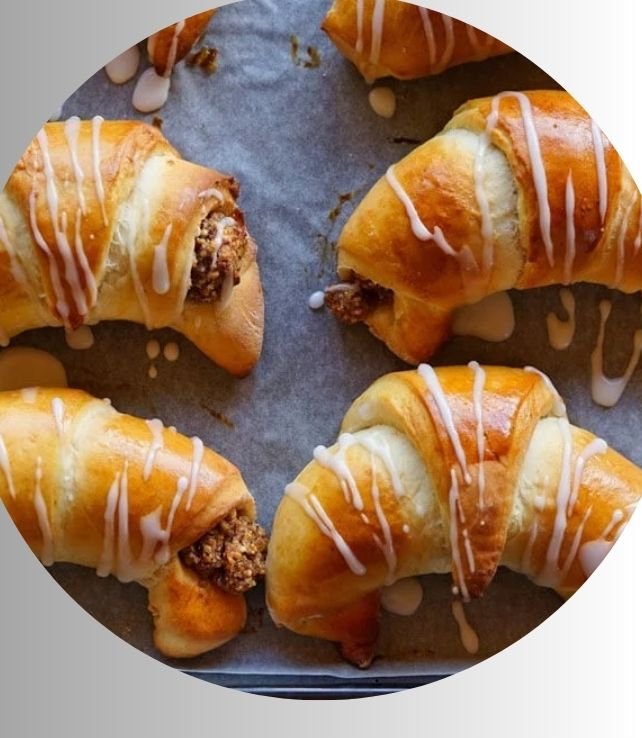
You know that feeling when a simple food transports you completely? For me, it happens with the first bite of a proper Gipfeli. The shatter of buttery layers, the soft interior, the faint sweetness—it’s a specific experience. Yet, many recipes I’ve tried at home resulted in something dense, bready, or simply not right.
After years of working as a dietitian and culinary researcher, I decided to apply that same analytical focus to this pastry. I wanted to understand not just the steps, but the why behind each one. This Gipfeli recipe is the result of that process, a methodical yet deeply rewarding approach to creating authentic, flaky Swiss-style croissants in your own kitchen.
This guide provides the complete recipe, followed by a deep analysis of the ingredients, the science of lamination, nutritional insights, and solutions for every possible variation or problem. My goal is to give you not just a list of steps, but the confidence and knowledge to master this classic.
How to Make Gipfeli Recipe
This recipe is structured in two parts: the initial dough (détrempe) and the butter block (beurrage), followed by a series of folds (tourage). Precision with temperature and timing is more critical than speed. Read through the entire method before beginning.
Recipe Details
- Prep Time: 45 minutes (plus 10-12 hours chilling)
- Cook Time: 18-22 minutes
- Servings: 12 Gipfeli
- Course: Breakfast, Pastry
- Cuisine: Swiss
- Diet: Contains Dairy, Contains Gluten
Ingredients
- For the Dough (Détrempe):
- 500 g all-purpose flour (high-protein, approx. 12-13%)
- 60 g granulated sugar
- 10 g fine sea salt
- 10 g instant yeast
- 250 ml whole milk, cold
- 50 g unsalted butter, very soft
- For the Butter Block (Beurrage):
- 280 g unsalted European-style butter (minimum 82% fat), cold
- 15 g all-purpose flour
- For Assembly:
- 1 large egg, for egg wash
- 15 ml whole milk, for egg wash
Instructions
- Make the Dough: In the bowl of a stand mixer fitted with a dough hook, combine the flour, sugar, salt, and yeast. Mix on low to combine. With the mixer running, slowly pour in the cold milk. Mix for 2-3 minutes until a shaggy dough forms. Add the 50g of very soft butter and mix on medium speed for 8-10 minutes until the dough is smooth, elastic, and cleans the sides of the bowl. It should be firm, not sticky.
- First Chill: Shape the dough into a smooth ball. Flatten it into a 6-inch square, about 1-inch thick. Wrap tightly in plastic wrap and refrigerate for 1 hour.
- Prepare Butter Block: While the dough chills, prepare the butter. Place the 280g of cold butter between two sheets of parchment paper. Using a rolling pin, pound and roll it into a neat 7-inch square. Sprinkle the 15g of flour over the butter and fold the parchment to incorporate it lightly, ensuring an even consistency. The butter should be pliable but cold. Return it to the refrigerator.
- First Lock-In: Remove the chilled dough. On a lightly floured surface, roll it into a 10-inch square. Place the chilled butter square diagonally in the center of the dough square. Fold the four corners of the dough over the butter, meeting in the center, and pinch the seams to seal completely. You now have a dough package enclosing the butter.
- First Fold (Single Turn): With the seam side down, gently roll the package into a rectangle approximately 8 inches by 24 inches. Brush off excess flour. Fold the rectangle in thirds like a business letter. This is one “single turn.” Wrap tightly and refrigerate for 1 hour.
- Second & Third Folds: Remove the dough from the fridge. Roll it again into an 8×24 inch rectangle, always rolling away from you to maintain layers. Perform a second single turn. Wrap and chill for 1 hour. Repeat this process for a third and final single turn. After the final fold, wrap the dough tightly and refrigerate for at least 6 hours, or preferably overnight.
- Shape the Gipfeli: Line two baking sheets with parchment paper. Remove the dough from the fridge. On a floured surface, roll it into a long rectangle about 8 inches wide and 1/4 inch thick. Trim the edges neatly. Cut the rectangle into long, narrow triangles, each about 4 inches wide at the base and 10 inches tall. Make a small 1/2-inch notch in the center of each base. Gently stretch each triangle slightly, then roll from the base to the tip, applying light pressure. Curve the ends inward to form the classic crescent shape.
- Final Proof: Place the shaped pastries on the prepared sheets, leaving ample space between them. Whisk the egg with 15ml of milk to make an egg wash. Brush the pastries lightly. Let them proof in a draft-free place at around 75-78°F (24-26°C) until they are visibly puffy and jiggle slightly when shaken, about 1.5 to 2 hours. Do not overproof.
- Bake: Preheat your oven to 400°F (200°C) with convection/fan if available. Brush the pastries with a second, very light coat of egg wash. Bake for 18-22 minutes, rotating the trays halfway, until deeply golden brown. Transfer to a wire rack to cool completely.
Nutrition
- Calories: 385 kcal
- Protein: 6 g
- Fat: 23 g
- Carbohydrates: 38 g
- Sugar: 6 g
- Fiber: 1 g
- Sodium: 330 mg
- Cholesterol: 65 mg
Values are per pastry and are estimates based on the specific ingredients used.
Cooking Method
The primary cooking method is baking. The high initial oven heat is critical. It causes the water in the butter layers to vaporize rapidly, creating steam that pushes the hundreds of dough layers apart. This “oven spring” is what creates the final, dramatic lift and flaky structure. The heat then sets the starches and proteins, browning the exterior through the Maillard reaction and caramelization of sugars.
Tools Needed
- Digital kitchen scale (non-negotiable for accuracy)
- Stand mixer with dough hook (optional but highly recommended)
- Rolling pin (preferably a French-style without handles)
- Parchment paper
- Ruler or measuring tape
- Pastry brush
- Two large baking sheets
- Wire cooling rack
The Anatomy of a Perfect Gipfeli: Ingredient Analysis
Each component in this formula has a specific functional role. Substituting without understanding these roles is the most common reason for failed results.
Flour: The Structural Framework
Not all all-purpose flours are equal. You need a flour with a protein content between 11.5% and 13%. This protein, primarily glutenin and gliadin, forms gluten when hydrated and kneaded.
Gluten provides the elastic network that can trap the steam from the butter during baking, allowing the pastry to rise without the layers bursting. A flour with too little protein (like cake flour) will tear easily during rolling. Bread flour, with too much protein, can make the dough tough and resist rolling.
Butter: The Engine of Flakiness
Butter is not just a fat here; it is a layered construction material. European-style butter, with a higher fat content (82-86%) and lower water content than standard American butter, is essential.
The lower water content means less steam, which sounds counterintuitive. However, excessive steam from watery butter can cause the layers to fuse together or the butter to leak out during baking. The higher fat content creates a more pliable, yet firm, block that stays distinct from the dough layers, which is the definition of flakiness.
Milk and Yeast: The Flavor and Lift Team
Using cold whole milk hydrates the flour while keeping the dough temperature down. The milk solids contribute to a tender crumb and richer browning. Instant yeast provides a slow, steady biological leavening. The carbon dioxide it produces during the long, cold proof helps aerate the dough internally, contributing to the final honeycomb structure inside the baked pastry.
Salt and Sugar: Flavor Balancers
Salt tightens gluten structure and is a powerful flavor enhancer, preventing the pastry from tasting bland. Sugar feeds the yeast, tenderizes the crumb by inhibiting gluten formation, and promotes caramelization for a beautiful, deep golden crust.
Nutritional Perspective on a Layered Pastry
As a dietitian, I view food through a lens of composition and context. A Gipfeli is an energy-dense food, with calories primarily from refined carbohydrates and fats.
The specific fat profile depends on your butter. High-quality butter contains butyric acid and conjugated linoleic acid (CLA), fats studied for their metabolic roles. However, the quantity in one pastry is small. The real nutritional consideration is portion awareness and frequency.
Pairing a Gipfeli with a source of protein and fiber—like a soft-boiled egg and a handful of berries—can modulate the blood sugar response and increase satiety, making it part of a more balanced meal rather than a standalone item that might leave you hungry soon after.
Adapting the Recipe for Dietary Needs
Creating a perfect laminated dough with restrictions is a significant challenge, but not impossible with adjusted expectations.
Gluten-Free Gipfeli
A direct 1:1 flour substitute will not work. You need a blend designed for yeast doughs, typically containing rice flour, tapioca starch, and potato starch, with added xanthan or psyllium husk to mimic gluten’s elasticity. The layers will be more delicate and crumbly, and the dough is much harder to handle without tearing. Roll it between two sheets of parchment paper.
Vegan and Dairy-Free Variations
Replacing the butter is the biggest hurdle. Vegan butter blocks with a fat content over 80% and minimal water are your only option. Margarine often contains too much water. The milk in the dough can be replaced with a neutral, unsweetened plant milk like soy or oat. The egg wash can be replaced with a mix of plant milk and maple syrup or aquafaba for browning.
Lower-Sugar and Whole Grain Options
Reducing the sugar by half is possible, but it may slightly slow yeast activity and reduce browning. For whole grain, substitute no more than 30% of the all-purpose flour with whole wheat or spelt flour. The bran particles can cut through the gluten and butter layers, resulting in a less dramatic rise and a denser, more rustic texture.
A Brief History of the Swiss Crescent
The term “Gipfeli” is the Swiss-German word for croissant, meaning “little crescent.” While the croissant’s origins are famously debated between Austrian and French lore, the Swiss version holds its own place.
Swiss baking traditions, particularly in the German-speaking regions, have long featured buttery, yeasted pastries. The Gipfeli is often considered slightly less buttery and slightly more bready than its ultra-rich French counterpart, though this distinction has blurred. It became a staple of Swiss breakfast and afternoon coffee (Kaffee und Gipfeli), representing a everyday luxury rather than a purely artisanal product. Its shape is said to have been inspired by the Ottoman crescent moon symbol, a common thread in the pastry’s history across Europe.
Expert Techniques and Common Errors
Success lies in managing temperature and patience. Here are the pitfalls I’ve seen most often.
Butter Breaking and Leaking
This happens when the butter is too cold and hard or when you roll too aggressively. It shatters into pieces inside the dough, melting out during baking. If your butter block feels rock-hard, let it sit for 3-4 minutes at room temperature before rolling. Always let the dough relax in the fridge if it fights back during rolling.
Dense, Bready Texture
The primary causes are under-proofing and butter that melted into the dough during lamination (due to a warm kitchen or overworking). Ensure your final proof is in a cool, not hot, place. The pastries should not feel like soft, over-risen bread dough; they should be wobbly and light to the touch. If your kitchen is warm, shorten bench times and extend fridge times.
Poor Oven Spring and Pale Color
An under-heated oven won’t create the necessary steam burst. Always preheat thoroughly for at least 30 minutes. Using a convection setting helps with even browning. The second, light egg wash just before baking is crucial for color and shine.
Serving, Storage, and Making Ahead
A Gipfeli is best enjoyed the day it is baked, ideally within a few hours of leaving the oven when the contrast between crisp exterior and tender interior is most pronounced.
To store, cool completely and place in a paper bag at room temperature for up to 24 hours. For longer storage, freeze the baked and cooled pastries in a single layer on a tray, then transfer to an airtight bag. Reheat frozen pastries directly in a 350°F (175°C) oven for 8-10 minutes to restore crispness. Avoid refrigerating them, as it accelerates staling.
You can also freeze the shaped, unproofed pastries after the final fold. Place them on a tray until solid, then bag. The night before baking, transfer them to a baking sheet in the fridge to thaw slowly, then proof as usual. This “make-ahead” method often yields excellent results as the dough develops more flavor.
The Science of Lamination
Lamination is the process of creating alternating, discrete layers of dough and fat. When the cold, laminated dough hits the hot oven, three things happen simultaneously. The water in the butter layers vaporizes into steam, pushing the dough layers apart. The yeast produces a final burst of gas, further inflating these pockets. Meanwhile, the heat sets the gluten and starch structure, locking in the expanded, layered architecture. The result is the iconic honeycomb you see when you tear open a well-made pastry.
Frequently Asked Questions
Can I use active dry yeast instead of instant yeast?
Yes. Use the same weight (10g). Activate it first by dissolving it in a few tablespoons of the warm milk (taken from the total 250ml) with a pinch of the recipe’s sugar. Let it sit for 5-10 minutes until foamy, then add it with the remaining cold milk to keep the overall dough temperature down.
My dough is very sticky after mixing. What went wrong?
This is usually due to inaccurate flour measurement or a low-protein flour. Always use a scale. If it’s sticky, you can add a small amount of flour (a tablespoon at a time) during kneading, but be cautious. A slightly sticky dough is better than a dry, tough one. The first chill will also firm it significantly.
Why is my butter oozing out during baking?
This indicates the butter layers melted and fused with the dough before baking, often because the kitchen was too warm, the dough was overworked, or the butter was too soft during lamination. Ensure all your folds are done in a cool environment, and don’t skip the chilling times.
How can I tell when the final proof is complete?
The pastries will look visibly puffy and filled out. Gently shake the baking sheet; they should jiggle slightly like jelly. If you press the side very lightly with a fingertip, the indentation should spring back slowly, leaving a small remnant. If it springs back immediately, it needs more time. If it doesn’t spring back at all, it is overproofed.
Can I make the dough entirely by hand?
You can. Mix the dough ingredients in a bowl with a sturdy spoon, then turn out and knead for 12-15 minutes until smooth and elastic. The stand mixer simply saves time and effort. The rolling and folding process is identical.
What’s the difference between a Gipfeli and a French croissant?
Traditionally, Swiss Gipfeli contained a bit more yeast and sometimes milk instead of water, leading to a slightly softer, more bready interior and a less intensely buttery flavor than the all-butter, lean-dough French classic. However, modern recipes in both countries have influenced each other, and the lines are now often blurred.
My layers aren’t defined. Where did I fail?
This typically points to one issue: the butter and dough were not at the correct, distinct consistency during the lock-in and folds. If the butter is too soft, it smears into the dough. If the dough is too warm and elastic, it shrinks back and squeezes the butter layers together. Consistent, cool temperatures are the key to defined layers.
