
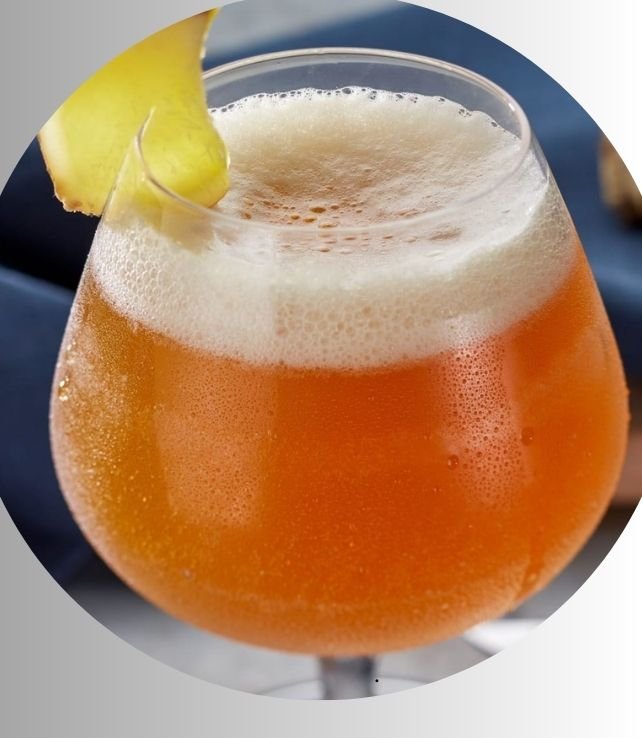
You have likely tasted ginger ale or ginger beer, but have you ever made a true ginger brew from scratch? The difference is not subtle. Store-bought versions often rely on extracts and high-fructose corn syrup, resulting in a one-dimensional, sugary fizz. A homemade brew, however, is a living, fermenting beverage with a complex, fiery personality that you control from start to finish.
I recall my first attempt, over a decade ago, following a tattered notebook instruction from a friend. The process seemed alchemical. Combining simple ingredients and waiting for nature to take its course felt like a small act of kitchen magic. That initial batch, with its potent, peppery kick and natural effervescence, was a revelation. It wasn’t just a soda; it was a probiotic, digestive-aiding tonic that connected me to centuries of traditional beverage-making.
This recipe is for that kind of ginger brew. It is a two-stage process: first creating a powerfully aromatic ginger syrup, and then fermenting it to produce natural carbonation. The result is a less-sweet, more sophisticated drink with a real ginger bite and a lively sparkle. Below, you will find the complete, tested method, followed by a deep exploration of the ingredients, science, and cultural history that make this drink so special.
Dietary Adaptations and Creative Variations
The base recipe is naturally vegan and gluten-free. Most adaptations revolve around the sugar source and flavor additions.
Sweetener Swaps
For a lower-glycemic option, erythritol or allulose can be used, but note that yeast cannot ferment these sugar alcohols. You will get a flavored syrup but will need to force-carbonate it with a soda siphon. For a partial swap, using up to half honey or maple syrup can work, but fermentation may be slower due to their natural antimicrobial properties.
Flavor Infusions
The basic syrup is a perfect canvas. During the simmering stage, you can add other ingredients to create unique profiles.
- Spiced Citrus: Add the zest of an orange and two crushed cardamom pods.
- Herbal: A few sprigs of fresh rosemary or thyme introduce an aromatic, savory dimension.
- Floral & Hot: Two dried hibiscus flowers and a single small, sliced habanero pepper make a stunningly vibrant and spicy brew.
Common Mistakes and How to Avoid Them
After guiding hundreds through this process, I have identified the key pitfalls.
Over-fermentation (Bottle Bombs): This is the most important safety concern. Leaving bottles at room temperature for too long creates excessive CO2 pressure. The fix is simple: refrigerate immediately once carbonation is achieved (the 24-48 hour window is a guide, not a rule). Use plastic bottles as a gauge; when they are rock-hard, they are ready for the fridge.
Weak Ginger Flavor: This usually stems from not using enough ginger, or from boiling the syrup too vigorously, which drives off the delicate volatile oils. Simmer gently and use the full 200 grams.
Cloudy or Gritty Brew: Inadequate straining is the culprit. Use a fine-mesh sieve lined with a double layer of cheesecloth for an absolutely clear liquid.
Lack of Fizz: This can be due to water that is too hot when the yeast is added (which kills it), using old yeast, or a kitchen that is too cold. Ensure your liquid is lukewarm, your yeast is fresh, and your fermentation spot is consistently around 70-75°F (21-24°C).
Serving, Storage, and Culinary Uses
Serve this brew well-chilled in a tall glass, with or without ice. A thin slice of fresh ginger or a twist of lemon peel makes a simple garnish.
Beyond drinking it straight, it is an exceptional mixer. It makes a far superior Dark ‘n’ Stormy (with dark rum) than any commercial ginger beer. A splash in a whiskey highball or as the base for a fermented Moscow Mule elevates the cocktail.
Storage is straightforward. Once refrigerated, the brew is stable for 2-3 weeks. The flavor will continue to mature and dry out slightly as slow fermentation continues. Always check pressure before opening. If a bottle shows no signs of carbonation after several days, the fermentation did not initiate, and it should be treated as a ginger syrup and used within a week.
The Science of the Fizz
The carbonation you achieve is a direct product of anaerobic respiration by yeast. The chemical equation is simple: Sugar (C6H12O6) is converted by yeast into ethanol (C2H5OH) and carbon dioxide (CO2). In our sealed bottle, the CO2 has nowhere to go, so it dissolves into the liquid under pressure, creating the effervescence. The small amount of ethanol produced is typically below 0.5%, classifying it as a non-alcoholic beverage by most standards. This is the same basic principle behind the carbonation in beer and champagne, just on a shorter timeline.
Frequently Asked Questions
Can I make this without yeast for a non-fermented version?
Yes. Follow the steps to make the ginger-lemon syrup (through step 5). Instead of adding yeast, simply bottle it and refrigerate. You will have a potent, still ginger cordial. To serve, mix 1/4 to 1/3 cup of the syrup with sparkling water or club soda over ice.
My brew tastes a little yeasty. Is that normal?
A slight yeasty aroma can be present, especially if using commercial yeast. It often dissipates after a few days in the refrigerator. For a cleaner taste, try using a ginger bug starter or reducing the amount of yeast to 1/8 teaspoon in your next batch.
How do I know if my fermentation is active?
Signs include tiny bubbles rising to the surface of the liquid in the bottle (visible against the glass) and the bottle becoming firm as pressure builds. With plastic bottles, you can gently squeeze them daily; resistance indicates CO2 production.
Is homemade ginger brew safe?
When made with clean equipment and following the basic rules of fermentation (using adequate acid/sugar, and monitoring carbonation), it is very safe. The low pH and alcohol content create an environment hostile to harmful pathogens. If you see mold, smell anything foul (beyond a yeasty aroma), or taste anything off, discard the batch.
Can I use ground ginger instead of fresh?
I do not recommend it. Ground ginger lacks the fresh, pungent oils and juice. It will result in a muddy, dusty flavor and a cloudy brew. Fresh ginger is non-negotiable for the right flavor profile and successful fermentation.
Why is my ginger brew so spicy?
The spiciness, or pungency, comes from gingerols. The heat level can vary based on the ginger’s origin and freshness. Young ginger is milder; older, more mature ginger is much hotter. You can reduce the heat by using less ginger, or by peeling it (as some of the pungent compounds are concentrated near the skin).
What is the difference between this and a “ginger bug”?
A ginger bug is a starter culture. It is a separate mixture of ginger, sugar, and water that you maintain for weeks, feeding it regularly. You then use a portion of that active, fermented liquid to inoculate your main brew. The recipe above using dry yeast is a shortcut that bypasses the need to maintain a separate starter.
How can I reduce the sugar content?
Reducing sugar
