
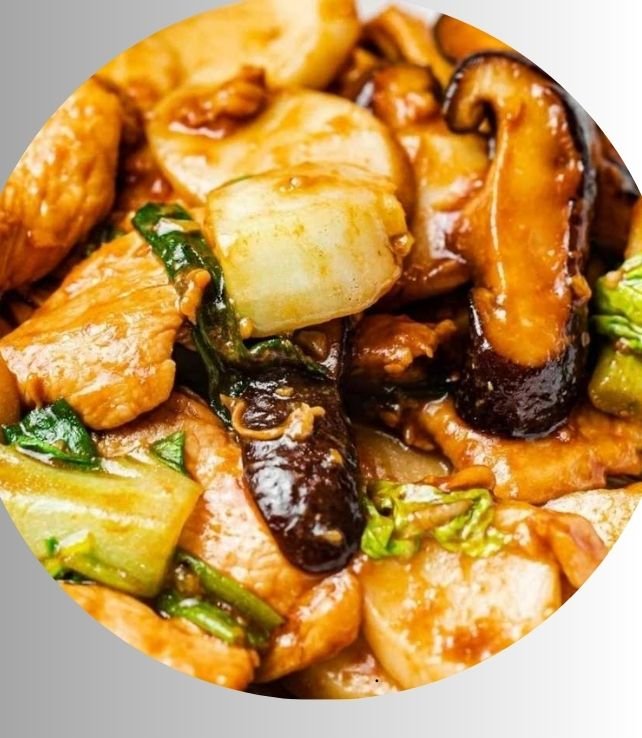
There is a specific texture I have been trying to recreate in my kitchen for years: a chewy, soft, and slightly elastic bite that is neither gummy nor dense. I found it in the rice cakes from Din Tai Fung, the world-renowned Taiwanese restaurant. While their soup dumplings often steal the spotlight, their simple, savory rice cakes left a lasting impression on me.
This recipe is my result of many attempts to capture that specific mouthfeel and flavor at home. Below, I will guide you through the precise techniques and ingredient choices that make the difference between a good rice cake and an authentic one. We will cover everything from the science of the rice flour to the nutritional profile of the final dish.
Understanding the Core: What Are Taiwanese Rice Cakes?
Before we begin cooking, it is important to understand what we are making. The Din Tai Fung rice cake dish, often listed as “Stir-Fried Rice Cakes” or “Nian Gao” on menus, uses sliced rice cakes as its primary component. These are not the sweet, pan-fried nian gao eaten during Lunar New Year, nor are they the Korean tteokbokki rice cakes, which have a different texture profile.
Taiwanese stir-fried rice cakes are savory, chewy, and typically cooked with pork, vegetables like Chinese cabbage or spinach, and a savory soy-based sauce. The texture is paramount—it should be pleasantly chewy (QQ in Taiwanese culinary terms) but not tough, and it should absorb the flavors of the sauce without becoming soggy.
The Historical and Cultural Context of Rice Cakes
Rice cakes, in various forms, are a staple across many Asian cultures. In Taiwan, savory stir-fried rice cakes are a common comfort food and a standard item in many local restaurants and home kitchens. Din Tai Fung’s version elevated this humble dish through meticulous ingredient sourcing and consistent technique.
The restaurant’s focus on precision, from the folds of a xiaolongbao to the cut of a green bean, extends to this dish. Their rice cakes are likely sourced from specific producers who master the water-to-rice flour ratio and milling process. Understanding this context helps us appreciate why replicating it requires more than just a list of ingredients.
How to Make Din Tai Fung Rice Cake Recipe
This recipe breaks down the process into two main phases: preparing the rice cakes and executing the stir-fry. For the best results, read through the entire recipe and the detailed analysis in the following sections before you start.
Recipe Details
- Prep Time: 30 minutes (plus optional soaking)
- Cook Time: 15 minutes
- Servings: 3-4
- Course: Main Course
- Cuisine: Taiwanese
- Diet: Can be adapted
Ingredients
- 450g fresh or frozen Taiwanese-style rice cake slices
- 150g pork loin or shoulder, thinly sliced
- 3-4 dried shiitake mushrooms
- 2 cups Napa cabbage, sliced
- 2 cups baby spinach
- 2 cloves garlic, minced
- 1-inch piece ginger, julienned
- 2 tablespoons cooking oil (like avocado or peanut)
- 1 tablespoon toasted sesame oil
- 1 ½ cups hot water or mushroom soaking liquid
For the Pork Marinade:
- 1 teaspoon light soy sauce
- 1 teaspoon Shaoxing wine
- ½ teaspoon cornstarch
- 1 pinch white pepper
For the Sauce:
- 2 tablespoons light soy sauce
- 1 tablespoon dark soy sauce (for color)
- 1 teaspoon sugar
- ½ teaspoon white pepper
- 1 teaspoon cornstarch mixed with 2 tablespoons water (slurry)
Instructions
- If using dried mushrooms, soak them in hot water for 20-30 minutes until soft. Squeeze dry, remove stems, and slice thinly. Reserve the soaking liquid.
- Separate the rice cake slices if they are stuck together. If they are very hard, you can soak them in cool water for 10-15 minutes, then drain thoroughly. Pat them completely dry with a kitchen towel; this is crucial for browning.
- Combine the sliced pork with the marinade ingredients. Mix well and set aside for 15 minutes.
- In a small bowl, combine the light soy sauce, dark soy sauce, sugar, and white pepper. Have your cornstarch slurry ready.
- Heat a wok or large skillet over high heat until very hot. Add 1 tablespoon of cooking oil. Add the rice cakes in a single layer and let them sear for 60-90 seconds until lightly browned on one side. Flip and sear the other side. Remove and set aside.
- Add the remaining tablespoon of cooking oil to the wok. Add the marinated pork and stir-fry until it just loses its pink color. Remove and set aside with the rice cakes.
- In the same wok, add the garlic and ginger. Stir for 20 seconds until fragrant. Add the sliced shiitake mushrooms and stir-fry for a minute.
- Add the Napa cabbage and stir-fry for 1-2 minutes until it begins to wilt. Pour in the hot water or mushroom liquid.
- Return the seared rice cakes and pork to the wok. Add the prepared sauce mixture. Stir everything together, reduce heat to medium, and let it simmer for 3-4 minutes. The rice cakes will soften and absorb the liquid.
- Stir in the baby spinach until wilted. Give the cornstarch slurry a final stir and drizzle it into the center of the wok while stirring. The sauce will thicken and coat everything evenly.
- Turn off the heat. Drizzle the toasted sesame oil over the top and give one final gentle toss. Serve immediately.
Nutrition
- Calories: 380 kcal (per serving, approx.)
- Protein: 18 g
- Fat: 12 g
- Carbohydrates: 52 g
- Sugar: 4 g
- Fiber: 3 g
- Sodium: 850 mg
- Cholesterol: 35 mg
Cooking Method
The primary method is stir-frying, but it incorporates specific techniques: high-heat searing for the rice cakes, sequential cooking of proteins and vegetables to manage texture, and final simmering to allow the rice cakes to absorb flavor. The sauce is thickened at the end with a cornstarch slurry to create a glossy, clinging coating.
Tools Needed
- A wok or large, heavy-bottomed skillet (carbon steel or cast iron is ideal for high heat)
- Sharp knife and cutting board
- Bowls for marinating and mise en place
- Spatula or wok turner
- Kitchen towels for drying rice cakes
Ingredient Analysis and Selection
Each component in this recipe plays a specific role. Substituting without understanding its function can alter the final result significantly.
The Rice Cakes: The Heart of the Dish
This is the most critical ingredient. Taiwanese savory rice cakes are made from rice flour and water, sometimes with a small amount of tapioca or potato starch added to modify the texture. They are sold fresh, refrigerated, or frozen in slabs or pre-sliced ovals.
When selecting them, look for packages labeled for savory stir-fries. The texture should be firm but pliable, not rock-hard or brittle. Avoid any with a sour smell. The milling of the rice flour determines the final smoothness; a finer mill yields a smoother, more cohesive chew.
Protein and Umami Components
Pork provides a savory depth that complements the mild rice cakes. A cut with a slight fat marbling, like shoulder, stays tender during quick cooking. The marinade, with cornstarch, creates a protective layer that seals in juices.
Dried shiitake mushrooms are non-negotiable for an authentic flavor. Their concentrated umami, released during soaking and cooking, forms the backbone of the dish’s savory profile. The soaking liquid becomes a flavorful cooking broth.
The Sauce and Aromatics
Using both light and dark soy sauce provides a balanced saltiness and the characteristic deep brown color. White pepper is preferred over black for its sharper, cleaner heat that doesn’t visually speckle the dish. Toasted sesame oil is always added at the end as a finishing oil; its flavor diminishes if cooked over high heat.
Nutritional Breakdown and Dietary Considerations
As a dish, this recipe offers a balance of macronutrients. The primary energy source is carbohydrates from the rice cakes and vegetables. The pork and mushrooms contribute protein, while the oils provide healthy fats necessary for nutrient absorption and satiety.
The sodium content is notable, primarily from soy sauce. For those monitoring sodium intake, you can use a reduced-sodium soy sauce, but note it will change the flavor balance. The dish provides a moderate amount of fiber from the Napa cabbage and spinach, which supports digestive health.
Dietary Adaptations
This recipe is adaptable to various dietary needs without losing its essential character.
Gluten-Free Adaptation
Ensure your soy sauce is a certified gluten-free tamari. Check that your rice cakes are made in a facility without cross-contamination, as some may use wheat starch.
Vegetarian or Vegan Adaptation
Omit the pork. Increase the quantity of shiitake mushrooms or add sliced seitan or firm, pressed tofu as a protein. Use a vegetarian stir-fry sauce or mushroom-based “oyster” sauce instead of the standard soy sauce blend for deeper flavor. Replace the pork marinade step with marinating your chosen protein.
Lower-Carb Adaptation
This is challenging as rice cakes are carbohydrate-dense. You could reduce the quantity of rice cakes and increase the proportion of cabbage, spinach, and mushrooms. The texture experience, however, will be fundamentally different.
The Science of Texture and “QQ”
The desired chewy texture, known as “QQ” in Taiwanese, is a result of starch gelatinization and retrogradation. When rice flour is cooked with water, the starch granules swell and gelatinize, forming a network that gives structure.
The specific chew comes from the type of rice used (typically short or medium-grain) and the potential addition of other starches like tapioca. Tapioca starch has a high amylopectin content, which contributes to a springier, more elastic gel than rice flour alone. When you sear the rice cakes, you create a slight crust via the Maillard reaction, which contrasts with the soft interior and prevents them from becoming mushy during simmering.
Common Mistakes and How to Avoid Them
After testing this recipe multiple times, I identified several points where the process can go wrong.
- Mistake 1: Skipping the Sear. Adding soft rice cakes directly to the sauce will cause them to dissolve slightly, making the sauce overly starchy and the cakes mushy. The sear creates a barrier.
- Mistake 2: Over-soaking the Rice Cakes. A brief soak is only for very hard, dried cakes. For fresh or frozen, simply separate and dry them thoroughly. Wet rice cakes will steam instead of sear.
- Mistake 3: Crowding the Wok. When searing, work in batches if necessary. Crowding lowers the pan temperature and causes the rice cakes to steam and stick together.
- Mistake 4: Overcooking the Pork. Cook the pork just until it changes color, then remove it. It will finish cooking when returned to the wok, preventing it from becoming tough and dry.
- Mistake 5: Adding Sesame Oil Too Early. Its delicate flavor compounds are volatile. Adding it at the end preserves its aroma and taste.
Serving, Pairing, and Storage Guidance
This dish is a complete meal on its own, but it can be part of a larger Taiwanese-style meal. Serve it hot, directly from the wok. The texture is best immediately after cooking.
For pairings, a simple clear soup, like a seaweed and tofu soup, complements it well. The dish is rich and savory, so a lighter, acidic side like a cucumber salad dressed with rice vinegar can provide balance.
Leftovers can be stored in an airtight container in the refrigerator for up to 2 days. Reheat gently in a microwave or on the stovetop with a small splash of water to loosen the sauce. Note that the rice cakes will harden when cold and soften again upon reheating, often becoming slightly denser.
I do not recommend freezing the completed dish, as the texture of the rice cakes and vegetables will degrade significantly upon thawing and reheating.
Frequently Asked Questions
Can I use Korean tteok for this recipe?
You can, but the result will be different. Korean tteok for tteokbokki is often denser and chewier. It may require a longer simmering time to soften and may not absorb the sauce in the same way. The final texture will be firmer.
My rice cakes turned out very hard. What happened?
This usually means they were not simmered in the sauce for long enough. After adding the liquid and sauce, ensure you let the dish simmer for a full 3-4 minutes, allowing the rice cakes to heat through completely and soften by absorbing the hot liquid. Undercooked rice flour products will have a hard, unpleasant chalkiness.
Is there a substitute for dark soy sauce?
Dark soy sauce is primarily for color. If you do not have it, use all light soy sauce. The dish will be lighter in color but will still taste correct. You could add a tiny drop of molasses to approximate the color, but this is not traditional.
Why is my final dish too watery?
Two likely causes: first, the rice cakes were not dried before searing, introducing extra water. Second, the cornstarch slurry was not used, or not enough was used to properly thicken the sauce. Ensure your slurry is well-mixed and added to the simmering liquid.
Can I make the rice cakes from scratch?
Yes, but it is a specialized process. It involves making a dough from rice flour and hot water, steaming it until set, then cooling and slicing. For most home cooks, sourcing high-quality pre-made rice cakes is the most practical path to achieving the authentic Din Tai Fung texture.
How can I make this dish spicier?
Add a teaspoon of chili bean paste (doubanjiang) or a few dried red chilies when stir-frying the garlic and ginger. This will infuse the oil with heat. You can also serve it with a side of chili oil for individuals to adjust their own portion.
What is the purpose of the sugar in the sauce?
The small amount of sugar is not for sweetness but to round out the salty and savory flavors. It balances the soy sauce and enhances the overall umami profile, preventing the dish from tasting one-dimensionally salty.
