
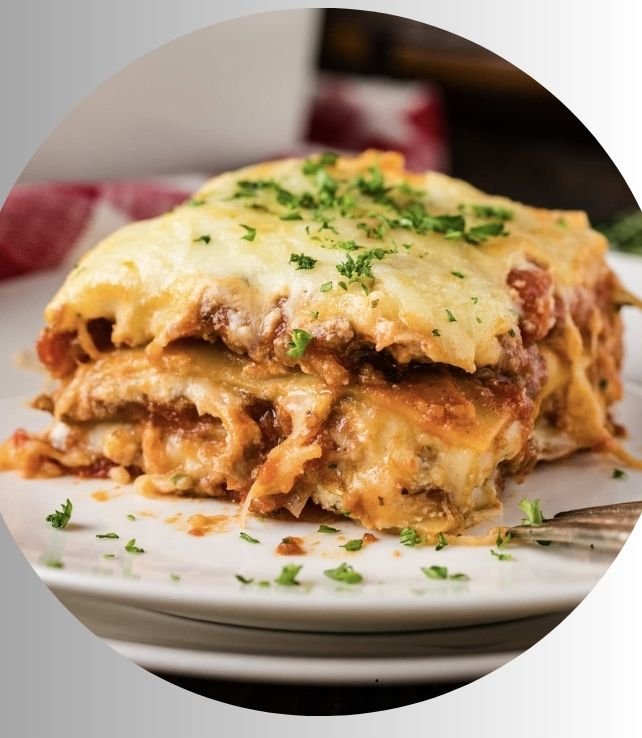
You have a box of Creamette lasagna noodles in your pantry. It’s a familiar sight, a staple for many home cooks. Yet, the gap between a simple box of pasta and a truly memorable, well-constructed lasagna can feel wide. The layers can be watery, the cheese rubbery, the flavor one-dimensional.
My aim is to bridge that gap. This isn’t just about following steps; it’s about understanding the principles behind them. I’ve made this dish countless times, adjusting techniques from my culinary research and considering its nutritional profile. The result is a methodical guide to transforming those reliable Creamette noodles into a lasagna that is structurally sound, deeply flavorful, and can be adapted to fit various dietary needs. Let’s begin with the complete recipe.
Dairy-Free and Vegan Adaptation
For a dairy-free version, use a plant-based ricotta alternative (often made from almonds or tofu) and vegan mozzarella shreds. Bind the “ricotta” with a flax egg (1 tbsp ground flaxseed mixed with 2.5 tbsp water per egg). Nutritional yeast can replace Parmesan for a cheesy, umami flavor. Replace the meat with a mixture of cooked lentils and finely chopped mushrooms sautéed with Italian seasoning for a hearty, plant-based filling.
Lower-Carb and Higher-Protein Version
Instead of pasta, use thin slices of zucchini or eggplant as the layering agent. Salt the slices and let them drain for 30 minutes to remove excess water, then pat dry before assembling. Increase the proportion of lean ground meat, such as turkey or chicken, and consider adding an extra egg to the ricotta mixture to boost protein further. Use a part-skim ricotta and mozzarella.
The History and Evolution of Lasagna
The dish we know today is an Italian-American creation, a descendant of ancient pasta preparations. The earliest known recipe resembling lasagna appears in a 14th-century English cookbook, “The Forme of Cury,” likely influenced by Italian cuisine. That version featured layered pasta with cheese and spices.
In Italy, regional variations abound. In Naples, “Lasagna di Carnevale” is layered with meatballs, sausage, hard-boiled eggs, and ricotta. In Bologna, “Lasagna alla Bolognese” uses green spinach pasta, a slow-cooked ragù, and béchamel sauce instead of ricotta. The American version, popularized by immigrants, simplified the components into a casserole using readily available ingredients like dried pasta, canned tomatoes, and ricotta—a practical, nourishing dish for families. The Creamette brand became a part of this story, providing a consistent, accessible product for home kitchens.
Common Mistakes and How to Avoid Them
After testing this process many times, I’ve identified the pitfalls that can undermine your results.
Watery Lasagna
This is the most frequent issue. It stems from three main sources: under-simmered sauce with too much liquid, using vegetables like spinach that haven’t been thoroughly wrung dry, or over-cooking the noodles before assembly. Our method addresses each: a long simmer reduces the sauce, we avoid watery add-ins here, and par-cooking leaves the noodles firm so they absorb excess moisture from the sauce during baking.
Rubbery or Oily Cheese
Using pre-shredded, low-quality mozzarella or over-baking can cause this. Low-moisture mozzarella is key. Shredding it yourself from a block ensures a clean melt. Covering the dish for the first part of baking protects the cheese from direct heat, preventing it from seizing and releasing fat.
Difficulty in Serving
Cutting into lasagna straight from the oven is a recipe for a soupy, collapsed slice. The resting period is as crucial as the baking time. During these 15-20 minutes, the starches in the pasta and sauce set, the fats in the cheese slightly firm up, and everything settles into distinct, stackable layers.
Serving, Pairing, and Storage Guidelines
Lasagna is a centerpiece. Serve it with a crisp, acidic side to cut the richness. A salad of arugula with a lemon vinaigrette is perfect. Garlic bread is a classic accompaniment, though from a nutritional standpoint, the dish already provides ample carbohydrates.
For storage, cool the lasagna completely. Wrap individual portions or the entire dish tightly. It will keep in the refrigerator for up to 4 days. Reheat portions in a covered oven-safe dish at 350°F until warmed through, or use the microwave at a reduced power setting. For longer storage, freeze it. Assemble the lasagna in a disposable aluminum pan, bake it, cool it completely, wrap it in several layers of plastic wrap and foil, and freeze for up to 3 months. Thaw in the refrigerator overnight before reheating.
The Science of Layering and Baking
The structure of lasagna is a lesson in food science. Par-cooking the pasta hydrates the starch granules, making them gelatinize. During baking, this gelatinized starch absorbs liquid from the sauce, swelling and setting to create a firm layer. The egg in the ricotta mixture acts as a coagulant, setting the cheese layer into a custard-like consistency rather than a runny one. Covering the dish with foil for the initial bake creates a steamy environment that heats the center evenly without over-browning the top. The final uncovered bake allows the Maillard reaction to occur on the cheese surface, creating complex flavor compounds and the desirable golden-brown color.
Frequently Asked Questions
Can I make this lasagna ahead of time?
Yes, it is an excellent make-ahead dish. Assemble it completely, cover tightly, and refrigerate for up to 24 hours before baking. You may need to add 5-10 minutes to the covered baking time if it goes into the oven cold.
Why do you par-cook the noodles instead of using no-boil?
Par-cooking gives you more consistent and reliable results. You control the noodle’s doneness before assembly, ensuring it finishes cooking perfectly in the oven by absorbing sauce. No-boil noodles can be inconsistent and often require a very specific amount of liquid around them to cook through properly.
What can I use instead of red wine in the sauce?
Use an equal amount of beef broth, chicken broth, or even water. The primary goal is to deglaze the pan and add a layer of flavor. Broth will provide savory notes, while water will work without adding extra flavor.
My lasagna is always dry around the edges. How can I prevent this?
Ensure the top layer of noodles is completely covered with sauce before adding the final cheese. The sauce acts as a protective barrier. Also, make sure your baking dish is not too shallow; the sides can insulate the edges. Using a glass or ceramic dish instead of metal can also lead to more even heating.
Is it necessary to use both beef and sausage?
No, but it is recommended for depth of flavor. You can use 2.5 pounds of all ground beef or all Italian sausage. Using only very lean beef (like 93/7) may result in a less flavorful sauce, as fat carries flavor.
How do I know when the lasagna is fully cooked?
The visual cues are bubbling sauce around the edges and melted, lightly browned cheese on top. An instant-read thermometer inserted into the center should read at least 165°F, indicating the egg in the ricotta layer has cooked and the dish is safely heated through.
Can I freeze individual portions?
Absolutely. After baking and cooling, cut the lasagna into portions. Wrap each portion tightly in plastic wrap, then place them in a freezer bag or airtight container. Freeze for up to 3 months. Reheat from frozen in the oven, covered, until hot throughout.
What’s the difference between ricotta and cottage cheese in lasagna?
Ricotta is smoother, sweeter, and has a finer curd. Cottage cheese has larger, distinct curds and a tangier flavor. While cottage cheese can be substituted in a pinch, ricotta provides the classic texture and mild flavor associated with traditional Italian-American lasagna.
