
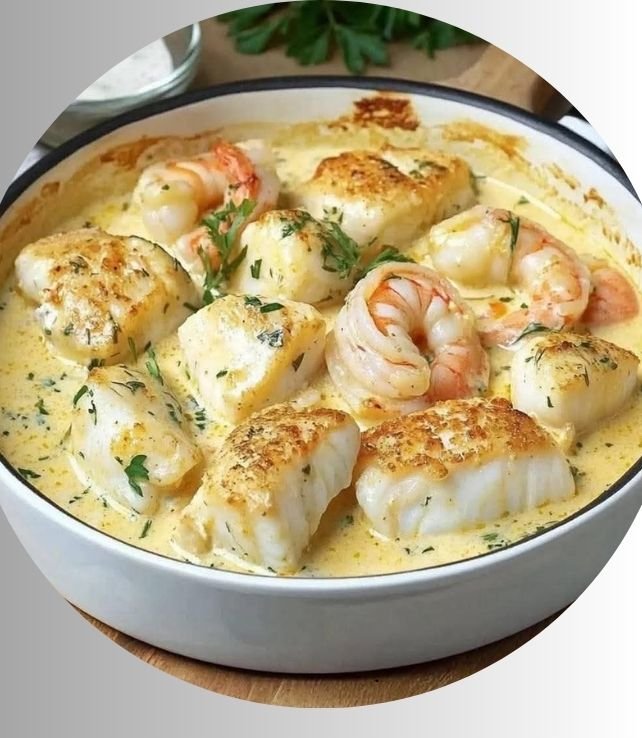
Finding a meal that is both impressive for guests and simple enough for a weeknight can be a challenge. You want something that feels special, nourishing, and doesn’t require hours in the kitchen. This combination of cod and shrimp solves that problem.
I first had a version of this dish years ago in a small coastal town, where the day’s catch dictated the menu. The memory of those clean, bright flavors stayed with me. In my work, I often look for meals that deliver high-quality protein and healthy fats without heavy sauces or complicated techniques. This recipe does exactly that, bringing together the mild, flaky texture of cod with the sweet, firm bite of shrimp.
Below, you will find the complete recipe, followed by detailed guidance on selecting ingredients, understanding their nutritional benefits, adapting the dish to various dietary needs, and mastering the techniques for the best result.
Lower-Sodium Version
Omit added salt during seasoning and use a no-sodium seafood stock instead of wine. Rely on the freshness of the herbs, the acidity of the lemon, and a generous amount of black pepper for flavor. The natural sodium in the seafood will still provide some seasoning.
Paleo and Whole30 Compliance
To make this recipe compliant, ensure the shrimp have no added sulfites, use ghee instead of butter, and substitute the wine with compliant seafood stock or simply use additional lemon juice and a splash of water.
Cultural and Historical Connections
Combinations of different types of seafood are a hallmark of coastal cooking worldwide, from Italian *fritto misto* to Spanish *zarzuela*. This specific pairing of a flaky white fish and shellfish speaks to a practical, resourceful culinary tradition.
In many North Atlantic fishing communities, the catch was never guaranteed to be uniform. A day might yield both groundfish like cod and netted shellfish like shrimp. Cooking them together in a simple preparation was a way to create a hearty, communal meal from what was available. This recipe is a modern, refined take on that tradition, emphasizing quick cooking and fresh flavors over prolonged stewing.
Common Mistakes and How to Avoid Them
Success with seafood often comes down to avoiding a few key errors that can compromise texture and taste.
Overcrowding the Pan
Adding too much seafood to the skillet at once causes the temperature to drop dramatically. Instead of searing, the ingredients will steam and release liquid, leading to a rubbery texture. Cook the cod and shrimp in batches to ensure each piece has contact with the hot surface.
Overcooking the Seafood
Cod and shrimp cook quickly and continue to cook from residual heat after being removed from the pan. The cod is done when it flakes easily but is still moist in the center. Shrimp are done the moment they curl and turn opaque. It is better to err on the side of slightly underdone, as you will return them to the warm sauce at the end.
Using Wet Ingredients
Failing to pat the cod and shrimp thoroughly dry is perhaps the most common mistake. Surface moisture prevents browning and creates steam. Take the time with paper towels to ensure the seafood is completely dry before seasoning and cooking.
Serving Suggestions, Pairings, and Storage
This dish is a complete centerpiece, but thoughtful accompaniments can round out the meal.
Ideal Side Dishes
To keep the meal light, serve with a simple arugula salad dressed with lemon vinaigrette or steamed asparagus. For a more substantial plate, roasted baby potatoes, quinoa, or a crusty whole-grain baguette to soak up the sauce are excellent choices.
Wine and Beverage Pairings
The same dry white wine used in the recipe, such as a Sauvignon Blanc or Pinot Grigio, pairs beautifully. A crisp, non-oaked Chardonnay also complements the dish. For a non-alcoholic option, sparkling water with a twist of lemon or a chilled herbal tea works well.
Storing and Reheating Leftovers
Store leftovers in an airtight container in the refrigerator for up to two days. To reheat, place the seafood and sauce in a covered skillet over very low heat just until warmed through. Avoid the microwave, as it will easily overcook and toughen the protein. I do not recommend freezing the cooked dish, as the texture of the seafood will deteriorate.
The Science of Searing and Deglazing
Understanding the reactions happening in your skillet can make you a more confident cook. Searing triggers the Maillard reaction, a complex chemical process between amino acids and reducing sugars that creates hundreds of new flavor compounds and the desirable brown crust. This is different from caramelization, which involves sugars alone.
When you add liquid to the hot pan after searing, you are deglazing. The liquid dissolves the water-soluble fond—the concentrated, caramelized bits stuck to the pan. This incorporates those deep, savory flavors into your sauce, ensuring no flavor is left behind.
Frequently Asked Questions
Can I use frozen cod and shrimp for this recipe?
Yes, frozen seafood can be a high-quality option. Thaw it completely in the refrigerator overnight. Place the sealed packages on a plate to catch any drips. Never thaw at room temperature or in warm water, as this can compromise texture and safety.
What can I use if I don’t have white wine?
An equal amount of seafood stock, chicken broth, or even vegetable broth works well. You can also use additional lemon juice mixed with a little water. The goal is to provide a flavorful liquid to deglaze the pan and create the sauce base.
How do I know when the cod is cooked through?
The fish is done when it turns opaque and flakes easily when gently pressed with a fork at its thickest part. An instant-read thermometer inserted into the center should read 145°F (63°C). The fish will continue to cook slightly after removal from the heat.
Is this recipe suitable for a low-cholesterol diet?
While shrimp contain dietary cholesterol, current nutritional science indicates that saturated fat intake has a greater impact on blood cholesterol for most people. This recipe is low in saturated fat. However, individuals with specific medical conditions should consult their healthcare provider for personalized advice.
Can I bake this cod and shrimp recipe instead of pan-searing?
You can. Arrange the seasoned cod and shrimp in a baking dish. Combine the olive oil, garlic, lemon juice, and herbs and pour over the top. Bake at 400°F (200°C) for 12-15 minutes, until the cod flakes. The result will be more of a poached texture, lacking the seared crust, but it is a hands-off method.
My sauce broke and looks oily. How can I fix it?
A broken sauce means the fat has separated from the liquid. To fix it, remove the pan from heat. Add a teaspoon of cold water or lemon juice and whisk vigorously to re-emulsify. Adding a small pat of cold butter and whisking can also help bring it back together.
What are the best herbs to use if I don’t have fresh dill?
Fresh tarragon offers a subtle anise note that pairs well with seafood. Thyme or chives are also good alternatives. If using dried herbs, use one-third the amount called for of fresh, as their flavor is more concentrated.
