
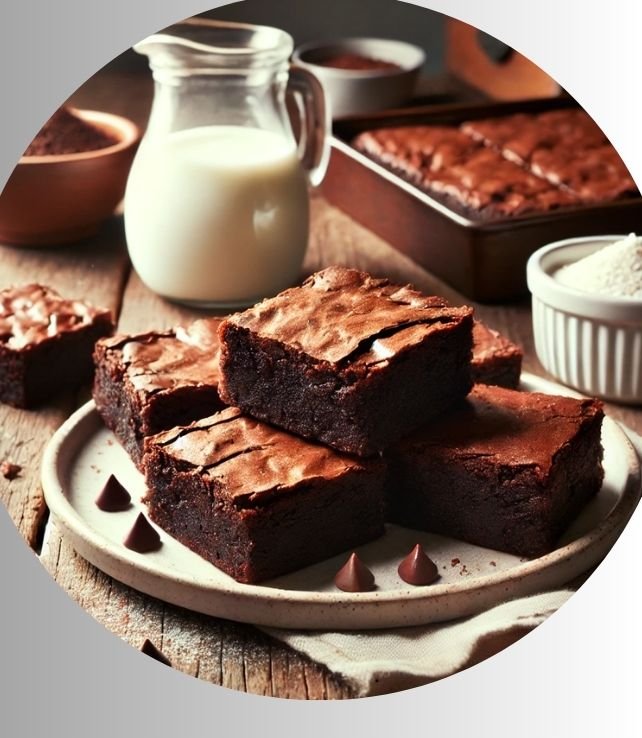
You have a can of sweetened condensed milk in your pantry. It’s been there a while, a relic from a holiday recipe you never made. You also want a brownie, but the idea of creaming butter and sugar or melting chocolate feels like a project. What if that can was the secret to the fastest, most fudgy brownie you’ve ever made?
This brownie condensed milk recipe is the solution. It transforms a single can of sweetened condensed milk into the base for a dense, chewy, intensely chocolate dessert with a crackly top. It bypasses many traditional steps, requiring no softened butter, no granulated sugar, and no double boiler. As a dietician and culinary historian, I appreciate its clever use of pantry staples, and as someone who values time in the kitchen, I rely on its consistent, excellent results.
I first encountered this method years ago in a community cookbook from the American Midwest, a region known for its resourceful, depression-era baking. The recipe was a handwritten note, simply titled “Emergency Brownies.” I’ve since refined it, understanding the science behind its simplicity. Below, you will find the complete formula, followed by a deep analysis of why it works, how to adapt it, and how to master it.
How to Make Brownie Condensed Milk Recipe
This section provides the complete, tested formula. Read through all instructions before beginning. The process is straightforward, but precision matters for the correct texture.
Recipe Details
- Prep Time: 10 minutes
- Cook Time: 25-30 minutes
- Servings: 16 squares
- Course: Dessert
- Cuisine: American
- Diet: Vegetarian
Ingredients
- 1 (14 oz / 397 g) can full-fat sweetened condensed milk
- 1/2 cup (113 g) unsalted butter, melted
- 2 large eggs, at room temperature
- 1 teaspoon pure vanilla extract
- 3/4 cup (75 g) unsweetened natural cocoa powder (not Dutch-processed)
- 1 cup (125 g) all-purpose flour
- 1/2 teaspoon baking powder
- 1/4 teaspoon fine sea salt
- 1 cup (170 g) semi-sweet chocolate chips or chopped chocolate
Instructions
- Preheat your oven to 350°F (175°C). Grease an 8×8-inch square baking pan and line it with parchment paper, leaving an overhang on two sides for easy removal.
- In a large mixing bowl, combine the melted butter and the entire can of sweetened condensed milk. Whisk vigorously until the mixture is completely smooth and uniform.
- Add the eggs and vanilla extract to the butter-milk mixture. Whisk again until the eggs are fully incorporated and the batter looks glossy.
- Sift the cocoa powder, flour, baking powder, and salt directly into the wet ingredients. This prevents lumps. Use a spatula to fold the dry ingredients into the wet until just combined; do not overmix.
- Fold in the chocolate chips or chopped chocolate, reserving a small handful to sprinkle on top if desired.
- Pour the thick batter into the prepared pan, spreading it evenly into the corners. Sprinkle with reserved chocolate.
- Bake for 25-30 minutes. The brownies are done when the top is set and shiny with a crackly appearance, and a toothpick inserted into the center comes out with a few moist crumbs (not wet batter). Do not overbake.
- Allow the brownies to cool completely in the pan on a wire rack. This is crucial for them to set properly. Use the parchment paper to lift the entire slab out before cutting into 16 squares with a sharp knife.
Nutrition
- Calories: 285 kcal
- Protein: 5 g
- Fat: 14 g
- Carbohydrates: 37 g
- Sugar: 28 g
- Fiber: 2 g
- Sodium: 85 mg
- Cholesterol: 55 mg
Cooking Method
This recipe uses the quick-bread or muffin mixing method. The wet ingredients (condensed milk, butter, eggs) are combined first. The dry ingredients are then folded in just until incorporated, minimizing gluten development for a tender, dense crumb. The cooking method is standard oven baking.
Tools Needed
- 8×8-inch square baking pan
- Parchment paper
- Large mixing bowl
- Whisk and spatula
- Fine-mesh sieve or sifter
- Measuring cups and spoons or a digital kitchen scale
- Wire cooling rack
Ingredient Analysis: The Science of Simplicity
Each component in this short list plays a critical, non-negotiable role. Substituting without understanding the function can lead to failure.
Sweetened Condensed Milk: The Architectural Core
This is not just a sweetener; it is the recipe’s structural foundation. Sweetened condensed milk is cow’s milk with about 60% of its water removed and sugar added. The resulting product is roughly 40% sugar and 20% milk solids by weight.
In this brownie, it provides three key attributes. First, its high sugar content attracts and holds moisture, guaranteeing a fudgy, moist texture even if slightly overbaked. Second, the milk proteins (casein and whey) contribute to browning and tenderize the crumb by interfering with gluten formation. Third, its thick, viscous nature replaces the need for creaming butter and sugar, which traditionally incorporates air. This is why these brownies are dense and chewy rather than cakey.
Cocoa Powder: Choosing Your Chocolate Foundation
The instruction to use natural cocoa powder is deliberate. Natural cocoa is acidic. It reacts with the alkaline baking powder in this recipe to produce carbon dioxide gas, giving the brownies a slight lift. Dutch-processed cocoa is treated with an alkali to neutralize its acidity. If used here with baking powder, the leavening reaction would be muted, resulting in a denser, possibly leaden slab.
Natural cocoa also provides a sharper, more fruity chocolate flavor compared to the mellow, earthy notes of Dutch-processed. This intensity stands up to the profound sweetness of the condensed milk.
Butter vs. Oil: A Texture Decision
This recipe uses melted butter, not oil. While oil can make baked goods moister, butter solidifies when cool. This solidification, combined with the setting of the milk proteins and sugars, is what gives these brownies their signature firm, chewy bite at room temperature. Butter also contributes flavor compounds that oil lacks. For the characteristic texture, butter is essential.
Nutritional Breakdown and Dietary Perspective
From a nutritional standpoint, this is an energy-dense dessert. A single serving provides a significant amount of calories from sugars and fats. The primary sugars are sucrose from the condensed milk and added chocolate, and lactose from the milk solids. The fats come from the butter, cocoa butter, and any fat in the chocolate chips.
There is a modest amount of protein (about 5 grams per serving) from the eggs, milk solids, and flour. The fiber content is low, though using a whole-grain flour adaptation can increase it. As a dietician, I view this as a dessert to be enjoyed mindfully within a balanced diet. Its richness means a small square is often satisfying.
The recipe’s high sugar content has a functional purpose beyond sweetness: it is a hygroscopic humectant, binding water molecules to retain moisture and ensure a long shelf-life without drying out.
Dietary Adaptations and Practical Swaps
With careful substitution, this recipe can accommodate several dietary needs without sacrificing its essential character.
Gluten-Free Adaptation
Replace the all-purpose flour with a 1:1 gluten-free baking blend that contains xanthan gum. I have had success with blends based on brown rice flour and tapioca starch. The result will be slightly more crumbly but still fudgy. Do not use a single flour like almond or coconut flour, as they absorb liquid differently and will not provide the necessary structure.
Dairy-Free and Vegan Adaptation
This requires more significant changes. Use a full-fat canned coconut milk, simmered with sugar until reduced by nearly half, to mimic condensed milk. Vegan butter can replace dairy butter. For the eggs, a commercial egg replacer or a flax egg (1 tbsp ground flax + 2.5 tbsp water per egg) can work, though the texture will be denser. Ensure your chocolate chips are vegan.
Lower-Sugar Consideration
You cannot simply reduce the condensed milk; it is the base. You can, however, use a “no sugar added” variety of condensed milk if available, and opt for unsweetened chocolate or cacao nibs instead of chocolate chips. Be aware the texture and sweetness profile will change dramatically.
Cultural and Historical Context
The concept of using sweetened condensed milk in baking is deeply rooted in food preservation and economic necessity. Gail Borden patented the commercial condensation process in 1856, and the product became a staple in regions without reliable fresh milk or refrigeration.
By the mid-20th century, condensed milk was a pantry hero in many American and European kitchens, featured in recipes for key lime pie, magic cookie bars, and fudge. This brownie recipe is a descendant of that tradition—a “desperation dessert” that uses shelf-stable ingredients to produce a treat that feels indulgent. It speaks to a pragmatic, creative approach to home baking where convenience does not compromise quality.
Common Mistakes and Expert Tips for Perfection
After making this recipe countless times and troubleshooting it with others, I have identified the key pitfalls.
Overmixing the Batter
Once the flour is added, mix only until the last streaks of white disappear. Overmixing develops gluten, which can make the brownies tough and rubbery instead of tender.
Misjudging Doneness
The most common error is overbaking. These brownies set significantly as they cool. The toothpick test should yield a few sticky crumbs, not be clean. A clean toothpick indicates overbaking, leading to dry brownies. The top should look set and crackly.
Using Cold Ingredients
Using eggs straight from the refrigerator can cause the melted butter to seize up when combined, creating a grainy batter. Ensure your eggs are at room temperature for a smooth, emulsified mixture.
Cutting While Warm
You must let the brownies cool completely in the pan. Cutting into them while warm releases steam and causes them to fall apart. For clean cuts, chill the entire slab in the refrigerator for an hour before slicing.
Serving, Pairing, and Storage Guidance
These brownies are rich enough to stand alone, but thoughtful pairings can elevate them.
For serving, a small square is sufficient. A sprinkle of flaky sea salt on top before baking or after baking can contrast the sweetness beautifully. A side of freshly whipped cream or a scoop of vanilla ice cream provides a creamy, temperature contrast.
For beverage pairings, consider the bitterness of black coffee or an espresso to cut through the sweetness. A glass of cold milk remains a classic choice.
Storage is straightforward. Keep the brownies in an airtight container at room temperature for up to 4 days. For longer storage, wrap individual squares tightly and freeze for up to 3 months. Thaw at room temperature. The condensed milk base helps them retain moisture exceptionally well, preventing staling.
The Science of the Crackly Top
That shiny, paper-thin crust is a hallmark of a good brownie. It forms through a specific process. During baking, sugar and moisture migrate to the surface. The oven’s heat causes the sugar to dissolve into this thin layer of moisture. As the baking continues, this supersaturated sugar syrup recrystallizes on the surface as the water evaporates, creating a delicate, shiny crust.
The high sugar content from the condensed milk, combined with the proteins from the eggs and milk, makes this recipe particularly prone to forming an excellent crackly top, provided you do not overmix and deflate the batter excessively.
Frequently Asked Questions
Can I use evaporated milk instead of sweetened condensed milk?
No. Evaporated milk is unsweetened. Substituting it would result in a lack of sweetness, improper moisture balance, and a complete failure of the recipe’s structure. They are not interchangeable.
Why did my brownies turn out cakey and dry?
This is typically caused by two factors: overmixing the batter after adding the flour (which developed gluten), or overbaking. Ensure you fold the dry ingredients in gently and remove the pan from the oven when a toothpick shows moist crumbs.
Can I double this recipe?
Yes. Double all ingredients and bake in a 9×13-inch pan. The baking time may increase by 5-10 minutes. Always rely on the visual and toothpick tests for doneness rather than the timer alone.
My batter was very thick. Is that normal?
Yes. This is a very thick, fudgy batter, not a pourable cake batter. You will need to spread it into the pan with a spatula. This thickness is what contributes to the dense final texture.
How can I make these brownies more decadent?
For a more intense experience, fold in 1/2 cup of toasted walnuts or pecans with the chocolate chips. You can also swirl 1/3 cup of smooth peanut butter or salted caramel sauce into the batter in the pan before baking.
Can I make these without eggs?
Eggs provide structure and lift. While a flax egg or commercial replacer can work in a bind, the texture will be denser, more like a chocolate truffle bar, and may not achieve the same crackly top.
What’s the best way to cut brownies cleanly?
For perfect squares, cool completely, then chill. Use a sharp chef’s knife, not a serrated one. Wipe the blade clean with a damp cloth between each cut for sharp edges.
