
You have likely experienced the moment of deciding between a warm slice of apple pie and a piece of soft, olive oil-rich bread. I faced this exact choice during a visit to a farmer’s market last autumn, surrounded by baskets of freshly picked apples and the scent of baking bread from a nearby stall. This recipe is the direct result of that experience, a successful fusion that satisfies both cravings in a single bake.
This guide provides the complete method for creating Apple Pie Focaccia. It is a sweet, flatbread with a tender, airy crumb, topped with spiced apples and a buttery crumble. Below, you will find the detailed recipe, followed by comprehensive analysis on ingredients, technique, and nutritional science to ensure your success.
What is Apple Pie Focaccia?
Apple Pie Focaccia is a creative interpretation of the classic Italian flatbread. Traditional focaccia is a savory bread known for its dimpled surface, crisp crust, and soft interior, enriched with olive oil. This version transforms that base into a dessert by incorporating the core components of an American apple pie: a spiced fruit filling and a streusel-like topping.
The final product is not a pie. It is a baked good that sits squarely in the category of sweet breads. The base is a slightly sweetened dough that, when baked, provides a chewy, cake-like foundation for the tender apples and crunchy crumb on top. It is often finished with a simple glaze or a drizzle of caramel sauce, making it suitable for breakfast, an afternoon snack, or a casual dessert.
The Historical Intersection of Two Traditions
Focaccia’s history dates back to ancient Rome, with its name derived from the Latin ‘focus’, meaning hearth. It was a common bread baked on the hearth. Apple pie, in its modern form, is largely an American institution, with roots in European pastry-making. This recipe represents a modern culinary fusion, combining Old World baking techniques with New World flavors.
This combination works because both items are fundamentally comforting and share a similar structural role in a meal. They are both centerpiece items, often shared among family and friends. By merging them, we create a new tradition that honors the simplicity of Italian bread-making and the hearty, spiced sweetness of American fruit desserts.
Why You Will Appreciate This Dessert Focaccia
This recipe offers a different texture profile than a standard pie. The focaccia base is less rich and flaky than pie crust, providing a chewy, bready contrast to the soft fruit. It is also less formal, requiring no intricate lattice work or crimping, making it accessible for bakers of all skill levels.
From a practical standpoint, the process of making the dough is straightforward. It utilizes common pantry items like all-purpose flour, sugar, and yeast. The active hands-on time is minimal, with the majority of the recipe time dedicated to waiting for the dough to ferment and rise. This makes it an excellent project for a weekend day at home.
How to Make Apple Pie Focaccia Recipe
Recipe Details
- Prep Time: 30 minutes (plus 2-3 hours for rising)
- Cook Time: 25-30 minutes
- Servings: 12 pieces
- Course: Dessert, Snack
- Cuisine: Fusion (Italian-American)
- Diet: Vegetarian
Ingredients
- For the Bread Dough:
- 500 g all-purpose flour
- 7 g instant yeast
- 10 g salt
- 30 g granulated sugar
- 350 ml warm water (about 105-115°F or 40-46°C)
- 50 ml extra virgin olive oil, plus more for the bowl and pan
- For the Spiced Apple Filling:
- 3 medium apples (about 500g), peeled, cored, and thinly sliced
- 30 g unsalted butter
- 50 g brown sugar
- 1 teaspoon ground cinnamon
- 1/4 teaspoon ground nutmeg
- 1 teaspoon vanilla extract
- 1 tablespoon lemon juice
- For the Crumble Topping:
- 60 g all-purpose flour
- 50 g brown sugar
- 45 g cold unsalted butter, cubed
- 1/4 teaspoon salt
- For the Glaze (Optional):
- 100 g powdered sugar
- 2-3 tablespoons milk or apple cider
- 1/2 teaspoon vanilla extract
- Optional: Caramel Drizzle:
- Store-bought caramel sauce or homemade
Instructions
- Make the Dough: In a large bowl, whisk together the flour, instant yeast, salt, and granulated sugar. Pour in the warm water and 50 ml of olive oil. Mix with a wooden spoon or your hands until a shaggy dough forms.
- Knead the Dough: Turn the dough out onto a lightly floured surface. Knead for 8-10 minutes until the dough becomes smooth and elastic. Alternatively, use a stand mixer with a dough hook attachment on medium speed for 5-7 minutes.
- First Rise: Lightly oil the same large bowl. Place the dough in the bowl, turning it to coat in oil. Cover the bowl with a damp cloth or plastic wrap. Let the dough rest in a warm, draft-free area until it has doubled in size, about 1 to 1.5 hours.
- Prepare the Filling: While the dough rises, melt the 30g of butter in a skillet over medium heat. Add the sliced apples, brown sugar, cinnamon, nutmeg, and lemon juice. Cook, stirring occasionally, for 5-7 minutes until the apples have softened slightly but still hold their shape. Stir in the vanilla extract. Remove from heat and let the mixture cool completely.
- Make the Crumble: In a small bowl, combine the flour, brown sugar, and salt for the crumble. Add the cold, cubed butter. Use your fingertips or a pastry cutter to work the butter into the dry ingredients until the mixture resembles coarse crumbs. Place the bowl in the refrigerator until needed.
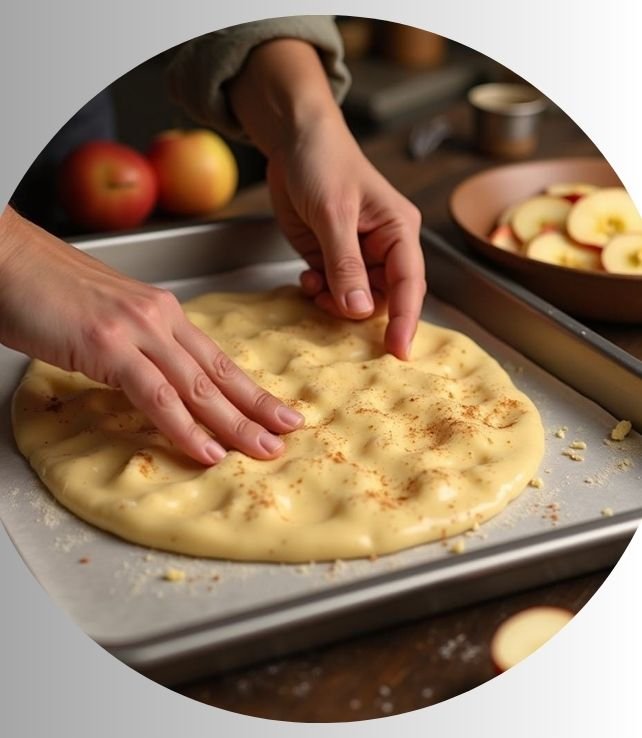
- Shape the Dough: Preheat your oven to 375°F (190°C). Generously drizzle a 9×13 inch baking pan with 2-3 tablespoons of olive oil. Gently punch down the risen dough and transfer it to the oiled pan. Using your oiled fingertips, press and stretch the dough to fit the pan evenly. If the dough resists, let it rest for 5-10 minutes before continuing to press.
- Assemble: Dimple the surface of the dough all over with your fingers. Spread the cooled spiced apple filling evenly over the dough. Sprinkle the chilled crumble topping over the apples.
- Second Rise: Let the assembled focaccia rest, uncovered, for 20-30 minutes. It will puff up slightly.
- Bake: Place the pan in the preheated oven and bake for 25-30 minutes, or until the edges are deep golden brown and the crumble is crisp.
- Cool and Finish: Transfer the pan to a wire rack and let the focaccia cool for at least 20 minutes. If using the glaze, whisk the powdered sugar, milk, and vanilla in a small bowl until smooth. Drizzle over the cooled focaccia. For an extra touch, warm some caramel sauce and drizzle it over the top before serving.
Nutrition
- Calories: 315 kcal
- Protein: 5 g
- Fat: 9 g
- Carbohydrates: 55 g
- Sugar: 24 g
- Fiber: 2 g
- Sodium: 330 mg
- Cholesterol: 15 mg
Cooking Method
This recipe uses a combination of methods. The dough is prepared using the straight-dough method, where all ingredients are combined at once. The apples are cooked using a sauté technique to soften them and release their juices before baking. The final product is baked in a standard oven, which sets the structure of the bread, caramelizes the sugars, and cooks the crumble topping.
Tools Needed
- Large mixing bowl
- Whisk
- Wooden spoon or stand mixer
- 9×13 inch baking pan
- Skillet
- Measuring cups and spoons or a digital kitchen scale
- Wire cooling rack
Ingredient Analysis and Selection
Each component in this recipe serves a specific functional and flavor purpose. Understanding these roles will help you make informed substitutions and troubleshoot any issues.
Flour and Leavening
All-purpose flour is the ideal choice for this bread. Its moderate protein content (typically 10-12%) provides enough gluten structure to trap the gases from the yeast, resulting in an airy crumb, without making the dough too tough. Using bread flour would create an overly chewy texture, while cake flour would be too delicate.
Instant yeast is specified for its convenience. It can be mixed directly with the dry ingredients, unlike active dry yeast which requires proofing in water first. The yeast consumes the granulated sugar, producing carbon dioxide that causes the dough to rise. The salt is crucial not just for flavor, but to regulate yeast activity and strengthen the gluten network.
Fats: Olive Oil and Butter
This recipe uses a dual-fat system. Extra virgin olive oil in the dough contributes to a tender crumb and a distinct, fruity flavor that complements the apples. The fat coats the gluten strands, shortening them and resulting in a softer bread.
Butter is used in the filling and crumble for its flavor. The milk solids in butter brown during cooking, providing a rich, nutty taste that is central to the “apple pie” character. For the crumble, using cold, solid butter is non-negotiable; it ensures the topping remains crumbly and crisp rather than melting into a paste.
Sugars and Sweeteners
Granulated sugar in the dough provides food for the yeast and a subtle sweetness. Brown sugar is used in the filling and crumble for its molasses content, which adds moisture and a deep, caramel-like flavor. The powdered sugar in the glaze is used for its ability to dissolve instantly into a smooth, pourable icing without requiring heat.
Honey or maple syrup could be used as liquid sweetener substitutes in the glaze, but they would impart their own distinct flavors and may require adjusting the liquid ratios.
The Apple Selection
The type of apple you select will significantly impact the final texture of the filling. For a filling that holds its shape and offers a slight firmness, use Granny Smith or Honeycrisp apples. For a softer, more jam-like filling, McIntosh or Braeburn apples are a good choice. I prefer a mix, such as Granny Smith for structure and Fuji for sweetness.
Nutritional Breakdown
As a dietitian, I analyze recipes not to label them as “good” or “bad,” but to understand their nutritional composition and how they fit into an overall eating pattern.
This Apple Pie Focaccia is an energy-dense food, with carbohydrates as its primary macronutrient. The carbohydrates come from the flour (complex carbs) and the various sugars (simple carbs). These provide readily available energy. The fiber content, primarily from the apples and whole-grain flour if used, aids in digestive health and provides a modest sense of fullness.
The fat content is moderate and comes from the olive oil and butter. Olive oil provides monounsaturated fats, which are considered heart-healthy. The protein content is low, as is typical for baked goods, coming solely from the wheat flour. To make this a more balanced snack, consider pairing a small piece with a source of protein, such as a glass of milk or a serving of Greek yogurt.
The sugar content is high, as expected for a dessert. The majority comes from the added sugars in the filling, crumble, and glaze. You can manage this by reducing the sugar in the filling by 10-15%, omitting the glaze, or using a sugar substitute designed for baking.
Dietary Adaptations
This recipe is versatile and can be modified to suit various dietary needs.
Gluten-Free Adaptation
Replace the 500g of all-purpose flour with a 1:1 gluten-free baking blend that includes xanthan gum. Without xanthan gum, the structure will be crumbly. The texture will be slightly more cake-like, and the dough will be stickier to handle. Press it into the pan with oiled hands or a spatula.
Vegan Adaptation
Substitute the butter in the filling and crumble with an equal amount of vegan butter or refined coconut oil. For the glaze, use plant-based milk. Ensure the sugar you use is certified vegan, as some refined white sugars are processed with bone char.
Lower-Sugar Adaptation
Reduce the brown sugar in the filling to 30g and rely on the natural sweetness of ripe apples. You can omit the crumble topping entirely or replace it with a sprinkle of chopped nuts and oats. The glaze can be skipped or made with a powdered erythritol-based sweetener.
Common Mistakes and Expert Tips
Avoiding a few key errors will lead to a much better result.
Dough-Related Issues
Using water that is too hot will kill the yeast, resulting in a dense, flat bread. If you do not have a thermometer, the water should feel warm to the touch, not hot. Conversely, cold water will drastically slow down yeast activity.
Not letting the apple filling cool completely before assembling is a common oversight. Adding warm apples to the dough will heat the dough, causing the butter to melt and potentially killing the yeast at the surface, which can hinder the final rise.
Rushing the rise is another frequent mistake. The fermentation period is not just about volume; it is when flavor develops. A slow rise in a slightly cooler environment will produce a more complex-tasting bread.
Baking and Assembly Tips
When pressing the dough into the pan, do not force it. If it springs back, it means the gluten is too tight. Let it rest for 5-10 minutes to relax, then continue. This prevents the dough from shrinking during baking.
Do not skip the step of dimpling the dough before adding toppings. These indentations catch pools of olive oil and the apple juices, creating pockets of flavor and varied texture.
To test for doneness, look for a golden-brown color on the edges and bottom. An instant-read thermometer inserted into the center of the bread (avoiding apples) should read between 190-200°F (88-93°C).
Serving, Pairing, and Storage
This focaccia is best served warm or at room temperature on the day it is baked. The texture is at its peak then, with a slight crispness to the bottom and edges.
Pairing Suggestions
For a dessert, a scoop of high-quality vanilla ice cream or a dollop of lightly sweetened whipped cream is a classic pairing. The cold, creamy element contrasts beautifully with the warm, spiced bread. A sharp cheddar cheese slice is also a traditional and excellent companion to apple desserts.
For a breakfast or brunch item, serve it alongside a plain yogurt parfait or a savory egg dish to balance the meal.
How to Store Leftovers
Once completely cool, store any leftovers in an airtight container at room temperature for up to 2 days. The crumble topping will soften over time.
For longer storage, you can freeze the baked and cooled focaccia. Wrap it tightly in plastic wrap and then in aluminum foil. It will keep for up to a month. Thaw at room temperature and reheat in a 300°F (150°C) oven for 10 minutes to restore some crispness.
The Science of Fermentation and Gluten Development
The transformation of simple ingredients into a light, airy bread is a fascinating process driven by microbiology and chemistry.
When yeast consumes sugar, it produces carbon dioxide gas and ethanol. The gluten network—formed when the proteins glutenin and gliadin in flour are hydrated and manipulated through kneading—traps these CO2 bubbles. This is what causes the dough to rise. The salt strengthens this gluten network, allowing it to stretch further without tearing.
The initial rise, or bulk fermentation, allows these gas bubbles to multiply and distribute evenly. The second, shorter rest after shaping gives the yeast a final burst of activity to create an open, irregular crumb structure characteristic of good focaccia.
Frequently Asked Questions
Can I use sourdough discard in this recipe?
Yes, you can create a Sourdough Apple Pie Focaccia. Replace 100g of the all-purpose flour and 100g of the warm water with 200g of unfed sourdough starter. You may need to reduce the instant yeast to 5g, and the rise times will be longer due to the weaker leavening power of a discard starter.
My dough didn’t rise. What went wrong?
The most common causes are dead yeast or an environment that was too cold. Ensure your yeast is fresh and your water was the correct temperature. The dough should be kept in a warm spot, around 75-80°F (24-27°C). If your kitchen is cool, you can place the covered bowl in an oven with the light on.
