
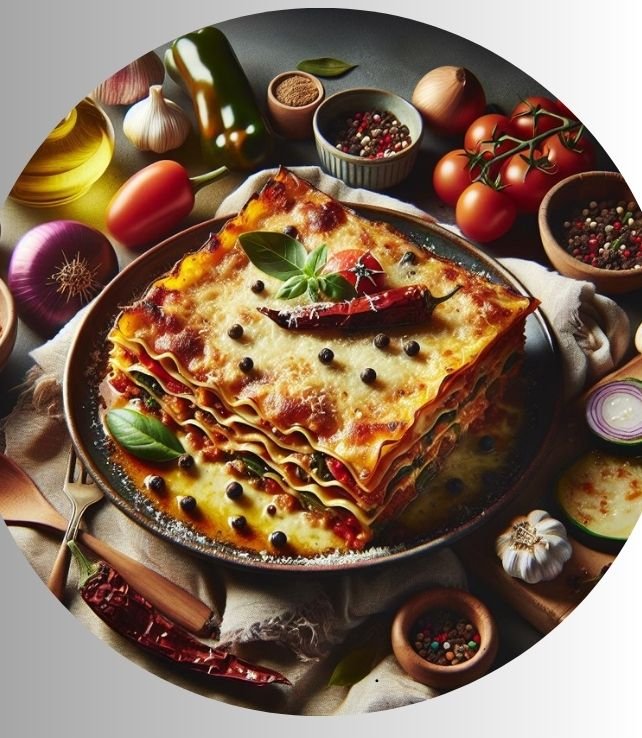
You have a box of Prince pasta in your pantry. It’s a familiar sight, a staple from a different era of home cooking. The challenge is transforming those thin, delicate noodles into something that feels both classic and new. This recipe is my answer to that challenge.
I developed this Prince Lasagna Recipe to honor the specific qualities of that pasta. It’s not just a substitution for standard lasagna sheets; it’s a dish built around them. The result is a lighter, more layered texture that holds its own against a robust meat sauce and creamy cheese. I’ll guide you through every step, from selecting the right meat to achieving the perfect bake.
This guide will provide the complete method, followed by a deep analysis of the ingredients, the nutritional considerations, and the techniques that ensure success. My goal is to give you a recipe you can trust, and the knowledge to understand why it works so well.
The Science of a Set Slice
The structural integrity of lasagna relies on protein coagulation and starch gelatinization. During baking, the egg in the ricotta mixture coagulates, turning from liquid to solid and binding the cheese layer. The starches in the pasta absorb moisture from the sauce and swell, further solidifying the matrix.
The resting period is crucial because it allows these processes to stabilize as the temperature drops. Cutting while too hot disrupts this fragile network, leading to a collapsed slice. Letting it cool slightly gives the structure time to firm up permanently.
Frequently Asked Questions
Can I make this Prince lasagna ahead of time?
Yes, you can assemble the lasagna up to 24 hours in advance. Cover it tightly with plastic wrap and refrigerate. When ready to bake, you may need to add 10-15 minutes to the covered baking time since it will be starting from cold. Do not bake frozen, uncooked assembled lasagna without thorough thawing first, as the center will remain frozen while the edges burn.
Can I use no-boil lasagna noodles instead of Prince noodles?
I do not recommend it. No-boil noodles are designed for a specific moisture content and cooking time. The Prince noodle method, involving pre-boiling, is integral to this recipe’s texture. Substituting a different type of pasta will change the liquid dynamics and the final result.
My lasagna is too watery. What happened?
The most common causes are under-reduced sauce, using ingredients with high water content (like fresh mozzarella not labeled “low-moisture”), or not letting the baked lasagna rest before cutting. Ensure your sauce is thick, use the cheeses specified, and always allow for the resting period to let excess moisture be reabsorbed.
Is it necessary to use both beef and sausage?
While using both creates a more complex flavor profile, you can use 2 pounds of all ground beef or all Italian sausage. If using all beef, consider adding 1/2 teaspoon of fennel seeds and a pinch more garlic powder to the sauce to approximate the sausage seasoning.
How can I tell when the lasagna is fully cooked?
The lasagna is done when the cheese on top is fully melted, bubbly, and has some golden-brown spots, and the sauce is bubbling vigorously around the edges. An instant-read thermometer inserted into the center should read at least 165°F, indicating the egg in the ricotta is fully cooked.
Can I freeze the leftovers?
Absolutely. Cool the baked lasagna completely. Cut into portions, wrap each tightly in plastic wrap and then foil, or place in a single layer in a rigid, airtight container. Freeze for up to 3 months. Reheat from frozen, covered, in a 350°F oven until heated through, or thaw overnight in the refrigerator first.
What’s the best way to reheat a single slice?
For best texture, reheat in a conventional oven or toaster oven at 350°F. Place the slice in an oven-safe dish, add a tablespoon of water or extra sauce around it to prevent drying out, cover with foil, and heat for 15-20 minutes. The microwave is faster but can make the edges tough and the center watery.
Why is my cheese layer grainy or separated?
This usually happens if the ricotta mixture was over-mixed or if a low-fat ricotta was used. Whole milk ricotta is more stable. Also, ensure you mix the egg into the ricotta thoroughly but gently, just until combined. Over-beating can incorporate too much air and lead to separation during baking.
