
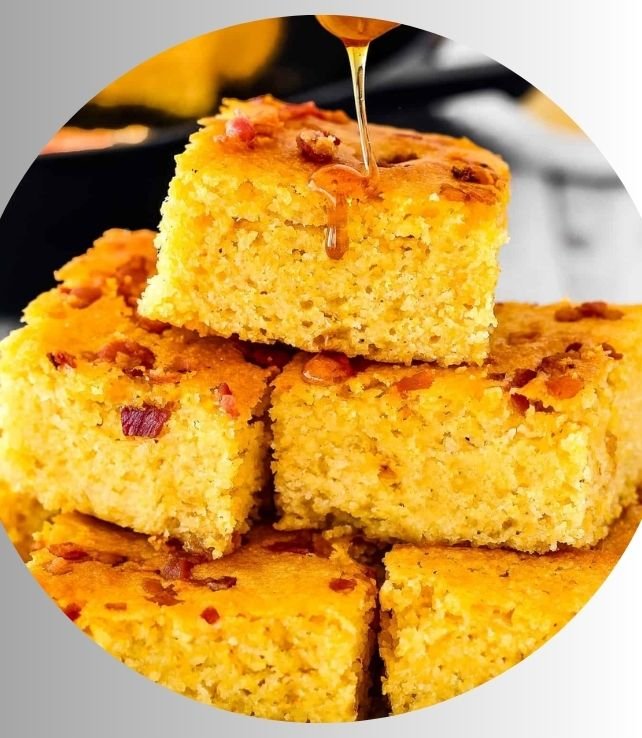
You can open your cabinet and find you are out of eggs, but the desire for warm cornbread remains. This situation is more common than you might think, and it does not mean you have to abandon your plans. A well-made cornbread does not require eggs to achieve a tender crumb and a golden crust.
I developed this specific formula after a family gathering where a last-minute dietary need arose. The result was a revelation—a cornbread that was moist, structurally sound, and deeply flavorful, proving that the essence of this classic bread lies in the balance of its core components. This article will guide you through making it and explain the science and history behind every decision.
This no egg cornbread recipe uses simple chemical leavening and ingredient ratios to create a perfect quick bread. The formula below is your starting point, and the following sections will give you the knowledge to master it completely.
How to Make No Egg Cornbread Recipe
This section provides the complete formula and method. Follow these instructions precisely for a consistent outcome. The subsequent parts of this article will delve into the reasons behind each step and ingredient.
Recipe Details
- Prep Time: 10 minutes
- Cook Time: 20-25 minutes
- Servings: 9 squares
- Course: Side Dish
- Cuisine: American
- Diet: Vegetarian
Ingredients
- 1 cup (120g) all-purpose flour
- 1 cup (140g) yellow cornmeal
- 1/4 cup (50g) granulated sugar
- 1 tablespoon baking powder
- 1/2 teaspoon salt
- 1 cup (240ml) milk
- 1/3 cup (80ml) vegetable oil or melted butter
- 1 tablespoon white vinegar
Instructions
- Begin by preheating your oven to 400°F (200°C). This high heat is necessary for a good rise and a crisp crust.
- Take an 8-inch square baking pan and grease it lightly with oil or butter.
- In a large bowl, combine the dry ingredients: all-purpose flour, yellow cornmeal, granulated sugar, baking powder, and salt. Use a whisk to blend them thoroughly. This aerates the mixture and prevents clumps.
- In a separate smaller bowl, prepare the wet mixture. Pour in the milk, vegetable oil, and white vinegar. Stir them together until just combined. The vinegar will begin to react with the baking powder.
- Create a well in the center of the dry ingredients. Pour the liquid mixture into this well.
- Stir the batter with a spatula until the dry and wet components are just incorporated. It is important not to overmix; a few small lumps are acceptable. Overmixing develops gluten and leads to a tough texture.
- Transfer the batter to your prepared baking pan, spreading it into an even layer.
- Place the pan in the preheated oven and bake for 20 to 25 minutes. The bread is done when the top is golden brown and a toothpick inserted into the center comes out clean.
- Remove the pan from the oven and let the cornbread cool in the pan for at least 10 minutes before slicing and serving.
Nutrition
- Calories: 215 kcal
- Protein: 4 g
- Fat: 9 g
- Carbohydrates: 30 g
- Sugar: 8 g
- Fiber: 1 g
- Sodium: 280 mg
- Cholesterol: 0 mg
Cooking Method
The primary cooking method for this bread is baking. The dry, concentrated heat of the oven causes the water in the milk and the fat to steam, while the chemical leaveners produce carbon dioxide. This combination forces the batter to expand and set, creating the final structure and texture.
Tools Needed
- 8-inch square baking pan
- Two mixing bowls (one large, one medium)
- Whisk
- Spatula
- Measuring cups and spoons
- Toothpick or cake tester
Understanding the Core Ingredients
Every component in this formula has a specific functional and sensory role. Understanding these roles allows you to make informed substitutions and troubleshoot any issues that may arise.
Cornmeal: The Soul of the Bread
Cornmeal is ground, dried corn. Its type and grind dramatically influence the final product. Yellow cornmeal provides a classic color and a slightly stronger corn flavor, while white cornmeal offers a milder taste. The grind can be fine, medium, or coarse. A medium grind is ideal for a balanced texture that is not gritty.
Historically, cornmeal was the primary flour in early American cornbread, with little to no wheat flour added. This resulted in a denser, more crumbly bread. The version we know today, with a blend of cornmeal and wheat flour, evolved as wheat became more accessible.
The Role of Flour and Leavening
All-purpose flour provides gluten, a protein network that gives the bread structure and prevents it from being too crumbly. Without it, the bread would not hold its shape well. Baking powder is a chemical leavener that releases carbon dioxide gas when hydrated and heated. This is the primary force that makes the batter rise, replacing the lifting power that eggs typically provide in other baked goods.
The combination of vinegar and baking powder creates an additional, immediate acid-base reaction, giving the batter an initial lift before it even enters the oven. This is a classic egg-free baking technique.
Fats and Liquids: Building Moisture and Tenderness
Vegetable oil contributes to a moist and tender crumb because it remains liquid at room temperature, coating the flour proteins and preventing them from forming a tough gluten network. Melted butter can be used instead for a richer flavor. The milk adds hydration and contributes proteins and sugars that aid in browning.
The sugar in the recipe does more than just sweeten. It tenderizes the crumb, aids in moisture retention, and promotes caramelization on the crust, leading to a more appealing color and flavor.
The Science of Egg Substitution in Baking
In traditional baking, eggs serve three primary functions: they provide structure by coagulating proteins, they act as a leavening agent when air is beaten into them, and they add moisture and fat. To create a successful eggless version, we must replicate these functions through other means.
How We Replace Eggs in This Cornbread
This recipe uses a combined approach. The structure is provided by the gluten from the wheat flour and the gelatinization of the cornmeal’s starches. Leavening is handled entirely by the double-acting baking powder and the acid-base reaction with vinegar. Moisture and fat come directly from the oil and milk. This synergistic system creates a final product that mimics the qualities of an egg-based cornbread.
Other Common Egg Substitutes
While the vinegar and baking powder method is highly effective for quick breads, other substitutes exist. A “flax egg,” made from ground flaxseed and water, adds structure and a slight nutty flavor. Mashed banana or applesauce can provide moisture and binding, though they will impart their own flavor. Commercial egg replacer powders are also a reliable, neutral-tasting option.
Nutritional Analysis of Egg-Free Cornbread
From a dietary perspective, this formulation offers specific benefits. The removal of eggs makes it suitable for those with egg allergies and reduces the cholesterol content to zero. The nutritional profile is primarily carbohydrate-based, providing energy, with a moderate amount of fat from the oil.
To increase the fiber content, you can substitute half of the all-purpose flour with whole wheat flour. For a lower-sugar version, the granulated sugar can be reduced to two tablespoons or replaced with a sugar alternative that measures like sugar. Using a plant-based milk makes the recipe fully vegan without altering the texture.
Cultural and Historical Context of Cornbread
Cornbread’s history is deeply intertwined with Indigenous American cuisine. Native Americans were using ground corn for thousands of years before European colonization. They taught settlers how to cultivate corn and prepare it, leading to the creation of simple cornmeal patties cooked on hot stones.
This food evolved differently across regions. In the Northern U.S., it tended to be sweeter and cakier, often made with wheat flour. In the South, it was traditionally made with just cornmeal, water, and salt, resulting in a denser bread cooked in a skillet. The version presented here is a modern, Northern-influenced take that prioritizes a light, tender texture.
Common Mistakes and How to Avoid Them
Many potential issues can be prevented with a few key pieces of knowledge.
Overmixing the Batter
This is the most frequent error. When you over-stir a quick bread batter, you develop the gluten in the wheat flour, leading to a tough, rubbery texture with tunnels running through it. Mix only until the last traces of dry flour disappear.
Inaccurate Oven Temperature
An oven that is not properly preheated or that runs hot or cold will affect the rise and cooking time. Use an independent oven thermometer to verify the temperature. The high initial heat is needed to activate the baking powder and create “oven spring,” the rapid rising that occurs in the first few minutes of baking.
Incorrect Ingredient Measurement
For dry ingredients like flour and cornmeal, the most accurate method is to use a digital kitchen scale. If using cups, spoon the ingredient into the measuring cup and level it off with a knife. Scooping directly with the cup packs the flour down, resulting in too much dry ingredient and a dense final product.
Serving, Pairing, and Storage Instructions
This cornbread is versatile. Serve it warm as a side for chili, soups, and stews. It pairs well with barbecue dishes or can be enjoyed on its own with a pat of butter and a drizzle of honey.
To store, allow the bread to cool completely. Wrap it tightly in plastic wrap or place it in an airtight container. It will stay fresh at room temperature for up to two days. For longer storage, you can freeze it. Wrap the whole loaf or individual slices in plastic wrap and then in aluminum foil. It can be kept in the freezer for up to three months. Thaw at room temperature or warm directly in a toaster oven.
Frequently Asked Questions
Can I make this cornbread gluten-free?
Yes. Replace the all-purpose flour with a 1:1 gluten-free baking blend that includes xanthan gum. The other ingredients remain the same.
Why did my cornbread turn out dry?
Dryness is usually caused by overbaking or measuring the flour incorrectly, leading to too much dry ingredient. Check for doneness a few minutes before the timer ends and ensure you are measuring flour with the spoon-and-level method.
Can I use buttermilk instead of milk and vinegar?
Absolutely. Buttermilk is naturally acidic. You can substitute 1 cup of buttermilk for the milk and omit the vinegar. The result will be a tangier, very tender crumb.
What is the difference between cornbread and a corn cake?
The line can be thin, but cornbread is generally less sweet and has a coarser, more bread-like crumb. A corn cake contains more sugar and fat, resulting in a sweeter, finer texture that is closer to a traditional cake.
How can I tell if my baking powder is still active?
Pour a small amount of baking powder (about 1/2 teaspoon) into a cup of hot water. If it bubbles vigorously, it is still good. If not, it has lost its potency and should be replaced.
Can I bake this in a cast-iron skillet?
Yes, a cast-iron skillet is an excellent choice. Preheat the greased skillet in the oven as it warms up. Carefully pour the batter into the hot skillet before baking. This will give you a exceptionally crisp crust.
