
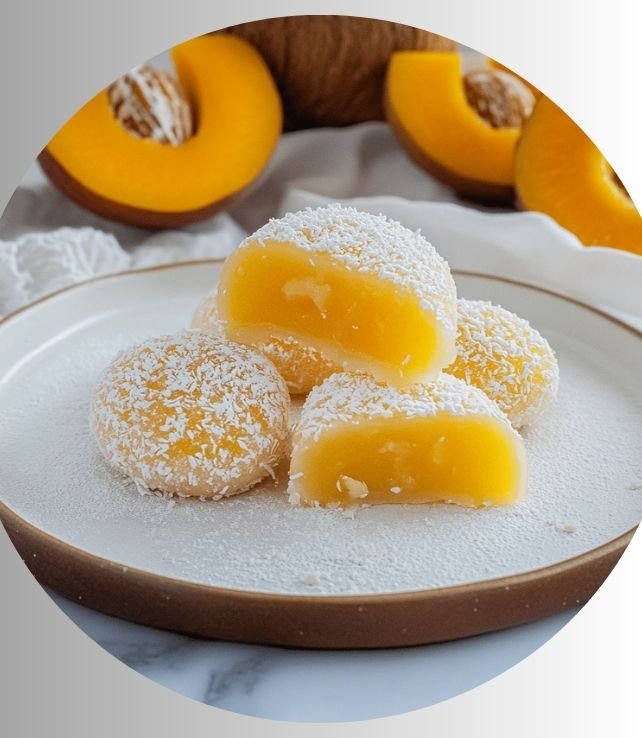
The first time I tasted mango mochi, it wasn’t in a professional kitchen but at a summer festival. The contrast between the soft, slightly chewy exterior and the cool, vibrant fruit center was a textural experience I wanted to recreate at home. Many attempts resulted in dough that was too sticky, cracked, or simply didn’t hold its shape.
This recipe is the culmination of that process, a reliable method for making mango mochi. It provides a clear guide to achieving the perfect balance of a tender, stretchy skin and a fresh mango filling. You will learn the precise techniques for handling the dough and the science behind each step to ensure consistent results.
What is Mango Mochi?
Mango mochi is a contemporary variation of a traditional Japanese confection. At its core, it consists of a sweet, glutinous rice flour dough that encases a filling of fresh mango. The defining characteristic of the dough, known as mochigome, is its unique chewy and elastic texture, which comes from a specific type of short-grain rice.
This dessert bridges the gap between a classic Japanese sweet and modern fruit-based treats. Unlike mochi ice cream, which uses a frozen center, this version highlights the natural, juicy quality of ripe mango, offering a different but equally satisfying experience.
The Core Components
Understanding the three primary parts of mango mochi is essential for mastering its preparation. Each component has a specific role in the final product’s structure and flavor.
The Mochi Skin
The outer layer is made from glutinous rice flour, sugar, and water. When cooked, the starch in the flour gelatinizes, creating the signature soft and chewy texture that is both pliable and strong enough to contain the filling.
The Mango Filling
The heart of this recipe is the mango. Using a ripe, sweet variety is non-negotiable for the best flavor. The mango is typically cut into small cubes, allowing for a distinct burst of fruit in every piece.
The Dusting Layer
Because the cooked dough is exceptionally sticky, a dusting of starch is crucial. Cornstarch, potato starch, or roasted glutinous rice flour (shiratamako) is used to coat the work surface, the dough, and the finished pieces to prevent them from adhering to each other.
How to Make Mango Mochi Recipe
This section provides the complete, step-by-step formula. Read through all instructions once before you begin. The subsequent parts of this article will delve into the reasons behind each step and how to troubleshoot common issues.
Recipe Details
- Prep Time: 30 minutes
- Cook Time: 5 minutes
- Servings: 8 pieces
- Course: Dessert
- Cuisine: Japanese Fusion
- Diet: Vegetarian
Ingredients
- 100g glutinous rice flour
- 25g granulated sugar
- 150ml water
- 1 large ripe mango (approx. 300g flesh)
- 50g cornstarch or potato starch, for dusting
Instructions
- Prepare the mango by peeling it and cutting the flesh away from the seed. Dice the mango into 8 equal, bite-sized cubes, about 2.5 cm (1 inch) each. Place these on a plate and set them in the freezer for 20 to 30 minutes. This firms them up, making them easier to wrap.
- While the mango chills, prepare your work area. Spread a thick, even layer of cornstarch onto a clean, dry baking sheet or a large plate. This will be your assembly and setting area.
- In a medium-sized, microwave-safe bowl, combine the glutinous rice flour and sugar. Use a whisk to mix them thoroughly, ensuring no lumps of sugar remain.
- Gradually add the water to the dry mixture, whisking continuously until you have a completely smooth liquid with a consistency similar to thin cream. There should be no dry flour visible.
- Cover the bowl loosely with a microwave-safe lid or plastic wrap, leaving a small vent for steam to escape. Microwave on high power for one minute.
- Remove the bowl carefully—it will be hot. Stir the mixture with a wet spatula. It will be lumpy at this stage. Re-cover the bowl and microwave for another minute.
- Remove and stir again. The dough should now be translucent and thick. If any white, wet spots remain, microwave for a final 30 seconds. The final dough should be a cohesive, gelatinous mass that pulls away from the sides of the bowl.
- Immediately transfer the hot dough to the prepared baking sheet dusted with cornstarch. Turn the dough over to coat both sides generously with the starch to prevent sticking.
- Allow the dough to cool until it is safe to handle, about 5 to 10 minutes. It should still be warm and pliable.
- Divide the dough into 8 equal portions using a bench scraper or a knife. Flatten one portion into a disc about 10 cm (4 inches) in diameter, dusting with more starch as needed.
- Take one frozen mango cube and place it in the center of the dough disc. Gently stretch the dough up and around the mango, pinching the seams at the top to seal completely. Roll it gently in your palms to form a smooth ball.
- Place the finished mochi seam-side down on the dusted tray. Repeat with the remaining dough and mango pieces.
- Let the mochi rest at room temperature for 10 minutes before serving to allow the mango to thaw slightly. For storage, place them in a single layer in an airtight container.
Nutrition
- Calories: 85 kcal
- Protein: 1 g
- Fat: 0.2 g
- Carbohydrates: 21 g
- Sugar: 9 g
- Fiber: 0.8 g
- Sodium: 2 mg
- Cholesterol: 0 mg
Cooking Method
The primary method described here uses a microwave for speed and consistency, which effectively steams the dough from the inside out. This method provides precise control over the cooking time and helps achieve the desired gelatinized texture without requiring specialized equipment like a steamer.
Tools Needed
- Medium microwave-safe bowl
- Whisk
- Measuring cups and spoons or a kitchen scale
- Spatula (silicone is best)
- Baking sheet or large plate
- Bench scraper or knife
Ingredient Analysis and Selection
The quality and type of ingredients you choose directly influence the final texture, flavor, and appearance of your mango mochi. Understanding the role of each component allows for informed substitutions and better results.
Glutinous Rice Flour: The Foundation
This is the most critical ingredient. Despite its name, it contains no gluten. The “glutinous” term refers to the glue-like, sticky quality of the rice starch. The flour is made from mochigome, a short-grain japonica rice.
The two most common types are Mochiko (sweet rice flour) and Shiratamako. Mochiko is a finer, powdery flour that yields a slightly denser, very chewy texture. Shiratamako is made from soaked and pulverized rice, resulting in a coarser texture that produces a lighter, more elastic dough. For this recipe, standard Mochiko is widely accessible and reliable.
The Role of Sugar
Granulated white sugar is used for its neutral sweetness and its functional role. Sugar is hygroscopic, meaning it attracts and holds water. In the dough, this helps keep the mochi soft and pliable for a longer period, preventing it from hardening too quickly. The amount can be adjusted slightly based on the sweetness of your mango, but reducing it too much can affect the dough’s texture over time.
Selecting the Perfect Mango
The variety of mango is important. Ataulfo (or Champagne) and Alphonso mangoes are excellent choices due to their creamy, non-fibrous flesh and intense sweetness. Tommy Atkins mangoes can be used but may have more fibrous threads. The mango should yield slightly to gentle pressure and have a fragrant aroma at the stem end. A ripe mango provides all the necessary flavor, requiring no additional sweeteners or purees for the filling.
Dusting Starch Comparison
The choice of starch for dusting affects both practicality and flavor.
- Cornstarch: The most common and neutral-tasting option. It creates a clean, white finish.
- Potato Starch: Has a slightly lighter texture and can be less chalky than cornstarch. It is also flavorless.
- Roasted Glutinous Rice Flour (Kinako): This is glutinous rice flour that has been toasted. It adds a subtle, nutty flavor and a beige color. It is traditional but will alter the taste profile.
For beginners, cornstarch or potato starch is recommended for their neutral qualities.
Nutritional Breakdown
From a dietary perspective, mango mochi can be part of a balanced diet when consumed in moderation. Its nutritional profile is primarily driven by its carbohydrate content.
The main energy source comes from the glutinous rice flour, which is a complex carbohydrate. This provides a more sustained energy release compared to simple sugars. The mango contributes natural sugars, but also provides valuable nutrients like Vitamin C, Vitamin A, and dietary fiber, especially if the skin is tender enough to eat without being peeled off the fruit cube.
The recipe is naturally low in fat and contains no cholesterol. The protein content is minimal. The relatively low fiber content is due to the refining of the rice into flour. For a fiber boost, consider using a dusting of kinako (roasted soybean flour) which adds protein and fiber.
Dietary Adaptations
This recipe is adaptable to several dietary needs with simple ingredient swaps.
Vegan Mango Mochi
The standard recipe is already vegetarian and can be made vegan by ensuring the sugar used is certified vegan, as some white sugars are processed with bone char. No other changes are required, as the recipe contains no animal products.
Gluten-Free Consideration
Mochi is naturally gluten-free because glutinous rice flour is derived from rice, not wheat, barley, or rye. However, you must always check the packaging of your specific flour brand to ensure it is produced in a facility free from cross-contamination with gluten-containing grains if you have celiac disease or a severe sensitivity.
Reduced-Sugar Variation
To make a lower-sugar version, you can reduce the granulated sugar in the dough by half. Be aware that the dough may become firmer and less pliable more quickly. You cannot eliminate the sugar entirely, as it plays a functional role in moisture retention. Relying on the natural sweetness of a perfectly ripe mango is the best strategy for reducing overall sugar intake with this dessert.
Cultural and Historical Context
Mochi’s history in Japan dates back centuries, with its origins linked to religious offerings and celebratory events, particularly the Japanese New Year. Traditionally, making mochi was a community event called “mochitsuki,” where people would steam glutinous rice and then pound it in a large mortar (usu) with heavy mallets (kine).
Fruit-filled mochi, like this mango version, is a modern invention that reflects global influences and the wider availability of tropical fruits. It represents an evolution of “daifuku,” a classic Japanese sweet consisting of a small round mochi stuffed with sweetened red bean paste. Replacing the bean paste with fresh fruit created a lighter, fruit-forward dessert that has gained international popularity.
Common Mistakes and Expert Tips
Anticipating and avoiding common errors is the key to achieving perfect mango mochi on your first try.
Dough is Too Sticky to Handle
This is the most frequent issue. The solution is twofold: adequate dusting and proper dough temperature. Use a generous amount of starch on your hands, the work surface, and the dough itself. The dough is also easiest to handle while it is still warm. If it cools completely, it can become stiff and harder to stretch.
The Mochi Skin Cracks When Wrapping
Cracking occurs when the dough is too dry or has been overworked. Ensure you do not overcook the dough, as this can drive out too much moisture. When dividing and shaping the discs, work quickly and avoid excessive kneading. If a disc does crack, you can often pinch it back together or re-roll it gently with a dusted rolling pin.
Incorrect Dough Consistency
The cooked dough should be smooth, translucent, and very elastic. A white, wet, or lumpy mixture indicates it is undercooked. Continue microwaving in 15-second intervals until the correct consistency is achieved. Conversely, a dough that is hard and rubbery has been overcooked.
Expert Tips for Success
- Freeze the mango cubes. This is a non-negotiable step for easy wrapping and a clean final product.
- Weigh your ingredients. Using a digital scale for the flour and sugar ensures accuracy and consistency, which is vital for the dough’s texture.
- Do not skip the resting period after assembly. This allows the mango to thaw slightly, creating the ideal soft-but-intact texture when you take a bite.
Serving, Pairing, and Storage
Mango mochi is best enjoyed fresh on the day it is made. The texture of the skin is at its peak—soft, chewy, and tender.
Presentation Ideas
For a simple presentation, serve the mochi on a plate with a light dusting of starch or matcha powder. For a Dessert Bento Box, include a few pieces alongside other small treats like fresh berries and a small cookie. A Mochi Ice Cream Plate can feature these mango mochi next to actual mochi ice cream balls for a contrasting temperature and texture experience.
Storage Instructions
Store leftover mochi in a single layer in an airtight container. Do not stack them without parchment paper in between, or they will fuse together.
- Room Temperature: They can be kept at cool room temperature for up to 24 hours.
- Refrigerator: Storing in the fridge will cause the mochi skin to harden significantly. It is not recommended.
- Freezer: For longer storage, freeze them on a baking sheet until solid, then transfer to a freezer bag. They will last for one month. Thaw at room temperature for 20-30 minutes before eating. The texture will be slightly less elastic but still enjoyable.
Frequently Asked Questions
Can I use frozen mangoes?
Yes, you can use frozen mango chunks. Thaw them completely and pat them dry with a paper towel to remove excess moisture before cutting into cubes and freezing as directed. Excess water will make the mochi skin soggy and difficult to seal.
How long does mango mochi last?
For the best texture, consume it within 24 hours at room temperature. While it is safe to eat for another day, the skin will gradually harden. Freezing is the best method for extending its shelf life up to one month.
Can I make mango mochi without a microwave?
Yes, the traditional method is steaming. Pour the flour, sugar, and water mixture into a heatproof bowl greased with a neutral oil. Cover the bowl with a plate or plastic wrap. Place the bowl in a steamer over boiling water and steam for 15-20 minutes, or until the dough is translucent and firm.
What if my dough is too sticky?
This is normal for freshly cooked dough. The solution is to use more dusting starch on your work surface, hands, and tools. Do not add dry flour directly into the cooked dough, as this will create dry spots and alter the final texture.
Is mango mochi gluten-free?
Yes, when made with 100% glutinous rice flour and confirmed gluten-free starches for dusting, it is inherently gluten-free. Always verify the labels on your ingredients if you have a medical requirement.
How do I achieve natural colors without food dye?
You can infuse the dough with natural colors. For a yellow hue to match the mango, you can replace some of the water with pureed fresh or frozen mango. Strain the puree to remove fibers. Be aware that this will add sugar and moisture, which may require slight adjustments to the cooking time.
What starch is best for dusting?
Cornstarch and potato starch are both excellent, neutral options. Potato starch is slightly less chalky in taste and texture. For an authentic flavor, use kinako (roasted soybean flour), which will add a nutty taste.
Why is my dough cracking when wrapping?
Cracking is typically a sign of the dough being too dry or cool. Work with the dough while it is still warm and pliable. If it has cooled and stiffened, you can try briefly re-warming it in the microwave for 5-10 seconds to restore flexibility.
