
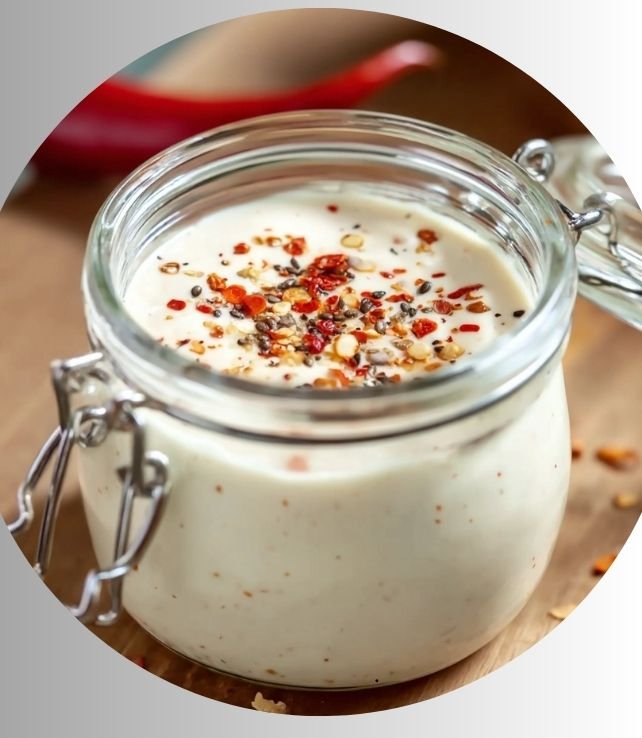
If you’ve ever ordered a burrito from a specific type of family-run Mexican restaurant in the American Southwest or Midwest, you know this sauce. It’s the creamy, slightly spicy, utterly unique white sauce served in a squeeze bottle alongside red salsa. For years, I tried to replicate it at home, failing with every attempt until a conversation with a restaurant owner’s daughter changed my approach.
This recipe is the result of that conversation, extensive testing in my own kitchen, and an analysis of its place in Mexican-American culinary tradition. It is not a traditional Mexican crema, but a distinct, beloved condiment with its own story. Below, you will find not just the formula, but a complete guide to its ingredients, variations, and the science behind its texture.
Understanding Mexican Restaurant White Sauce
Before we begin, it’s important to define what we are making. This condiment is often called “Mexican White Sauce,” “White Queso Dip,” or “Creamy Jalapeño Sauce.” It is distinctly different from a cooked cheese-based queso fundido or a simple blend of sour cream and salsa.
The hallmark of an authentic version is its smooth, pourable consistency, pale ivory color, and a flavor profile that balances rich dairy, tang, and a slow-building heat from fresh jalapeños. It is typically used as a dip for chips or a topping for burritos, tacos, and grilled meats.
My quest to perfect it taught me that the secret lies in the emulsion of fats and the treatment of the peppers. This isn’t just mixing; it’s about creating a stable, creamy suspension that won’t separate.
How to Make Mexican White Sauce Recipe
This is the core method I developed after many trials. Follow these steps precisely for a sauce that mirrors the restaurant classic.
Recipe Details
- Prep Time: 15 minutes
- Cook Time: 10 minutes
- Servings: Makes about 2.5 cups
- Course: Condiment, Appetizer
- Cuisine: Mexican-American
- Diet: Vegetarian
Ingredients
- 2 large fresh jalapeño peppers
- 1 tablespoon neutral oil (like canola or vegetable)
- 1 cup whole milk
- 1 cup heavy whipping cream
- 2 tablespoons unsalted butter
- 2 tablespoons all-purpose flour
- 1/2 cup grated white American cheese (about 2.5 ounces)
- 1/4 cup grated Monterey Jack cheese (about 1.25 ounces)
- 1/2 teaspoon kosher salt, plus more to taste
- 1/4 teaspoon white pepper
- 1/4 teaspoon garlic powder
- 1/8 teaspoon onion powder
Instructions
- Prepare the jalapeños. Wearing gloves is advised. Remove stems, slice peppers in half lengthwise, and scrape out the seeds and white membranes for a milder heat. For a spicier sauce, leave some membranes intact. Chop the peppers finely.
- In a small skillet, heat the neutral oil over medium heat. Add the chopped jalapeños and sauté for 4-5 minutes, until they have softened and lost their raw, bright green color. This step tames their sharp heat and brings out a more complex flavor. Set aside.
- In a medium saucepan, melt the butter over medium heat. Once melted and foaming, whisk in the flour to form a roux. Cook this mixture, whisking constantly, for about 2 minutes until it is bubbly and has a faint nutty aroma. Do not let it brown.
- Slowly pour in the whole milk and heavy cream while whisking vigorously to prevent any lumps from forming. Continue to cook, whisking frequently, until the mixture thickens enough to coat the back of a spoon, about 5-7 minutes.
- Reduce the heat to low. Gradually add the grated American and Monterey Jack cheeses, a handful at a time, whisking until each addition is fully melted and incorporated before adding the next.
- Stir in the sautéed jalapeños, kosher salt, white pepper, garlic powder, and onion powder. Taste and adjust seasoning, adding more salt if needed.
- For the smoothest texture, carefully transfer the hot sauce to a blender. Blend on high for 45-60 seconds until completely smooth and pale. Alternatively, use an immersion blender directly in the pot.
- Allow the sauce to cool for 15 minutes before transferring to a serving bowl or squeeze bottle. It will continue to thicken slightly as it cools. Serve warm or at room temperature.
Nutrition
- Calories: 120 kcal (per 2-tablespoon serving)
- Protein: 3 g
- Fat: 11 g
- Carbohydrates: 3 g
- Sugar: 2 g
- Fiber: 0.1 g
- Sodium: 180 mg
- Cholesterol: 35 mg
Cooking Method
This sauce employs a classic French technique: the béchamel. We start with a white roux (equal parts fat and flour, cooked briefly), which acts as a starch-based thickener. The dairy is then incorporated to create the béchamel base. Finally, cheese and seasonings are added, transforming it into a Mornay sauce. The unique steps here are the sautéing of fresh jalapeños and the final blending, which creates the signature smooth, pale green-tinged consistency distinct to this condiment.
Tools Needed
- Chef’s knife and cutting board
- Small skillet
- Medium saucepan (preferably heavy-bottomed)
- Whisk
- Measuring cups and spoons
- Box grater (for fresh cheese)
- Blender or immersion blender (essential for correct texture)
- Rubber gloves (for handling jalapeños)
Ingredient Analysis and Selection
Each component in this recipe serves a specific structural or flavor purpose. Substitutions can be made, but they will alter the final product’s authenticity.
The Role of Dairy and Cheese
The combination of whole milk and heavy cream provides a rich base with enough fat content to carry the flavors and create a luxurious mouthfeel. Low-fat alternatives will result in a thinner, less cohesive sauce.
The cheese choice is critical. White American cheese is not just a processed product; in culinary terms, it is an emulsifying cheese. It contains sodium citrate, which helps keep the sauce smooth and prevents the fats from separating. Monterey Jack adds a mild, milky flavor and improves meltability. Using only a hard cheese like cheddar will likely lead to a grainy, broken sauce.
Jalapeños: Managing Heat and Flavor
The character of the peppers defines this sauce. Fresh jalapeños provide a vegetal, bright heat that canned versions cannot match. The capsaicin, the compound that creates heat, is concentrated in the seeds and white ribs. Sautéing them does more than soften texture; it mellows the capsaicin’s punch and caramelizes the peppers’ natural sugars, adding depth.
For a consistent heat level, taste a small piece of your jalapeño before chopping. Peppers can vary dramatically. Remember, you can always add heat later but you cannot remove it.
The Thickening Agent: Roux
The butter and flour roux is non-negotiable for stability. It gelatinizes the starch granules, which then swell and absorb liquid as the sauce heats, providing a stable thickness that holds even as the sauce cools. A proper two-minute cook of the roux is necessary to remove the raw flour taste, which would otherwise linger in the final product.
Nutritional Breakdown and Dietary Perspective
As a dietician, I view this as a condiment to be used mindfully. It is energy-dense, with the majority of calories coming from fats. A two-tablespoon serving provides a notable amount of saturated fat and sodium.
However, it also offers some calcium and protein from the dairy. The key is portion control. Using it as a flavor accent rather than a main component is the balanced approach. The sauce’s intense flavor means a little can go a long way in enhancing a dish full of vegetables, lean proteins, and beans.
Dietary Adaptations
With careful swaps, this recipe can accommodate various dietary needs without sacrificing its essential character.
Dairy-Free & Vegan Version
Replace the butter with a plant-based alternative. Use full-fat, unsweetened coconut milk for the heavy cream and a rich, barista-style oat milk for the whole milk. For the cheese, seek out vegan “American” style slices or shreds that are designed to melt. Nutritional yeast (1-2 tablespoons) can add a cheesy, umami note. The roux method remains the same.
Gluten-Free Adaptation
Swap the all-purpose flour for an equal weight of a gluten-free 1:1 baking blend or rice flour. Ensure you cook the roux for the full two minutes to eliminate any gritty texture from alternative flours.
Lower-Fat Option
This will significantly change the texture, making it less creamy. You can use 2% milk and half-and-half. The cheese is harder to substitute, but using a sharp, flavorful reduced-fat cheddar may work in a pinch, though the sauce may be less smooth.
Cultural and Historical Context
This creamy white sauce is a fascinating example of culinary adaptation. It is not a sauce you will find widely in Mexico. Its origins appear to be in the “Tex-Mex” or “Midwest-Mex” restaurant scenes of the United States, likely developed in the latter half of the 20th century.
It represents a creative response to available ingredients and American tastes, merging the French-derived cream sauce technique with the chile-forward flavors of Mexican cuisine. It sits alongside “nacho cheese” as a uniquely Mexican-American creation, born in restaurant kitchens to complement a specific style of service. Its popularity is a testament to how regional foodways evolve and create new traditions.
Common Mistakes and Expert Tips
After making this dozens of times, I’ve identified the key pitfalls and how to avoid them for a flawless result every time.
Grainy or Broken Sauce
This is the most common issue. Causes include: overheating the sauce after adding cheese (keep it on low), using pre-shredded cheese (it contains anti-caking agents that hinder melting), or not using an emulsifying cheese like American. The final high-speed blend is your best insurance for smoothness.
Sauce is Too Thick or Too Thin
If too thick, whisk in additional milk, one tablespoon at a time, until desired consistency is reached. If too thin, you have two options: create a small additional roux (1/2 tbsp butter + 1/2 tbsp flour) in a separate pan, cook it, and then whisk it into the simmering sauce, or simply continue to simmer the sauce to reduce it, stirring constantly to prevent scorching.
Lack of Flavor Depth
Do not skip sautéing the jalapeños. Raw peppers will give a harsh, one-dimensional heat. The gentle cooking unlocks a more rounded flavor. Also, ensure you are using enough salt; it is essential for balancing the richness and making the other flavors pop.
Serving, Pairing, and Storage
This sauce is versatile, but some applications are particularly effective.
Ideal Pairings
- As a Dip: Serve warm with sturdy restaurant-style tortilla chips. The thickness should coat the chip without dripping.
- On Proteins: Drizzle over grilled chicken, carne asada, or shrimp tacos and burritos.
- With Vegetables: Use as a topping for roasted cauliflower or a drizzle over a black bean and corn salad.
- Breakfast: A spoonful on huevos rancheros or breakfast burritos is excellent.
Storage and Reheating
Store cooled sauce in an airtight container in the refrigerator for up to 5 days. The sauce will solidify when cold. To reheat, place the desired amount in a saucepan over low heat, adding a splash of milk and whisking gently until smooth and warm. Microwaving in short bursts, stirring between each, also works, but watch for separation.
I do not recommend freezing, as the dairy-based emulsion may break upon thawing, resulting in a grainy, separated texture.
The Science of the Emulsion
Understanding the “why” makes you a better cook. This sauce is a complex emulsion. The roux provides starch molecules that surround fat droplets, preventing them from coalescing and separating out. The proteins in the milk and cheese further stabilize the mixture.
The sodium citrate in the American cheese is a powerful emulsifying salt. It modifies the proteins in the other cheeses, allowing them to stay in suspension in the high-fat, high-water environment without becoming greasy or clumpy. This is why the final blending step is so effective; it mechanically creates an incredibly fine, stable dispersion of all elements.
Frequently Asked Questions
Can I use pickled jalapeños instead of fresh?
You can, but the flavor profile will change significantly. Pickled jalapeños will impart a vinegary, briny taste rather than the fresh, vegetal heat of sautéed peppers. If you must substitute, use about 3 tablespoons of finely chopped pickled jalapeños and omit the sauté step. Be mindful of the added sodium.
My sauce separated after refrigerating. Can I fix it?
Yes. Separation is common upon cooling. Gently reheat the sauce on the stove over low heat while whisking vigorously. If it remains grainy, add a teaspoon of fresh milk or cream and continue to whisk. Using a blender or immersion blender on the reheated sauce is the most reliable way to restore a smooth emulsion.
What can I use if I can’t find white American cheese?
The closest substitute is a mild white cheddar combined with a small amount of sodium citrate (available online). For every cup of other cheese, add 1 teaspoon of sodium citrate dissolved in 2 tablespoons of water or milk. Another option is to use a few slices of a mild, meltable Swiss cheese like Gruyère, though the flavor will be different.
Is this sauce spicy?
The heat level is controllable. By thoroughly removing the seeds and membranes from the jalapeños and sautéing them, you create a mild to medium sauce with a slow warmth. For more heat, leave some membranes in. For a very mild sauce, use only one jalapeño.
How long can I leave this sauce out at a party?
For food safety, do not leave this dairy-based sauce at room temperature for more than two hours. If serving at a gathering, keep it in a small slow cooker on the “warm” setting or place the serving bowl over a larger bowl of ice to keep it chilled.
Can I make this sauce ahead of time?
Absolutely. In fact, making it a day ahead allows the flavors to meld and deepen. Store it covered in the refrigerator and reheat gently before serving, adding a little milk if needed to adjust consistency.
What’s the difference between this and Mexican crema?
Mexican crema is a cultured dairy product similar to thin sour cream or crème fraîche. It is tangy, pourable, and rarely cooked. This recipe is a cooked sauce thickened with a roux and cheese, resulting in a richer, more stable, and creamier condiment with a different flavor foundation.
