
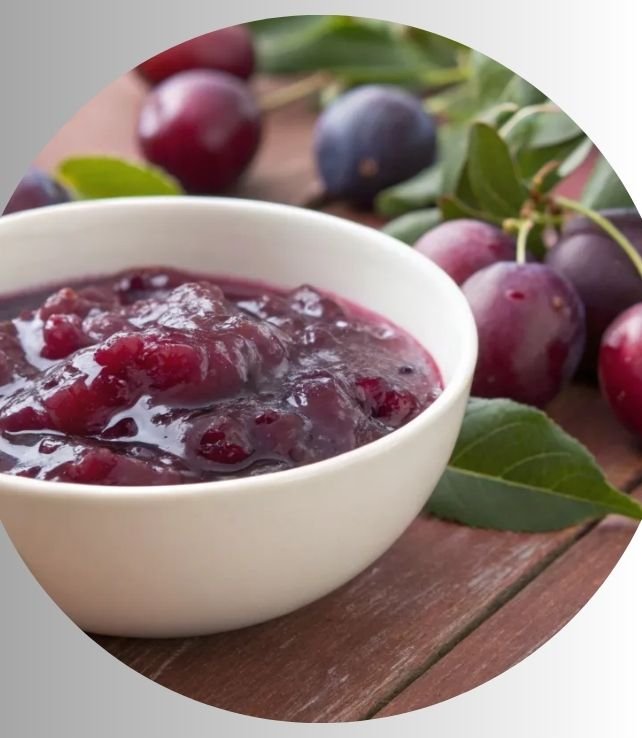
The first time I encountered a beach plum, its tartness made me pause. I was on a coastal path, and the small, dusty purple fruit looked unassuming. Later, I learned its potential for transformation into a clear, vibrant jelly with a unique balance of sweet and sour.
This recipe is the result of many seasons of working with this specific fruit. It provides a method for turning foraged beach plums into a stable, spreadable jelly you can enjoy throughout the year. The process is straightforward but requires attention to detail for the best results.
Understanding Beach Plums
Before you begin cooking, it is helpful to know the main ingredient. Beach plums are not the large, juicy fruits you find in a supermarket. They are a wild species that thrives in sandy soil along the Atlantic coast.
What Are Beach Plums?
Beach plums are small, round fruits that grow on low, shrubby trees. Their skin color ranges from deep blue to a reddish-purple when fully ripe. The flesh is tart and astringent, making them generally unpleasant for fresh eating but exceptional for preserves.
The prime harvesting season is brief, typically from late August through September. This short window is why finding them in a store is rare, and foraging or knowing a local grower is often necessary.
Foraging and Sourcing
If you live near the coast from New England down to the Mid-Atlantic, you may find these plants in dunes and coastal thickets. Always be certain of your identification before harvesting any wild fruit. Respect private property and local regulations concerning foraging.
If you cannot forage, some specialty farms in areas like Cape Cod and Martha’s Vineyard may sell them during the season. You can also find frozen beach plums online, which work well for this recipe.
How to Make Beach Plum Jelly
This section contains the complete formula and steps. Read through the entire recipe before you start to ensure you have the required tools and understand the process.
Recipe Details
- Prep Time: 45 minutes
- Cook Time: 25 minutes
- Servings: 4 eight-ounce jars
- Course: Condiment
- Cuisine: American
- Diet: Vegan, Gluten-Free
Ingredients
- 4 pounds fresh beach plums
- 4 cups water
- 1 package (1.75 oz) powdered pectin
- 5 cups granulated sugar
Instructions
- Place the beach plums in a large bowl and rinse them thoroughly under cool water. Remove any stems or leaves.
- Transfer the clean fruit to a large, heavy-bottomed pot. Add the 4 cups of water.
- Bring the mixture to a boil over high heat. Once boiling, reduce the heat to a steady simmer. Cook for 20 minutes, stirring occasionally and using a potato masher to crush the fruit and release its juices.
- Line a colander with several layers of cheesecloth and place it over a large bowl. Carefully pour the cooked plum mixture into the colander and allow the juice to strain through. Do not squeeze the cheesecloth, as this will cloud the jelly. Let it drip for at least 2 hours, or until the pulp is relatively dry.
- Measure out 4 cups of the strained juice. Pour it back into the cleaned pot.
- Whisk the powdered pectin into the juice. Bring the mixture to a full, rolling boil that cannot be stirred down.
- Add the sugar all at once, stirring constantly. Return the mixture to a full, rolling boil and maintain it for exactly 1 minute.
- Remove the pot from the heat. Skim off any foam from the surface with a spoon.
- Immediately ladle the hot jelly into sterilized jars, leaving 1/4 inch of headspace. Wipe the rims clean, place the lids on, and screw on the bands until fingertip-tight.
- Process the jars in a boiling water bath for 10 minutes to ensure a proper seal. Remove and let cool completely on a towel-lined counter. Check the seals after 24 hours; the lids should not flex when pressed.
Nutrition
- Calories: 50 kcal
- Protein: 0 g
- Fat: 0 g
- Carbohydrates: 13 g
- Sugar: 12 g
- Fiber: 0 g
- Sodium: 0 mg
- Cholesterol: 0 mg
Nutrition information is an estimate per tablespoon.
Cooking Method
The primary method used here is boiling and gelling. The initial boil softens the fruit and extracts pectin and flavor. The second boil, with added sugar and commercial pectin, creates the chemical environment for the liquid to set into a firm gel upon cooling.
Tools Needed
- Large, heavy-bottomed pot
- Large bowl
- Colander
- Cheesecloth or a jelly bag
- Potato masher
- Ladle
- Canning jars with lids and bands
- Jar lifter
- Large pot for water bath canning
Ingredient Analysis and Function
Each component in this recipe has a specific role. Understanding these roles helps you troubleshoot if your jelly does not set correctly.
Beach Plums: The Core Flavor and Pectin Source
The fruit provides the unique tart flavor, a natural red-purple color, and a base level of pectin. Pectin is a soluble fiber found in fruit that acts as a gelling agent. Wild beach plums have variable pectin levels, which is why we supplement with a commercial product for reliability.
Water: The Extraction Medium
Water is not just a liquid to prevent burning. It is the solvent that draws out the pectin, acids, and flavor compounds from the fruit pulp during the initial simmering stage. The amount is calibrated to achieve a concentrated juice without being overly diluted.
Sugar: More Than Just Sweetness
Granulated sugar is crucial for both taste and chemistry. It balances the intense tartness of the fruit. In the gelling process, sugar interacts with pectin and acid to form the jelly structure. It also acts as a preservative, inhibiting microbial growth in the finished product.
Pectin: The Guarantor of the Set
Adding powdered pectin standardizes the gelling process. Beach plums can be unpredictable from one harvest to the next. The commercial pectin ensures a firm set and allows for a shorter cooking time, which better preserves the fresh fruit flavor.
Nutritional Breakdown
As a spread, beach plum jelly is a concentrated source of energy from sugars. A serving provides a quick source of carbohydrates. While it is not a significant source of vitamins or minerals due to the straining process, it does retain some of the fruit’s plant compounds, like anthocyanins, which give it its color.
The recipe is naturally free from gluten, dairy, and cholesterol. The primary consideration from a dietary standpoint is its sugar content, which is typical for fruit preserves.
Dietary Adaptations
This basic recipe accommodates several dietary needs, but changes will affect the final product.
Low-Sugar Variation
You can make a lower-sugar version using a specific type of pectin designed for such recipes. Do not simply reduce the sugar in the standard recipe, as the jelly will not set properly and may spoil quickly. Follow the instructions on a “low-sugar” or “no-sugar-needed” pectin box precisely.
Alternative Sweeteners
Using liquid sweeteners like honey or agave nectar is not recommended for this type of jelly. They have different chemical properties than granulated sugar and can interfere with pectin’s ability to gel. They also impart a strong flavor that can mask the delicate taste of the beach plum.
Cultural and Historical Context
Beach plum jelly is a regional specialty deeply tied to the coastal areas of New England, particularly Cape Cod, the islands, and parts of Long Island. For generations, families have foraged these wild fruits at summer’s end as a way to preserve a taste of the shore.
It is more than a recipe; it is a seasonal ritual. The act of gathering the fruit and spending a day making jelly connects people to the landscape and to traditions that predate commercial food production. Each jar represents a specific place and time.
Common Mistakes and Expert Tips
Many potential issues can be avoided with a few key pieces of advice.
Avoiding a Cloudy Jelly
The most common error is squeezing the fruit pulp in the cheesecloth. This forces fine particles of pulp through the cloth, resulting in a jelly that is not clear. Patience is key. Let gravity do the work.
Achieving the Perfect Set
Do not guess the cooking time. Use a timer for the 1-minute boil after adding the sugar. A “rolling boil” means the surface is covered in bubbles that do not subside when you stir. This vigorous boiling is necessary to activate the pectin fully.
Testing for Doneness
If you are unsure if your jelly will set, perform a plate test. Place a small plate in the freezer before you start. When you think the jelly is ready, drop a small spoonful onto the cold plate. Let it sit for a minute, then push it with your finger. If the surface wrinkles, it is set. If not, cook for another minute and test again.
Serving, Pairing, and Storage
Beyond toast and biscuits, this jelly pairs wonderfully with savory foods. Try it with roasted or grilled meats, especially pork and chicken, where its acidity cuts through the fat. It is also excellent with a sharp, hard cheese.
Properly processed and sealed jars will keep in a cool, dark place for up to one year. Once opened, refrigerate the jelly and use it within three months. For long-term storage without canning, the strained juice can be frozen for up to a year, and you can make the jelly later.
The Science of Gelling
Jelly formation is a precise interaction between three components: pectin, acid, and sugar. Pectin molecules, in the presence of the right amount of acid and a high concentration of sugar, link together to form a three-dimensional network that traps water. This network is what gives jelly its solid, yet spreadable, texture. If any of these three elements is out of balance, the gel will be too soft, too tough, or will not form at all.
Frequently Asked Questions
Can I use regular plums for this recipe?
You can, but the flavor and texture will be different. Cultivated plums are sweeter and less tart, and they often have lower natural pectin levels. The resulting jelly will lack the distinctive sharp, wild flavor of a true beach plum jelly.
My jelly did not set. What can I do?
If your jelly is too runny after 24 hours, you can re-cook it. Reheat the jelly in a pot, adding another 1/4 cup of sugar and a tablespoon of lemon juice for every 2 cups of jelly. Bring it back to a rolling boil for 1-2 minutes, then re-jar it. Alternatively, you can use it as a delicious syrup for pancakes or ice cream.
Do I have to process the jars in a water bath?
For shelf-stable storage, yes. The water bath processing destroys any microorganisms and creates a vacuum seal, which prevents spoilage. If you plan to keep the jelly in the refrigerator and use it within a few weeks, you can skip this step, but processing is recommended for safety and long-term storage.
Why is my jelly too hard or rubbery?
This is usually caused by overcooking. If the jelly is boiled for too long after the sugar is added, too much water evaporates. This leaves behind an overly concentrated mixture of sugar and pectin, resulting in a stiff gel. Precise timing is important.
How can I tell if my beach plums are ripe enough?
Ripe beach plums have a deep, uniform color and are slightly soft to the touch. They should come off the stem with a gentle twist. Underripe fruit will be very hard and more red than purple; they contain more pectin but less flavor. A mix of ripe and slightly underripe fruit is often ideal for jelly-making.
